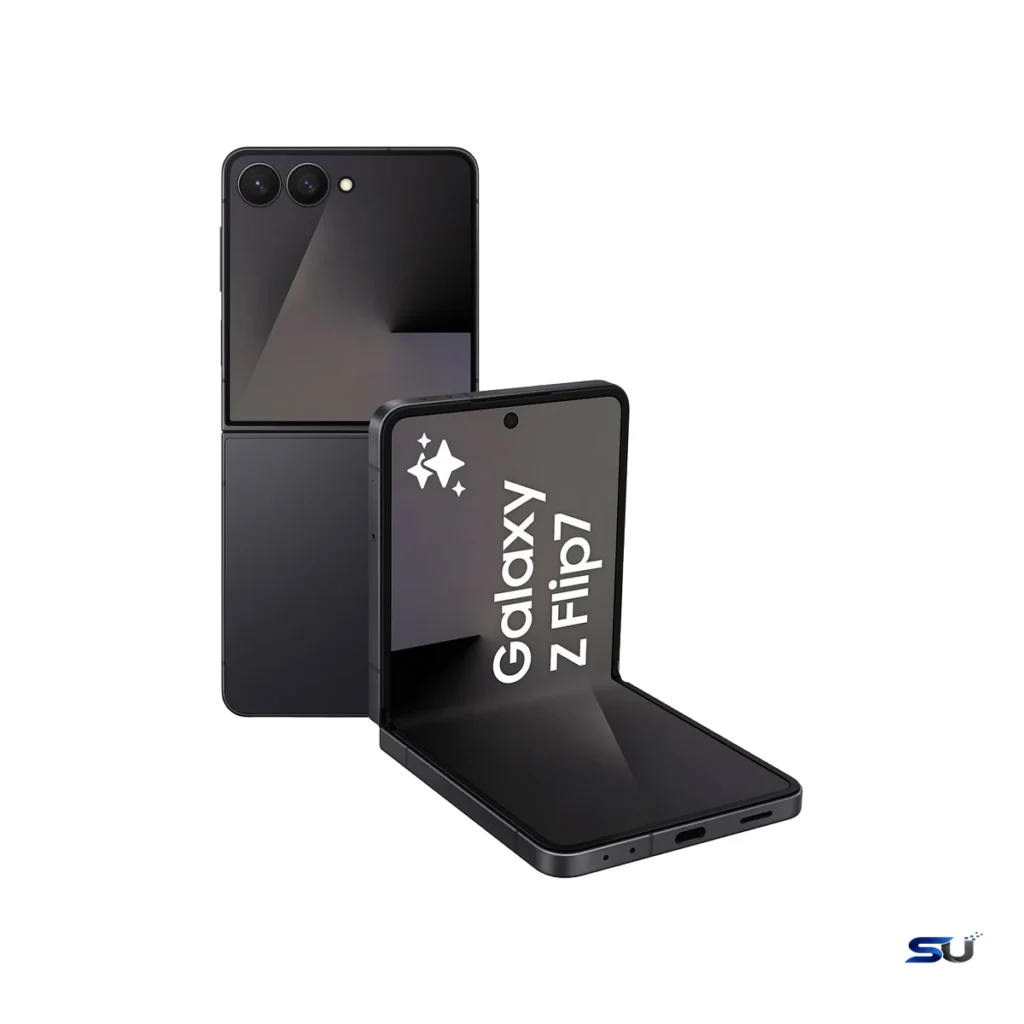
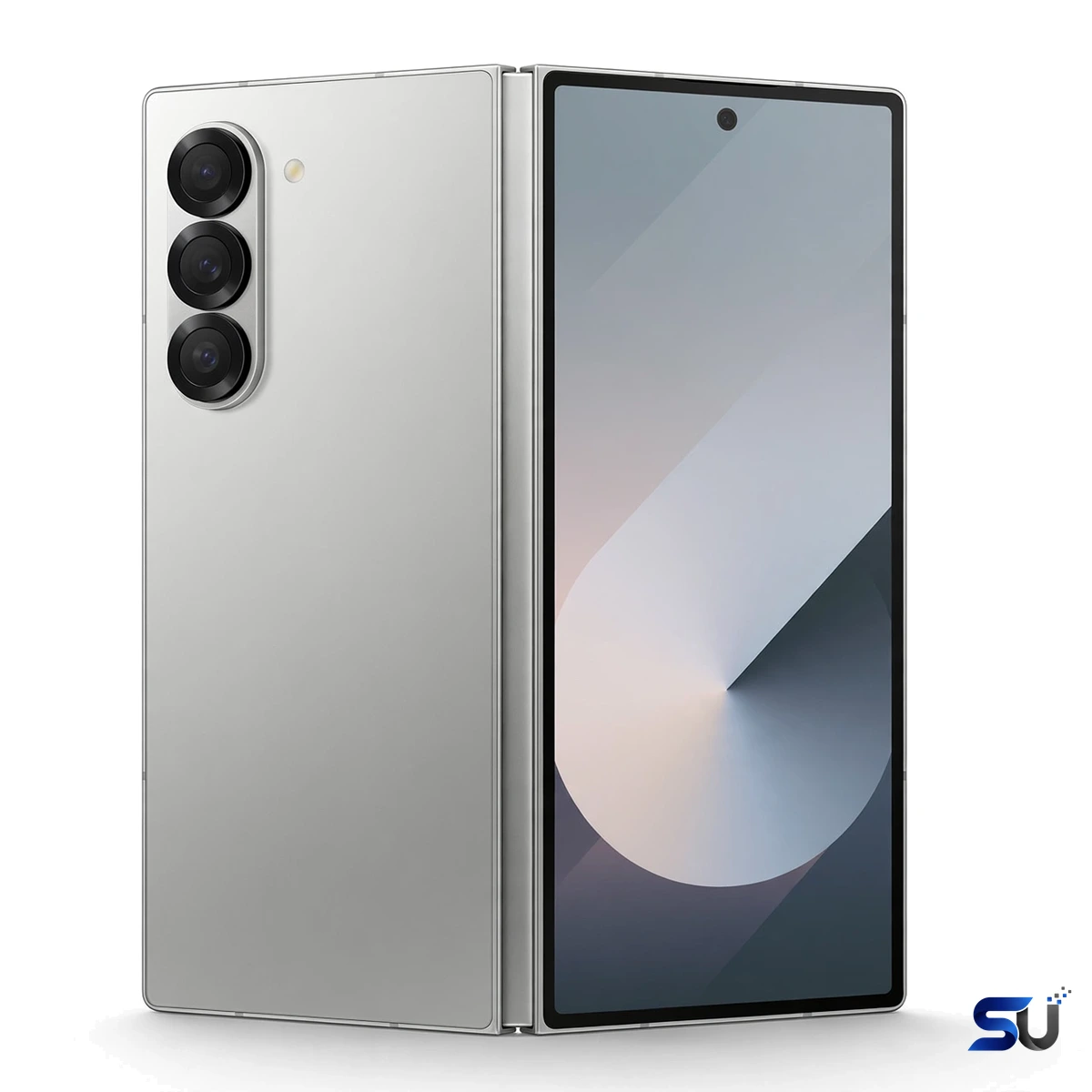
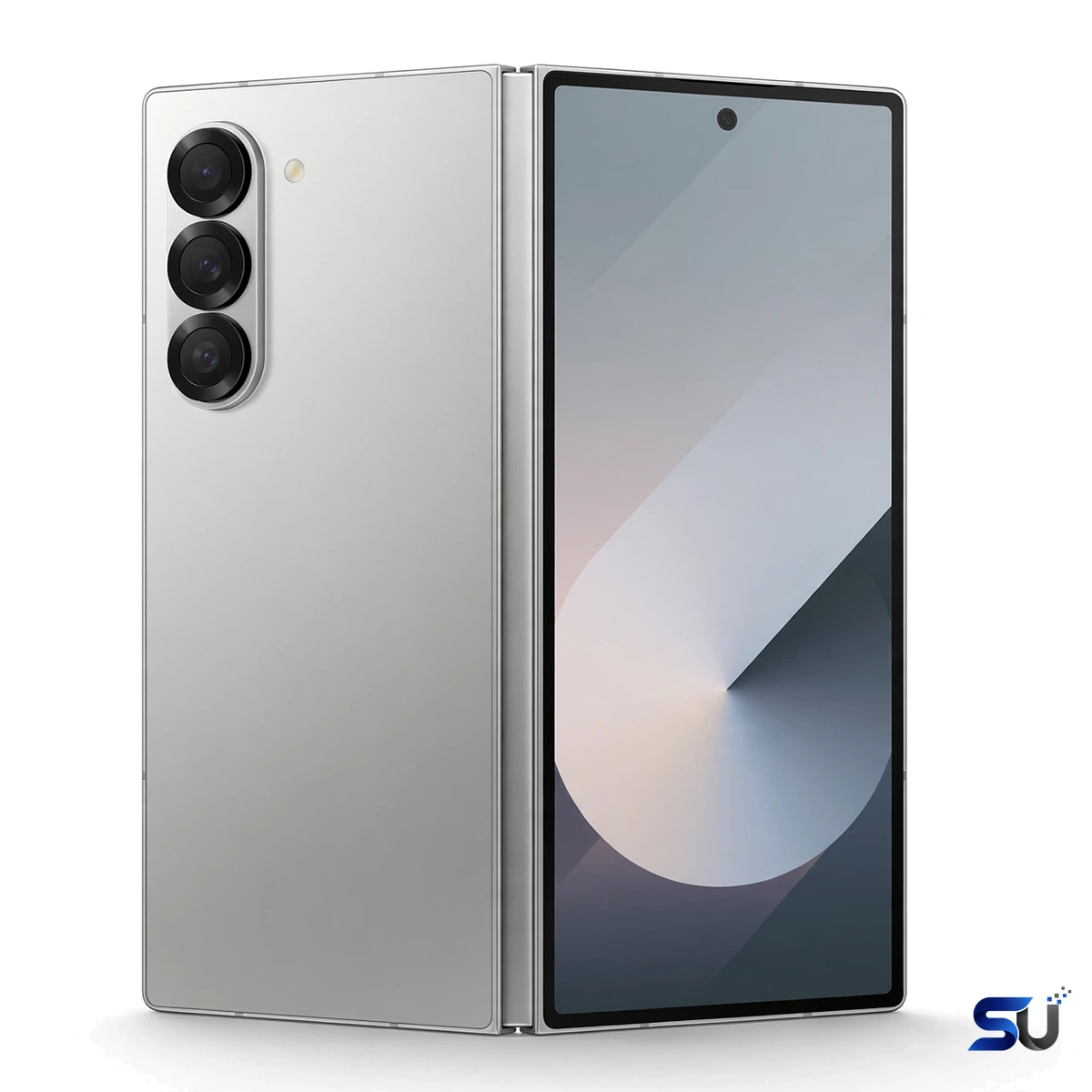
The flip phone grew up. The Samsung Galaxy Z Flip 7 12GB 512GB pairs a bigger cover screen with the Snapdragon 8 Elite for Galaxy — a pocketable foldable that doesn't ask you to compromise.
Foldables used to demand trade-offs. You accepted a smaller battery, a thicker body, or last year's chip to get the folding trick. That era is over. The Samsung Galaxy Z Flip 7 12GB 512GB arrives with flagship silicon. It has a 4.1-inch cover screen you can genuinely use. Its 6.9-inch inner display stands up to any slab phone. It folds in half, slips into pockets other flagships can't, and still runs Samsung's full Galaxy AI suite.
This is the 12GB RAM and 512GB storage configuration. It's the one to pick if you keep phones for years and hate micromanaging storage. It launched in the US in July 2025 at $1,219.99. Android 16 and One UI 8 come preinstalled. Plus, seven years of updates should keep it current well into the next decade.
Samsung Galaxy Z Flip 7 12GB 512GB design and build
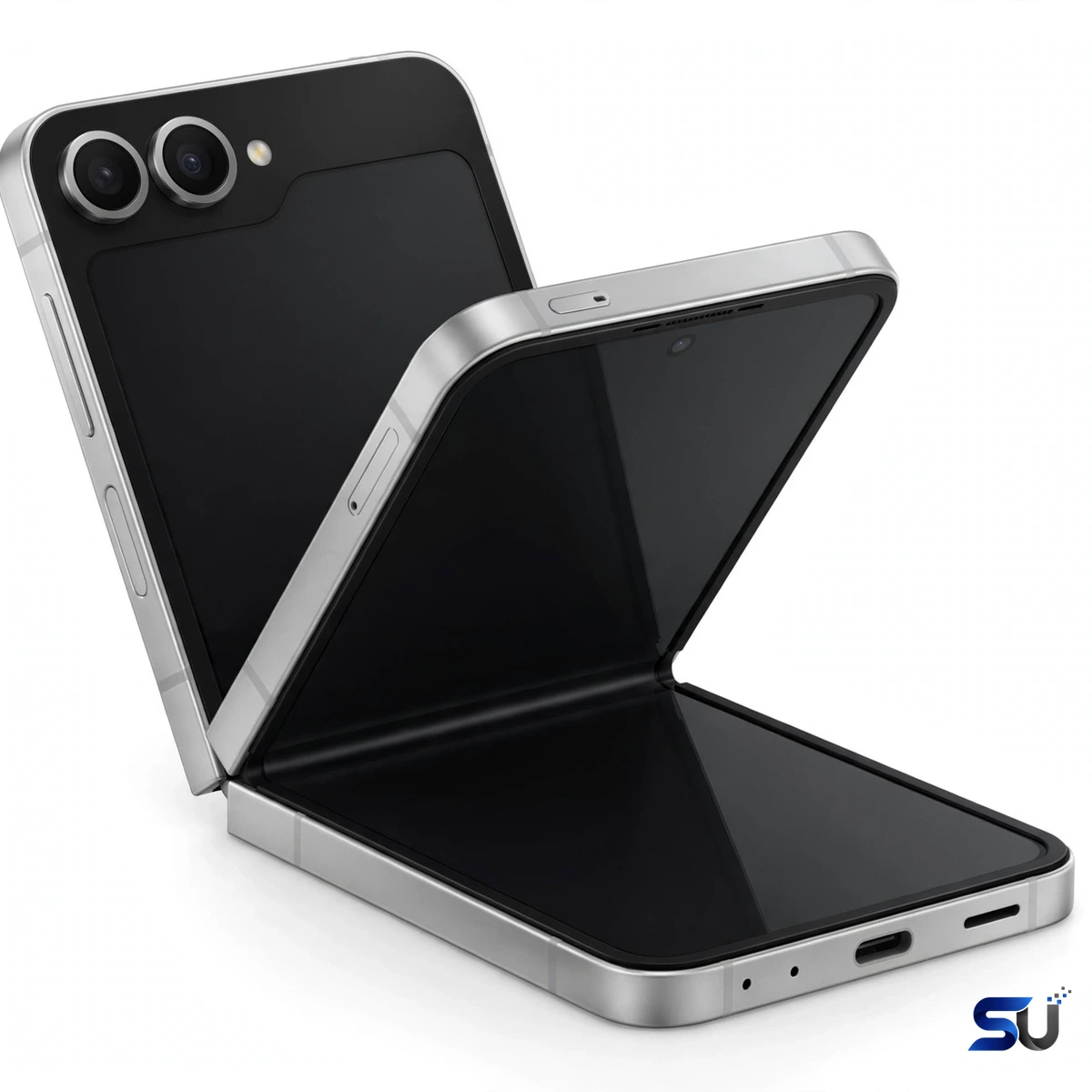
Samsung slimmed the Flip down again. Unfolded, it measures 166.7 × 75.2 × 6.5 mm. Folded, it's a compact 85.5 × 75.2 × 13.7 mm square that disappears into a jacket pocket. At 188 g, it's also lighter than many conventional flagships. The Armor Aluminum frame feels rigid. In addition, the hinge closes flat with no wedge gap.
Durability gets real attention here. The cover glass is Corning Gorilla Glass Victus 2. Ultra Thin Glass protects the main display. The whole phone carries an IP48 rating. That means protection against solids larger than 1 mm. It also survives submersion in fresh water up to 1.5 meters for 30 minutes. It's not full dust-proofing. Nevertheless, it's a meaningful step for a foldable.
Colors include Blue Shadow, Jetblack, Coralred, and Mint, with Mint exclusive to Samsung.com. The finishes are matte and shrug off fingerprints. Meanwhile, the side-mounted fingerprint sensor sits in the power button. Unlocking happens naturally as you pick the phone up.
Cover screen: a 4.1-inch FlexWindow
The cover screen is the headline upgrade. At 4.1 inches, it's much larger than the 3.4-inch panel on the Flip 6. At the same time, Samsung shrank the bezels to just 1.25 mm. It runs at 120 Hz with up to 2,600 nits of peak brightness. As a result, it stays readable in harsh sunlight.
More importantly, it's genuinely useful. You can answer messages on the Samsung Galaxy Z Flip 7 12GB 512GB without unfolding it. You can check maps, control music, and run full apps on the cover display. The Now Bar surfaces live activities like timers and sports scores. Now Brief delivers a morning summary. Widgets are customizable, and the always-on display shows time and notifications at a glance.
For photography, the cover screen doubles as a viewfinder. Frame selfies with the 50MP main camera while watching yourself on the FlexWindow. Indeed, that's a real advantage over slab phones, where selfies are stuck with the front camera.
Battery impact is modest. The cover screen sips power for glanceable tasks. In turn, checking notifications without unfolding actually saves energy. Finally, it's a small efficiency win that adds up over a day.
Main display: 6.9 inches of AMOLED
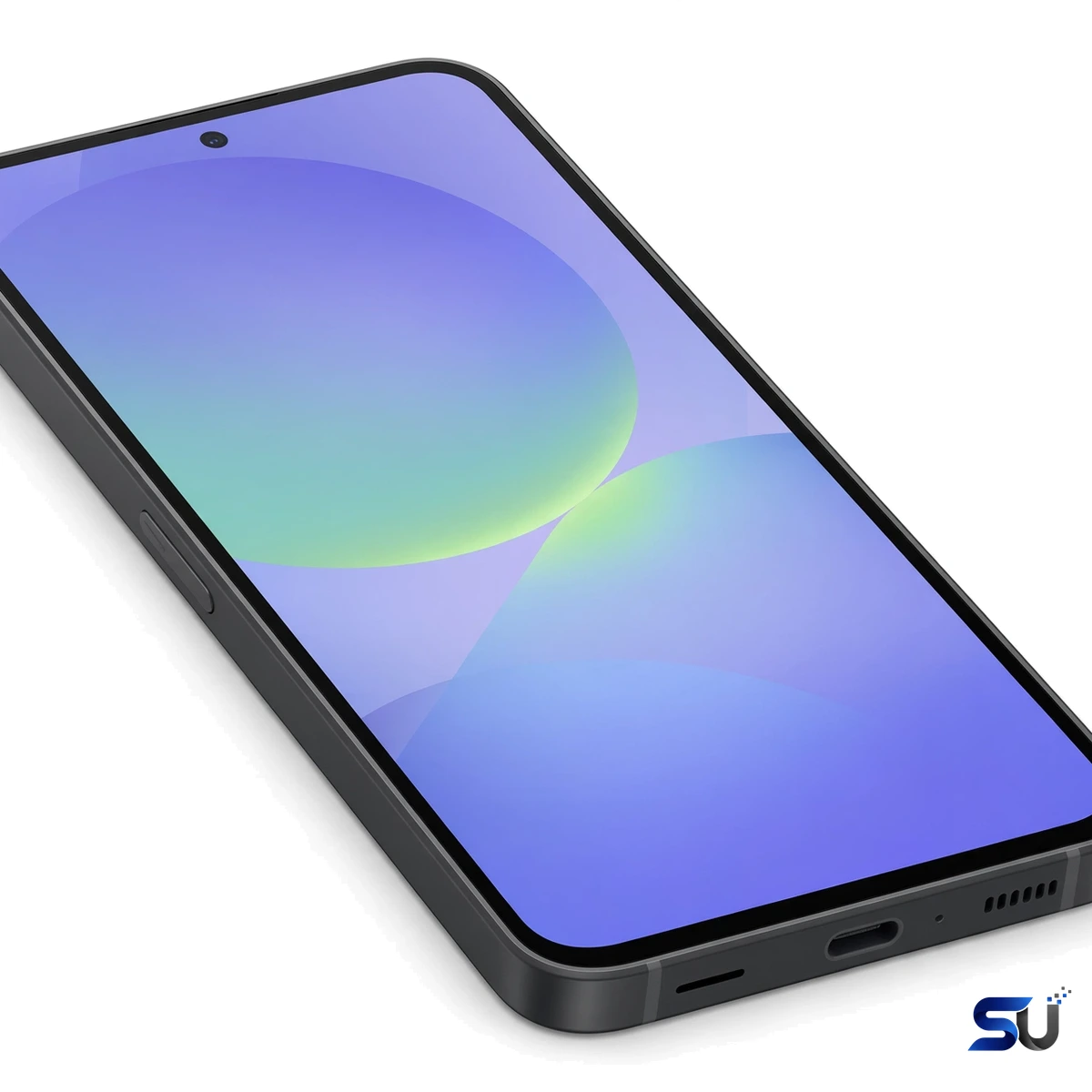
Unfold the phone and a 6.9-inch Dynamic AMOLED 2X panel greets you. Resolution is 2520 × 1080. Refresh rate is 120 Hz. Peak brightness hits 2,600 nits. Colors look vivid, blacks are deep, and HDR10+ content appears properly punchy.
The crease is still there if you hunt for it. Still, Samsung has reduced its visibility with each generation. In daily use — scrolling, watching video, reading — your eyes glide right past it. Moreover, the Ultra Thin Glass layer feels reassuringly firm under the finger. By comparison, early foldables felt plasticky.
Vision Booster keeps the screen legible outdoors by adjusting tone mapping per scene. As a result, the Samsung Galaxy Z Flip 7 12GB 512GB adapts to bright sun or dark rooms without you touching a setting.
Performance with the Snapdragon 8 Elite for Galaxy
The Samsung Galaxy Z Flip 7 12GB 512GB runs on the Snapdragon 8 Elite for Galaxy. That's the overclocked variant of Qualcomm's flagship chip, built for Samsung phones. It's an octa-core part with a custom Oryon CPU and Adreno GPU. Samsung has also fitted a larger vapor chamber than the Flip 6 had.
In practice, everything feels instant. Apps launch without hesitation. Multitasking between the cover and main screens is seamless. Demanding games, for instance, run at high settings without stutter. The chip also accelerates on-device AI, from live translation to generative photo edits, without waiting on the cloud.
For gaming specifically, the Adreno GPU targets demanding titles at high settings. The 120Hz display keeps motion smooth. Thermals matter in a thin foldable, though. Therefore Samsung's cooling improvements are welcome. The phone stays comfortable during long sessions, where older Flips grew warm and throttled.
Memory and storage
With 12GB of RAM, the Samsung Galaxy Z Flip 7 12GB 512GB keeps apps alive in the background. Split-screen multitasking works without constant reloads. It's the same memory allotment as Samsung's Ultra flagships. There's no foldable tax on multitasking here.
Storage is 512GB of UFS 4.0. That's fast enough that app installs, photo bursts, and 4K video writes never feel sluggish. There's no microSD slot, so 512GB is your ceiling. For most people, though, that's years of photos, apps, and offline media without anxiety. Therefore, pick this configuration if you shoot lots of video or keep big music libraries offline.
Cameras
The Samsung Galaxy Z Flip 7 12GB 512GB carries two rear cameras and one front camera. The hardware is familiar from the Flip 6. However, the new chip's image processing lifts results. Above all, it covers the shots most people actually take.
Samsung's ProVisual Engine handles the computational heavy lifting. It sharpens details and balances HDR scenes. It also cleans up noise in low light. Thus, the result is a camera that flatters without much effort on your part.
Rear cameras
The main camera is a 50MP wide sensor with an f/1.8 aperture and optical image stabilization. It bins pixels to 12.5MP by default. Photos come out sharp and well-exposed, with Samsung's characteristically vivid color. The 12MP ultra-wide (f/2.2) handles landscapes and group shots with minimal distortion.
Zoom relies on the main sensor's 2x "optical quality" crop. It uses the full 50MP readout for a clean 2x image, plus up to 10x digital zoom. However, there's no dedicated telephoto. Distant subjects are therefore where Ultra models pull ahead.
Nightography improved thanks to the faster ISP. Night shots show better detail and less noise. The dedicated night mode also kicks in automatically when light drops.
Front camera and video
The 10MP front camera lives in a punch-hole in the main display. It handles video calls and quick selfies fine. However, the best selfie camera is the rear 50MP — just use the FlexWindow as a viewfinder.
Video reaches 4K at 60 fps with stabilization. Slow motion hits 240 fps at 1080p. Overall, footage looks smooth and detailed. Samsung's stabilization irons out handshake nicely.
Battery life and charging
The 4,300 mAh battery is the largest ever in a Z Flip. Samsung claims up to 31 hours of video playback. That's a big jump from the Flip 6's 23 hours. In real terms, most people will end the day with charge to spare, even with heavy cover-screen use.
Charging runs at 25W wired. That takes the phone from empty to roughly half in about 30 minutes with a compatible adapter. You also get 15W wireless charging. There's 4.5W reverse wireless charging for earbuds or a watch. However, note that no charger ships in the box, as with other recent Samsung flagships.
Standby drain is low, so the phone sips power overnight. This comes down to the efficient chip and Samsung's software tuning. Either way, you won't wake up to surprises.
Battery health features include an 80% charge limit to extend long-term lifespan. Consequently, it's worth enabling if you plan to keep the Samsung Galaxy Z Flip 7 12GB 512GB for several years.
Software, AI features, and updates
Notably, the phone ships with Android 16 and One UI 8. That's Samsung's latest interface. Furthermore, it refines the foldable experience. For instance, cover-screen widgets are better. Multitasking gestures are smoother. Now Brief delivers a useful daily summary.
Galaxy AI runs throughout the experience. Live Translate handles calls in real time. Chat Assist polishes your messages. Generative Edit moves or removes objects in photos. Circle to Search works on both screens. Furthermore, many features run on-device, so they work offline and keep your data private.
Above all, the update policy is a standout. You get seven generations of OS upgrades and seven years of security updates. That carries the Samsung Galaxy Z Flip 7 12GB 512GB from Android 16 into the 2030s. Combined with 12GB RAM and 512GB storage, it's a genuinely future-proof pairing.
Connectivity and security
In fact, wireless coverage is complete. There's 5G (sub-6 and mmWave on the US model). There's Wi-Fi 7, Bluetooth 5.4, and NFC for payments. The USB-C port supports USB 3.2 speeds for fast transfers. Dual SIM works through nano-SIM plus eSIM.
Security comes from Samsung Knox, the side-mounted fingerprint sensor, and face unlock. In addition, Samsung Wallet handles payments, IDs, and keys. In short, everything you'd expect from a 2025 flagship is here.
Strengths
- Large, genuinely useful 4.1-inch 120Hz cover screen
- Snapdragon 8 Elite for Galaxy delivers true flagship performance
- 12GB RAM plus 512GB of fast UFS 4.0 storage
- IP48 dust and water resistance — rare in a foldable
- 4,300 mAh battery rated for up to 31 hours of video
- Seven years of OS and security updates
- 50MP main camera doubles as an excellent selfie camera via the FlexWindow
- Thin at 6.5 mm unfolded and light at 188 g
Trade-offs
- No dedicated telephoto camera; zoom tops out at 10x digital
- 25W wired charging trails faster-charging rivals
- No charger included in the box
- No microSD expansion, so 512GB is the limit
- Crease is reduced but still visible at certain angles
- IP48 isn't full dust-proofing like IP68
- Premium price at $1,219.99
Who the Samsung Galaxy Z Flip 7 12GB 512GB suits
This phone suits anyone who wants flagship power without the slab. If you love the idea of a phone that folds to half its size, take lots of selfies, or want a device that stands out, the Flip 7 delivers. It's also a smart pick for long-term owners. As a result, the update policy, 12GB RAM, and 512GB storage mean it won't feel old quickly.
It's less ideal if you need the best zoom camera or the fastest charging. Mobile photographers who live at 5x zoom should look at the S25 Ultra or Z Fold 7 instead. On the other hand, if you prefer a traditional shape, a conventional flagship will serve you better.
Buying checklist
- Pick a color: Blue Shadow, Jetblack, Coralred, or Samsung.com-exclusive Mint.
- Choose storage: 512GB if you shoot video or keep media offline; 256GB costs less.
- Budget for a 25W or faster USB-C charger, since none is included.
- Check carrier deals — the Flip 7 launched with aggressive trade-in offers.
- Consider a case, as the hinge area appreciates protection.
- Enable the 80% battery limit if you'll keep the phone for years.
Frequently asked questions
Does the Samsung Galaxy Z Flip 7 12GB 512GB support wireless charging?
Yes. It supports 15W Fast Wireless Charging and 4.5W Wireless PowerShare for reverse-charging accessories like earbuds. For the fastest top-ups, use 25W wired charging with a compatible USB-C adapter.
Is the Galaxy Z Flip 7 water resistant?
Yes. It carries an IP48 rating. That means resistance to solids larger than 1 mm and survival in up to 1.5 meters of fresh water for 30 minutes. Still, it's not fully dust-proof like IP68 phones, so keep it away from sand and fine dust when you can.
How many years of updates does the Z Flip 7 get?
Samsung promises seven generations of Android OS upgrades and seven years of security updates from launch. Since it ships with Android 16, the phone should stay current into the early 2030s.
What's the difference between the 256GB and 512GB models?
Both have 12GB of RAM and identical performance. The 512GB model simply doubles storage. Specifically, that matters if you record lots of 4K video, download media for offline use, or keep phones for many years. There's no microSD slot, so choose carefully.
Can you run apps on the cover screen?
Yes. The 4.1-inch FlexWindow runs full apps and widgets, plus Samsung's Now Bar and Now Brief. You can reply to messages, check maps, and take selfies with the main camera using the cover screen as a viewfinder — all without unfolding the phone.
Does the Z Flip 7 have a visible crease?
A crease remains where the display folds, but each generation makes it less noticeable. During normal use — scrolling, video, reading — most people stop seeing it. The Ultra Thin Glass layer also makes the folding area feel more solid than on early foldables.
The Samsung Galaxy Z Flip 7 12GB 512GB is the foldable for people who refused to compromise. It combines the biggest cover screen the Flip has ever had with flagship silicon. It adds a bigger battery and an update policy that outlasts most carrier contracts. Ultimately, at $1,219.99, it's a premium buy — but it's also the most complete Flip Samsung has made.