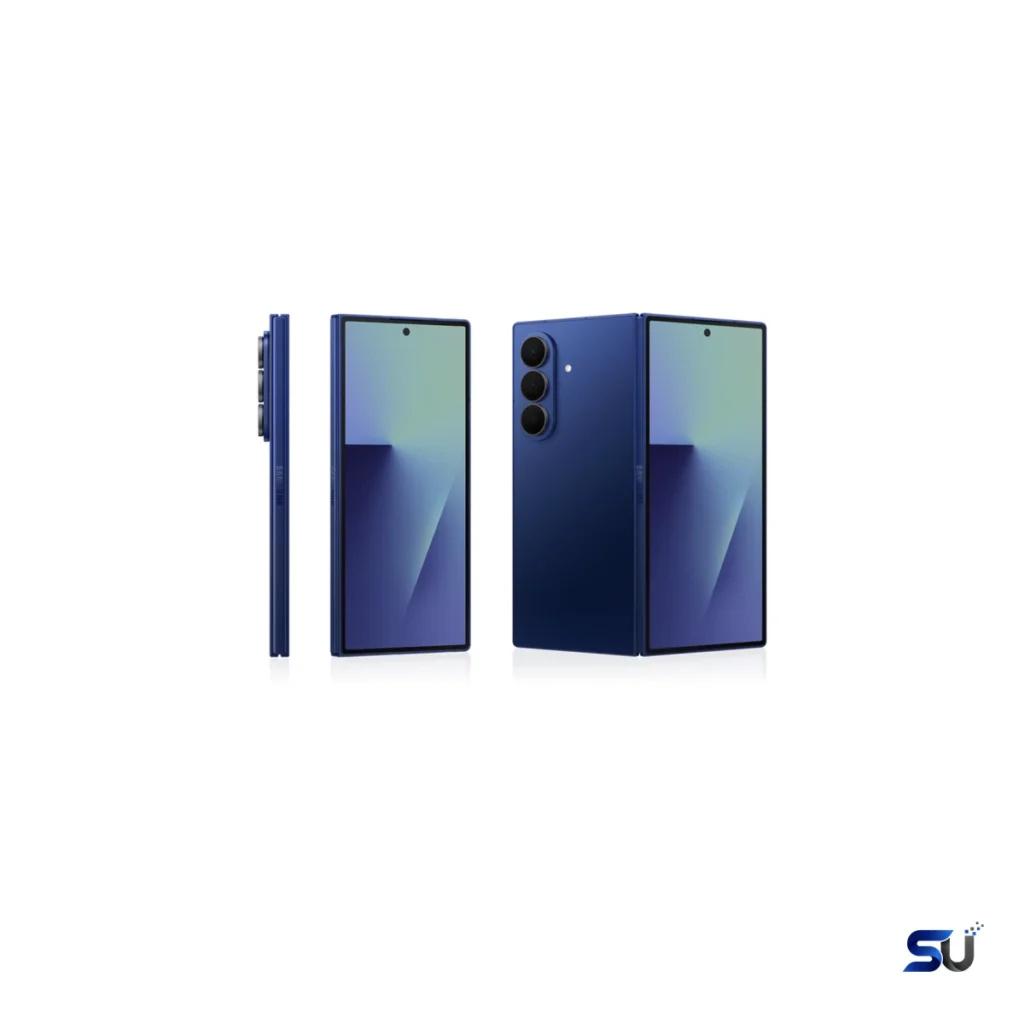
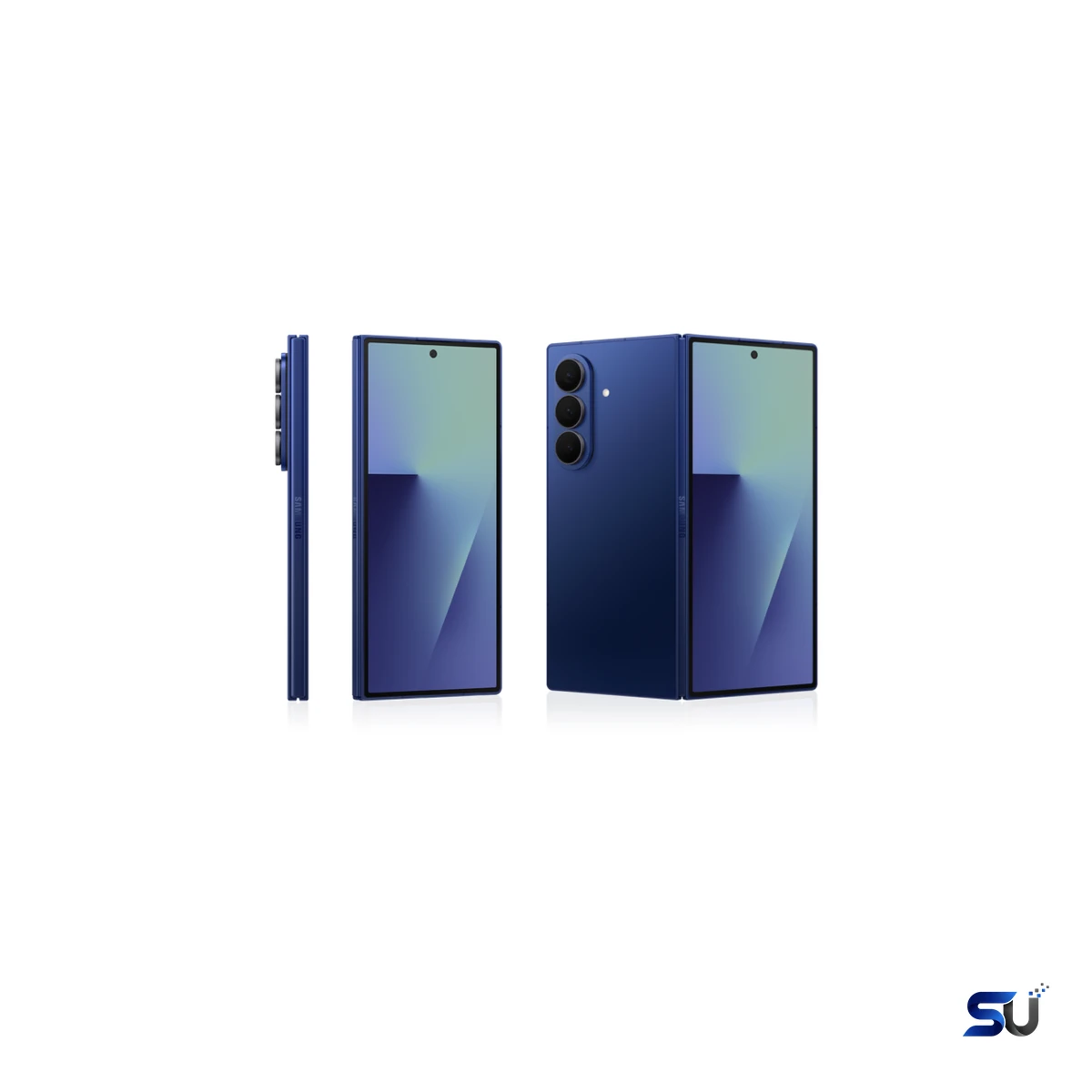
Foldables grew up with the Galaxy Z Fold 7. The Samsung Galaxy Z Fold 7 12GB 512GB — Samsung's seventh-generation foldable — is thinner, lighter, and tougher than ever, unfolding from a regular phone into a genuine 8-inch tablet.
Samsung Galaxy Z Fold 7 12GB 512GB model identity and configuration
Look for model number SM-F966: the US version launched in July 2025 from $1,999.99. The 512GB configuration keeps 12GB of RAM but doubles the storage of the base model — useful headroom, since foldables invite big files and offline media. Colors are Blue Shadow, Silver Shadow, Jetblack, and a Mint exclusive to Samsung's own store. Under the skin, it's the Snapdragon 8 Elite for Galaxy running Android 16 with One UI 8.
Camera hardware in depth
Pixel-binning lets the 200MP main sensor turn tiny pixels into big, light-hungry ones, so daylight photos carry impressive detail when you crop in. Samsung's ProVisual Engine applies AI sharpening and noise reduction behind the scenes. The 12MP ultra-wide is best in good light — it softens at the edges in dim conditions, like most ultra-wides. Optical stabilization on the 3x telephoto keeps handheld zoom shots sharp. For video, 8K at 30fps captures huge files; most people will prefer 4K at 60fps for the better balance of quality and file size. The cover camera handles video calls well, while the under-display camera is best left for calls only. It's a convenience feature, not a photography tool.
Display technology in depth
LTPO AMOLED on both screens varies the refresh rate to match what's on screen — that saves battery when you're reading static text. The 2,600-nit peak brightness applies to small highlights in HDR content; full-screen brightness runs lower but stays strong outdoors. With HDR10+ support, compatible videos show wider contrast and richer color. At 21:9, the cover screen is taller than older Folds, so it feels like a normal phone in hand. The main display's near-square ratio suits multitasking beautifully but leaves black bars on widescreen video — a fair trade for productivity. In short, both panels punch well above what earlier foldables offered.
Living with a foldable
There's a short adjustment period with any foldable. You learn which tasks deserve the big screen and which don't. The device is heavier than a standard phone, so long one-handed sessions can tire your hand — use the cover screen or both hands for extended reading. The crease fades from notice in practice. Battery anxiety fades too, once you learn the rhythm: cover screen for quick checks, main display for focused work. After a month, going back to a slab phone feels cramped. That's when you know the foldable has earned its place in your pocket.
Key specifications at a glance
The Samsung Galaxy Z Fold 7 12GB 512GB packs the following hardware:
- 8.0-inch Foldable Dynamic AMOLED 2X main display, 2184 × 1968, 120Hz adaptive
- 6.5-inch Dynamic AMOLED 2X cover display, 2520 × 1080, 120Hz adaptive
- Snapdragon 8 Elite for Galaxy, octa-core up to 4.47 GHz
- 12GB RAM, 512GB UFS 4.0 storage, no microSD slot
- 200MP + 12MP + 10MP (3x telephoto) rear cameras, 8K video
- 4400mAh battery, 25W wired and 15W wireless charging
- 215g; 4.2mm thin unfolded; IP48 rated
- Android 16 with One UI 8; seven years of updates
Display quality and daily viewing
You get two very good screens here, not one good screen and one compromise. The main 8.0-inch foldable panel is Dynamic AMOLED 2X at 2184 × 1968, with the refresh rate adapting from 1Hz to 120Hz. The 6.5-inch cover display is also Dynamic AMOLED 2X at 2520 × 1080, adaptive to 120Hz. Both hit 2,600 nits peak and support HDR10+. Lab tests measured around 1,408 nits (main) and 1,409 nits (cover) in auto mode — strong enough for bright daylight.
What the displays mean in practice
As a phone display, the cover screen is a proper 21:9 panel. Closed, the Samsung Galaxy Z Fold 7 12GB 512GB works like a normal flagship — messages, calls, maps, quick photos. Open it and you get a near-square canvas where two apps sit side by side comfortably. For example, three-app multitasking finally has room to breathe. The crease is still visible if you look for it, but most eyes adjust within a day or two.
Processor and performance
At its heart is the Snapdragon 8 Elite for Galaxy, a 3nm chip with prime cores up to 4.47 GHz. In practice, the Samsung Galaxy Z Fold 7 12GB 512GB edits 4K video, juggles three apps, and plays demanding games without breaking a sweat. Galaxy AI features run on-device too. The chip is also more efficient than its predecessor — welcome news, since the big foldable screen is always hungry for power.
Memory and storage
With 12GB of LPDDR5X RAM, multi-window setups stay alive in the background — no constant reloads when switching apps. The 512GB of UFS 4.0 storage is fast for game installs and 8K video files. However, there's no microSD slot. For most buyers, 512GB is the comfortable middle between the base 256GB and the pricey 1TB tier.
Rear camera system
Leading the array is the 200MP wide camera (f/1.7, OIS), backed by a 12MP ultra-wide and a 10MP 3x telephoto (f/2.4, OIS). Daylight shots bin down to clean, detailed 12MP images with Samsung's punchy colors. For portraits and distant subjects, the 3x telephoto steps in, while digital zoom reaches 30x. Nightography handles low light well, though moving subjects can soften under multi-frame processing.
Front cameras and video
Two selfie cameras: a 10MP f/2.2 on the cover display and a 10MP under-display unit on the main screen. The cover camera is sharp for video calls; the under-display one stays hidden but trades image quality. For the best selfies, use the rear cameras with the cover screen as a viewfinder. Video reaches 8K 30fps, with 4K 60fps the practical pick.
Battery life
At 4400mAh, the battery is modest for two screens. Samsung claims up to 24 hours of video playback; independent lab tests recorded an Active Use Score of 11 hours 44 minutes. That's a full day of mixed use, not two, so set your expectations accordingly. Heavy main-display days will need an evening top-up, while cover-screen days stretch further.
Charging and power habits
Wired charging tops out at 25W — about 53% in 30 minutes per lab tests. That's slow for a 2025 flagship, and there's no charger in the box, so bring a USB-C PD/PPS adapter. 15W wireless charging covers overnights, and Wireless PowerShare reverse-charges earbuds in a pinch. Overall, plan on overnight charging plus daytime top-ups.
Build, size and handling
At 4.2mm unfolded and 215g, the Samsung Galaxy Z Fold 7 12GB 512GB is Samsung's thinnest, lightest Fold. Folded it's 8.9mm and 158.4 × 72.8mm — pocketable, unlike older Folds. Armor Aluminum frames the device; Gorilla Glass Victus 2 backs it; Gorilla Glass Ceramic 2 armors the cover display. The hinge holds angles for Flex Mode and snaps shut cleanly.
Durability and protection
IP48 brings a first meaningful dust rating (solids over 1mm) plus 30-minute submersion at 5 feet. Still, sand threatens the hinge, so beach days need caution. The ultra-thin-glass main display scratches easier than normal screens — a case is strongly advised, and treat the inner panel gently.
Connectivity and ports
The Samsung Galaxy Z Fold 7 12GB 512GB covers 5G, Wi-Fi 7, Bluetooth 5.4, NFC, and ultra-wideband. File transfers run at USB 3.2 Gen 1 over the USB-C port. Samsung DeX offers a desktop mode on external monitors, and nano-SIM plus eSIM enables dual lines for travel or work.
Software and update support
The first foldable to launch with Android 16 and One UI 8, with seven OS generations and seven years of security patches promised. That long runway suits an expensive device. Foldable software is mature — taskbar, app continuity, Flex Mode panels — and on the Samsung Galaxy Z Fold 7 12GB 512GB, Galaxy AI features get room to breathe on the big screen. Seven years of updates means this phone will stay secure and current long after most flagships are forgotten.
Benchmark context
Geekbench 6 hit 9,152 multi-core and AnTuTu 10 reached 1,995,132 in independent tests — near the top of 2025. Still, the chip is rarely the bottleneck; thermals and battery are. The jump over the Fold 6 is roughly 30-40%, most visible in sustained work like video exports. Day-to-day, everything simply feels instant.
Gaming and sustained workloads
Games look fantastic on the 8.0-inch display, and speakers rated "Good" (-28.0 LUFS) add punch. Thinness has a cost, though: sustained load brings throttling, so frame rates step down over long sessions. For burst workloads it's superb; for hour-long max-settings gaming, a dedicated gaming phone still wins.
Real-world daily use
The Fold 7 rewards unfolding: reading, email, spreadsheets, and split-screen research shine. Quick tasks stay on the cover screen, which also saves battery. Meanwhile, the side fingerprint sensor is fast. After a week, most settle into a rhythm — closed for quick stuff, open for real work. If you'd rarely unfold it, a conventional flagship gives more for less.
Advantages
The Samsung Galaxy Z Fold 7 12GB 512GB gets a lot right:
- Thinnest, lightest Fold yet — 4.2mm unfolded, 215g
- Two excellent 120Hz AMOLED displays with 2,600-nit peak brightness
- Top-tier Snapdragon 8 Elite for Galaxy performance
- 200MP main camera borrowed from the Ultra playbook
- Seven years of OS and security updates
- IP48 rating — a first meaningful dust rating for the line
- Mature foldable software with strong multitasking
Limitations
Worth weighing before buying:
- Expensive — flagship foldable pricing from $1,999.99
- 25W charging is slow for this price class; no charger in the box
- 4400mAh battery means all-day, not multi-day, endurance
- Visible crease and a scratch-prone inner display
- No S Pen support — stylus users should look at the Ultra line
- 30x digital zoom lags behind 100x rivals
- Repairs for foldable displays remain costly
Who it suits best
Mobile professionals, travelers, and multitaskers who'll unfold daily will feel right at home. Photography enthusiasts get Ultra-class cameras in a foldable. Finally, five-year keepers benefit from the update policy and 512GB storage.
Who may want to look elsewhere
Budget buyers, S Pen devotees (no stylus support), and battery-maximalists should look elsewhere. If you'd mostly use it closed, a Galaxy S25 Ultra gives similar performance for less.
Buying checklist
Before spending flagship money:
- Confirm the exact configuration: 12GB RAM with 512GB storage, model SM-F966 for the US.
- Decide whether you'll actually unfold it daily — that's what justifies the price.
- Budget for a case and a 25W-plus USB-C PD/PPS charger, since neither may be in the box.
- Check carrier compatibility and 5G bands for your network.
- Compare storage needs honestly: 512GB suits most people; 1TB exists for heavy video shooters.
- Look at trade-in and carrier deals — foldables often carry the steepest discounts.
Frequently asked questions
Is the Samsung Galaxy Z Fold 7 12GB 512GB water resistant?
It's IP48 rated: up to 5 feet of fresh water for 30 minutes, plus resistance to solids over 1mm. That's a real improvement for foldables, but it's not dust-tight — keep it away from sand and grit.
Does the Galaxy Z Fold 7 support the S Pen?
No. Samsung removed S Pen support to make this generation thinner. The Galaxy S25 Ultra still supports the stylus.
How visible is the crease?
Visible and feelable, especially with the screen off or at an angle. In normal use, most people stop noticing it within a day or two.
How much usable storage does 512GB give?
Roughly 470-480GB after the system and apps. There's no microSD slot. 512GB suits large photo libraries and games; heavy 8K video shooters should consider 1TB.
How long will it get software updates?
Seven OS generations and seven years of security patches from launch. It shipped with Android 16, so it stays current well into the next decade.
Position in the 2025 lineup
Samsung's most refined book-style foldable yet: Ultra-grade cameras, the fastest silicon, and the longest update commitment available. It asks a lot in money and care, but for buyers who'll use both screens daily, nothing else quite matches it. For media-heavy users, this 12GB/512GB configuration hits the sweet spot between price and headroom.