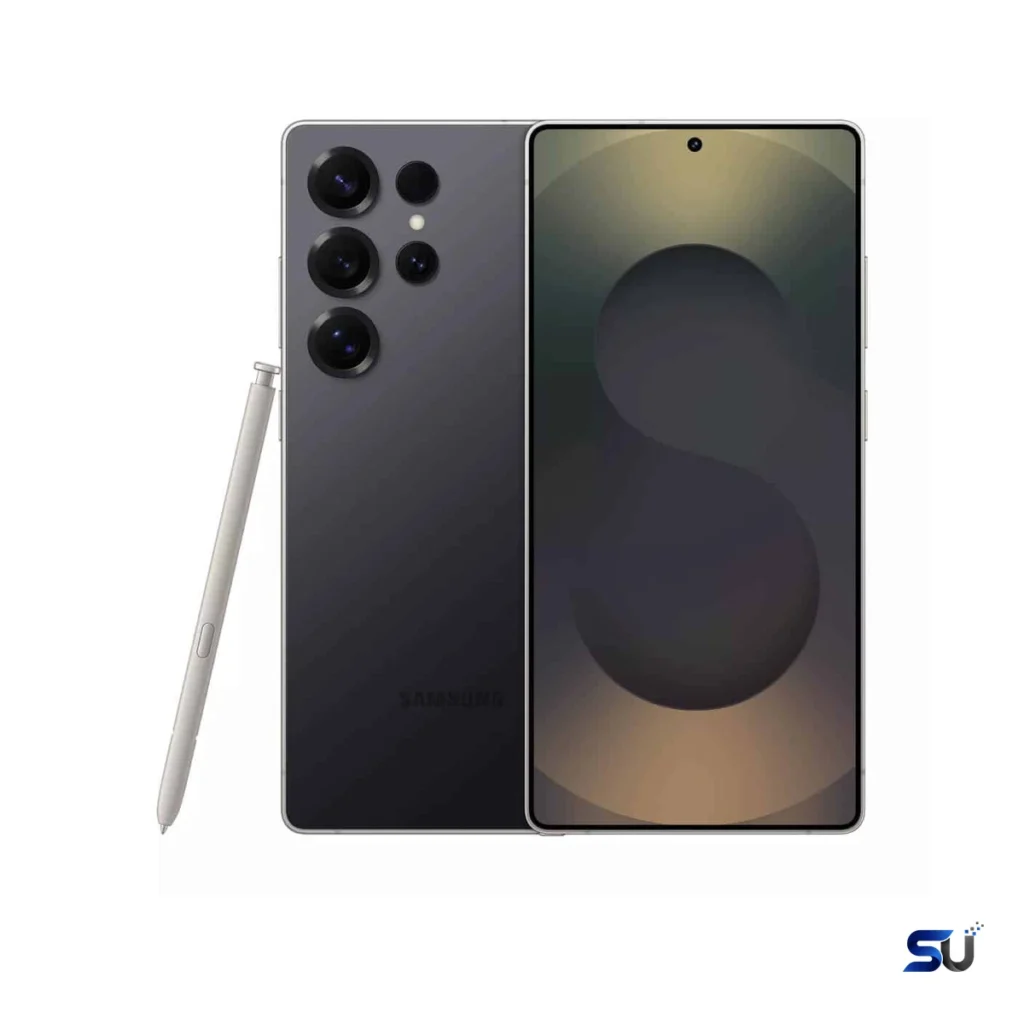
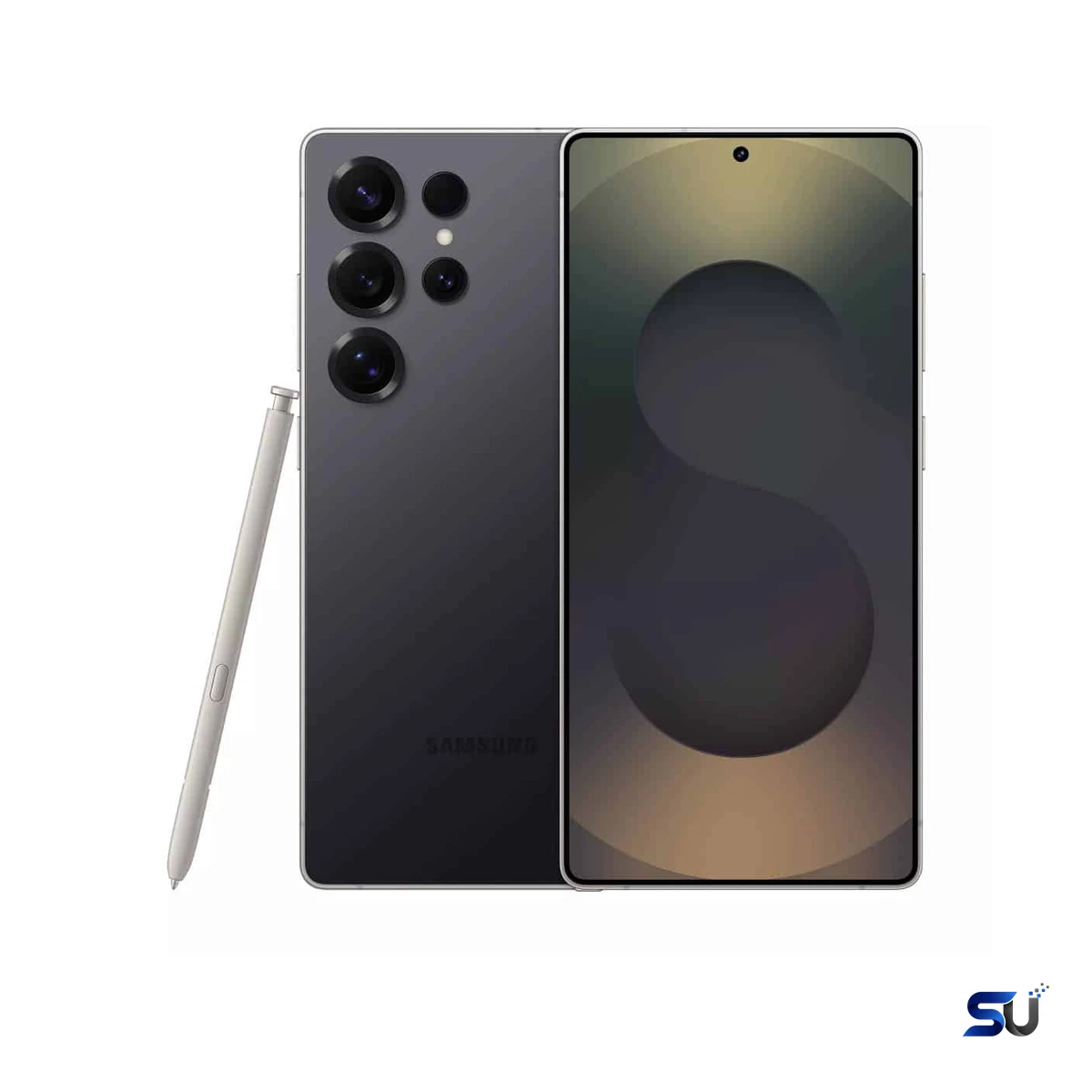
Samsung's 2025 flagship doesn't do subtle — the Samsung Galaxy S25 Ultra 12GB 512GB pairs a 200MP camera with the Snapdragon 8 Elite for Galaxy and a built-in S Pen, the complete package for anyone who wants one phone that handles everything.
The phone reached the United States in February 2025 at $1,419.99 for this 12GB/512GB configuration. Samsung also sells the phone with 256GB or 1TB of storage. Still, 512GB is the sweet spot if you shoot lots of video or keep years of photos on your phone. There is no microSD slot, so the storage you buy is the storage you keep.
Design and build: thinner, lighter titanium
Flat edges still define the Ultra look, but Samsung slimmed everything down. It measures 162.8 x 77.6 x 8.2 mm and weighs 218 grams, which makes it noticeably thinner and lighter than last year's Ultra. The corners are slightly more rounded now, so the phone sits more comfortably in a pocket and feels less sharp in the hand.
Titanium frame and Gorilla Armor 2
The frame uses titanium, while Corning Gorilla Armor 2 covers the front and glass finishes the back. The Armor 2 glass matters for two reasons. First, it resists scratches and drops better than ordinary glass. Second, it keeps the anti-reflective coating that made last year's screen so easy to read outdoors. In practice, that means fewer reflections when you use the phone in bright sunlight.
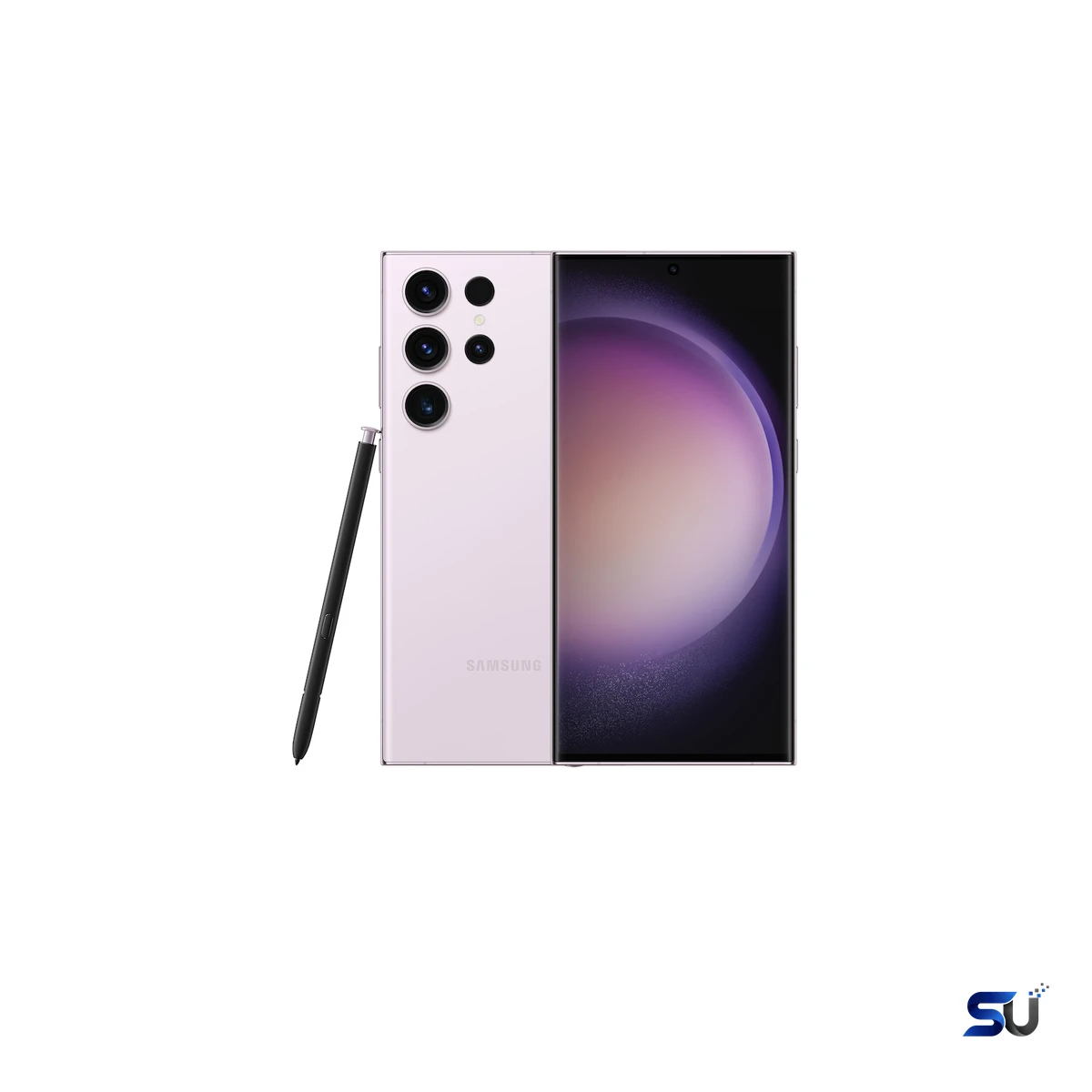
Dust and fresh-water dips are no threat thanks to an IP68 rating. Color choices for the US include Titanium Silverblue, Titanium Whitesilver, Titanium Gray and Titanium Black, with extra finishes like Titanium Jadegreen, Titanium Jetblack and Titanium Pinkgold sold through Samsung's own store.
The S Pen and everyday handling
Docked in a silo at the bottom, the S Pen is still there whenever you need it. It works for notes, sketching and signing documents, and the large screen gives you real room to write. One change to know: this year's S Pen has no Bluetooth, so the old air gestures and remote camera shutter are gone. If you never used those tricks, you won't miss them. If you did, that is a genuine step back.
Display: a bigger, brighter 6.9-inch panel
While the body got slimmer, the screen grew to 6.9 inches — Samsung simply shrank the bezels. It is a Dynamic AMOLED 2X panel with a 3120 x 1440 (QHD+) resolution. That works out to about 498 pixels per inch. Text looks razor sharp, and photos show fine detail without any zoom.
Refresh rate, brightness and color
Between 1Hz and 120Hz, the refresh rate adapts to whatever is on screen. That means scrolling and animations look smooth at 120Hz, while the screen can drop to 1Hz for static content to save battery. Peak brightness hits 2,600 nits, so HDR video pops and the screen stays readable in harsh daylight.
Color accuracy is strong, with wide gamut coverage and HDR10+ support for streaming services. The anti-reflective glass helps here too, because deep blacks only look deep when reflections are not washing them out.
A note on PWM dimming
Like most OLED phones, this display dims with pulse-width modulation. Independent lab measurements put the PWM frequency at 240Hz with low amplitude, plus a secondary 480Hz component. Most people never notice it. Still, if your eyes are sensitive to flicker at low brightness, that is worth knowing before you buy.
Performance: Snapdragon 8 Elite for Galaxy
Every Galaxy S25 Ultra sold in the US uses the Snapdragon 8 Elite for Galaxy, a 3nm chip with a custom Oryon CPU. The prime cores run up to 4.47GHz, which is unusually fast for a phone. In daily use that speed shows up as instant app launches, smooth multitasking and zero lag when jumping between heavy apps.
CPU, RAM and storage speed
With 12GB of RAM, the Samsung Galaxy S25 Ultra 12GB 512GB keeps dozens of apps alive in the background, so switching back to a game or a big document rarely forces a reload. Storage is UFS 4.0, which reads and writes far faster than older standards. That speed matters when you install large games, copy 4K video or load huge photo libraries.
Gaming and heat
Demanding games at high settings are no trouble for the Adreno 830 GPU. Independent GameBench testing tells the story. Genshin Impact averaged 60 fps. Wild Rift averaged close to 120 fps. PUBG Mobile averaged over 118 fps on its Smooth preset. Those are effectively the ceilings those games allow, which tells you the hardware is not the limit.
Sustained load does warm the phone, as it does every flagship. In 3DMark stress tests the stability landed around 50 percent, with peak surface temperatures near 43.5 C. That is normal for this class of chip. Short bursts of speed stay cool, while long gaming sessions will make the frame warm to the touch.
Benchmarks from independent lab testing
Published lab results give a clear picture of where this chip stands:
- Geekbench 6.7: 3,200 single-core, 10,020 multi-core
- AnTuTu v10: 2,262,067 points
- 3DMark Wild Life Extreme: 6,907 points
- 3DMark Solar Bay ray tracing: 12,395 points
These numbers put the S25 Ultra at the very top of Android phones from its generation. That is roughly 30 to 40 percent ahead of last year's Snapdragon 8 Gen 3 in CPU tests.
Cameras: 200MP main and a sharper ultra-wide
Around back you will find four cameras: a 200MP main, a new 50MP ultra-wide, a 50MP 5x periscope telephoto and a 10MP 3x telephoto. The front camera is 12MP with autofocus. On paper that matches last year, but the ultra-wide sensor is brand new and image processing got a serious upgrade.
The 200MP main camera
By default, the main sensor bins 16 pixels into one, producing 12MP photos with strong detail and low noise. You can also shoot at 50MP or the full 200MP when you want maximum detail for cropping. Optical stabilization keeps shots sharp at night, and the large sensor gathers enough light for clean evening photos without a tripod.
The new 50MP ultra-wide
This is the biggest camera change. The old 12MP ultra-wide is gone, replaced by a 50MP sensor that captures far more detail. Wide landscape shots look cleaner, and macro-style close-ups benefit from the extra resolution. If you shoot a lot of group photos or scenery, this upgrade is easy to appreciate.
Zoom: 3x, 5x and 100x
Two telephoto lenses cover different jobs. The 3x camera suits portraits and closer subjects, while the 5x periscope reaches distant detail with optical quality. Both have stabilization. Digital Space Zoom stretches to 100x, which is fun for reading far-away signs but best treated as a novelty rather than a daily tool.
Video and the front camera
Video goes up to 8K at 30 fps, with 4K at up to 120 fps for smooth slow motion. HDR10+ recording keeps highlights and shadows balanced in tricky light. The 12MP front camera focuses automatically, so selfies and video calls stay sharp even when you move.
Battery life and charging
Capacity is unchanged at 5,000mAh, but the more efficient chip stretches it further. In independent lab testing, the Samsung Galaxy S25 Ultra 12GB 512GB managed 22 hours and 11 minutes of Wi-Fi web browsing and 32 hours and 15 minutes of video playback. Those are marathon results. Real-world use with mixed apps, 5G and a bright screen will land lower, but two-day light use is realistic for many people.
Charging tops out at 45W wired with Samsung's Super Fast Charging 2.0, reaching about 65 percent in 30 minutes with a 45W adapter. A full charge takes roughly an hour. Wireless charging runs at 15W, and the phone is Qi2-ready, which means magnetic alignment works with a compatible magnetic case. Wireless PowerShare can top up earbuds or a watch from the phone's battery in a pinch.
Software: One UI 7, Galaxy AI and seven years of updates
Out of the box you get Android 15 with Samsung's One UI 7. The interface is clean and fast, with deep customization for themes, lock screens and multitasking. Samsung DeX turns the phone into a desktop-style workspace on an external monitor, which still has no real rival on other phones.
Galaxy AI is woven through the system: live call translation, writing assistance, photo editing tools like generative fill, and smarter search that can circle anything on screen. Some features run on the device, others need a connection. Samsung promises seven generations of OS upgrades and seven years of security updates, so this phone should stay current into the early 2030s.
Connectivity, security and extras
On US carriers, the model supports sub-6GHz and mmWave 5G, with nano-SIM plus eSIM. Wi-Fi 7 is on board for the fastest home networks. You also get Bluetooth 5.4, NFC and ultra-wideband for precise finding of tags and keys. The USB-C port runs at USB 3.2 Gen 1 speeds, which makes wired file transfers and DeX connections quick.
Security comes from an ultrasonic in-display fingerprint sensor, which reads your finger through the glass and works even with slightly damp hands. Stereo speakers measured around 93 dB in lab tests, so video and games sound full without headphones.
Is the Samsung Galaxy S25 Ultra 12GB 512GB right for you?
This configuration makes the most sense for heavy users. Think mobile photographers, 4K video shooters, S Pen note-takers and anyone who keeps a phone for four or more years. The 512GB of storage removes the anxiety of a full gallery, and the 12GB of RAM keeps everything fluid. It is also the version to pick if you want the longest useful life, since storage is the one spec you can never upgrade later.
On the other hand, the phone is big, heavy and expensive. Prefer a compact phone? Rarely zoom past 3x? Mostly use your phone for messaging and social apps? A smaller Galaxy S25 model would serve you well for less money.
Samsung Galaxy S25 Ultra 12GB 512GB: price, storage and colors
In the United States, the Samsung Galaxy S25 Ultra 12GB 512GB launched at $1,419.99. That sits $120 above the 256GB model and $240 below the 1TB model. Prices have drifted down since launch, so shop around before you pay full retail.
Storage is the only difference between the three versions. Every model gets the same chip, the same 12GB of RAM, the same cameras and the same display. So the choice is simple: buy the storage you will actually fill. Photos and 4K video eat space fast. A minute of 4K footage can take 400MB. At that rate, 256GB fills up quicker than most people expect.
Colors are straightforward too. The Samsung Galaxy S25 Ultra 12GB 512GB comes in Titanium Silverblue, Titanium Whitesilver, Titanium Gray and Titanium Black at most retailers. Samsung's own store adds Titanium Jadegreen, Titanium Jetblack and Titanium Pinkgold. The titanium frame keeps every color looking muted and professional.
One last practical note: the box has no charger. The Samsung Galaxy S25 Ultra 12GB 512GB supports 45W charging, but you need to supply your own 45W adapter and cable to reach those speeds. Any decent USB-C PD charger works.
Frequently asked questions
When was the Samsung Galaxy S25 Ultra 12GB 512GB released?
Samsung announced the Galaxy S25 Ultra on January 22, 2025. It went on sale in the United States on February 7, 2025. The 12GB/512GB version launched at $1,419.99.
Does the Samsung Galaxy S25 Ultra 12GB 512GB have a microSD slot?
No. There is no microSD slot, so 512GB is fixed. Cloud storage or a USB-C drive are the only ways to add space later. That is why buyers who keep lots of media often choose 512GB or 1TB up front.
Does the S Pen still have Bluetooth?
No. The S25 Ultra's S Pen has no Bluetooth. That means air gestures and the remote camera shutter from older Ultra models do not work here. Writing, drawing and on-screen navigation all work exactly as before.
How many years of updates does it get?
Seven generations of Android OS upgrades and seven years of security updates from launch. That is among the longest support windows on any phone, and it makes the Ultra a safe pick for long-term owners.
Is the Samsung Galaxy S25 Ultra 12GB 512GB water resistant?
Yes. It carries an IP68 rating. That means it resists dust and can survive submersion in fresh water under test conditions. It is not designed for salt water or high-pressure jets, so rinse it after beach trips.
What is the difference between the 256GB, 512GB and 1TB versions?
Only the storage capacity and the price differ. The chip, RAM, cameras, display, battery and S Pen are identical across all three. Pick the storage size that matches how much video, photo and app data you keep on your phone.