LTPO OLED (Super Actua)
16 GB
256 GB / 512 GB / 1 TB
50MP wide (ƒ/1.68) + 48MP ultrawide (ƒ/1.7) + 48MP 5x telephoto (ƒ/2.8)
Google Tensor G5 (3 nm) + Titan M2
5200
6.8
LTPO OLED (Super Actua)
1344 x 2992 (486 PPI)
120
3300
Yes (HDR)
Corning Gorilla Glass Victus 2
50MP wide (ƒ/1.68) + 48MP ultrawide (ƒ/1.7) + 48MP 5x telephoto (ƒ/2.8)
42MP (ƒ/2.2, 103°)
5x optical, up to 100x Pro Zoom
8K@24/30 (Video Boost), 4K@24/30/60, 1080p@240 slo-mo
Night Sight (photo + video)
Yes (wide + telephoto)
Google Tensor G5 (3 nm) + Titan M2
Octa-core: 1x Cortex-X4 @ 3.78 GHz + 5x Cortex-A725 @ 3.05 GHz + 2x Cortex-A520 @ 2.25 GHz
Integrated Tensor G5 GPU
16 GB
256 GB / 512 GB / 1 TB
UFS (Zoned UFS)
No
162.8 x 76.6 x 8.5 mm
232
Gorilla Glass Victus 2 front/back, polished aluminum frame
IP68
Obsidian, Porcelain, Moonstone, Jade
5200
45
24+ hours typical; up to 100 hours with Extreme Battery Saver
5G (Sub-6 + mmWave), LTE, GSM/EDGE, UMTS
Dual eSIM (US)
Bluetooth v6.0
Wi-Fi 7 (802.11be), tri-band 2x2 MIMO
Dual-band GNSS (GPS, GLONASS, Galileo, BeiDou, QZSS, NavIC)
Yes
USB Type-C 3.2
Android 16
Pixel UI
7 years of OS, security, and Pixel Drop updates
Geekbench 7: ~2,000 single-core / ~5,800 multi-core
232
8.5 mm
Gorilla Glass Victus 2 (front and back), polished aluminum frame
Ultrasonic in-display
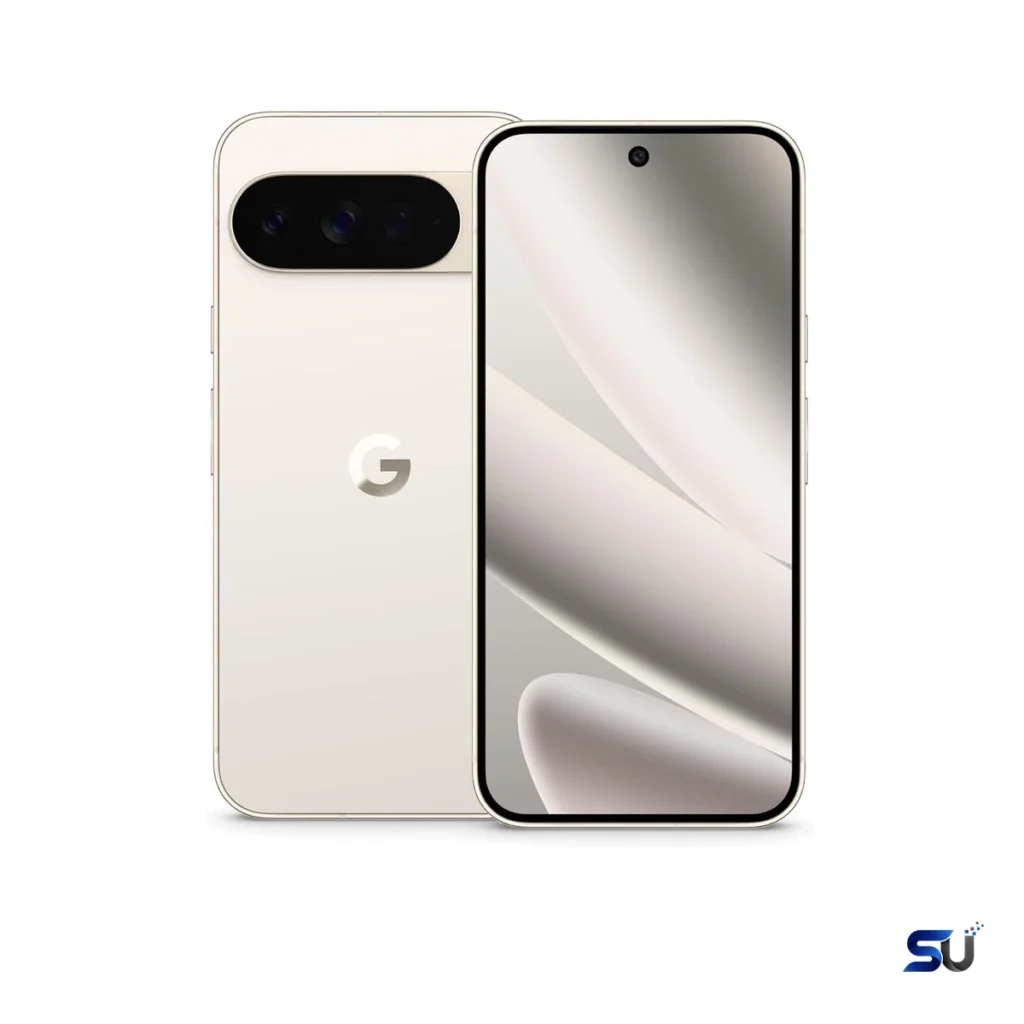
Google's AI-first philosophy gets room to breathe in the Google Pixel 10 Pro XL 16GB. With 16GB of RAM, a 6.8-inch Super Actua display, and the Tensor G5 chip designed around on-device Gemini, it's the Pixel for people who want Google's smartest features at full size.
Google's AI-first philosophy gets room to breathe in the Google Pixel 10 Pro XL 16GB. With 16GB of RAM, a 6.8-inch Super Actua display, and the Tensor G5 chip designed around on-device Gemini, it's the Pixel for people who want Google's smartest features at full size.
Launched alongside the rest of the Pixel 10 lineup on August 20, 2025, the Pixel 10 Pro XL 16GB reached US stores on August 28, 2025, starting at $1,199. It runs Android 16 and gets seven years of OS, security, and Pixel Drop updates — so a phone bought today should still receive fresh software in 2032, which is remarkable longevity.
Its smaller sibling, the Pixel 10 Pro, shares the cameras, chip, RAM, and software. Where the XL pulls ahead is size and stamina: a 6.8-inch screen instead of 6.3 inches, a 5,200 mAh battery, and faster 45W wired charging. If you watch lots of video, play games, or hate midday charging, the XL makes a strong case — it's the maxed-out Pixel experience.
Familiar Pixel styling carries over here, subtly refined. The camera bar still spans the back, letting the phone sit flat without wobbling. A polished aluminum frame is joined by Gorilla Glass Victus 2 on the front and back, and the rear glass gets a silky matte finish that resists fingerprints better than glossy phones — so it looks cleaner in daily use.
Measuring 162.8 x 76.6 x 8.5 mm and 232 grams, this is a big, substantial phone that most people will use two-handed. Prefer something smaller? The regular Pixel 10 Pro packs identical hardware into a 6.3-inch body that's easier to handle one-handed.
Dust and submersion in fresh water up to 1.5 meters for 30 minutes are no problem thanks to the IP68 rating — that covers rain, spills, and sink accidents. Still, skip swimming, salt water, and soapy water, which degrade the seals over time. Treat the rating as accident insurance, not an invitation to shoot underwater photos.
The color lineup stays understated: Obsidian (black), Porcelain (off-white), Moonstone (gray-blue), and Jade (pale green). Rather than anything flashy, Google is going for a premium, professional look, and the muted palette suits the phone's refined design.
Few phone screens get better than this 6.8-inch Super Actua display. The LTPO OLED panel delivers 1344 x 2992 resolution (486 pixels per inch), so text looks razor-sharp with no visible pixelation even up close. Its LTPO backplane shifts the refresh rate from 1Hz to 120Hz automatically, giving you buttery scrolling when swiping and real power savings with static content like an always-on clock.
Brightness is the real standout here. Google rates the panel at 2,200 nits for HDR and 3,300 nits peak, so you can read this screen comfortably in direct sunlight while most phones wash out. Contrast exceeds 2,000,000:1, which means blacks look truly black and HDR video shows punchy highlights with deep shadows.
Up front, Gorilla Glass Victus 2 resists scratches and drops better than older glass — though a hard fall on concrete can still crack it. For a $1,199 phone, a case and screen protector remain wise investments.
Cameras built the Pixel reputation, and the 10 Pro XL upholds it. All three rear lenses serve a real purpose, not just marketing. Google's computational photography still leads the industry.
Leading the trio is the 50MP main camera, pairing an f/1.68 aperture with a large 1/1.3-inch sensor to pull in plenty of light — night shots look clean rather than grainy. Optical image stabilization steadies the lens for sharper photos and smoother video, making this the camera you'll reach for most.
Next up, the 48MP ultrawide pairs an f/1.7 aperture with a 123-degree field of view, and doubles as a macro camera with autofocus for close-ups of flowers, food, or documents. Then there's the 48MP 5x telephoto (f/2.8) with true optical zoom for portraits and distant subjects, also carrying OIS — and stabilization on two lenses makes a visible difference at high zoom.
Pro Zoom pushes to 100x via Super Res Zoom, blending optical zoom with AI enhancement. At 100x you won't get gallery-quality images, but you can read signs or identify distant objects. What matters more is the practical range: Google promises optical-quality results at 0.5x, 1x, 2x, 5x, and 10x — the zoom levels people actually use.
Night Sight still excels, and now works for video too. Astrophotography captures the stars, Long Exposure handles light trails, Action Pan freezes motion, and full AI editing tools round out the package. Video also reaches 8K at 24/30fps with Video Boost, which uses cloud processing for better quality in difficult light.
Selfies get a 42MP front camera with a 103-degree ultrawide lens and autofocus, so group shots fit without a stick, plus 4K recording at 60fps. Across the board, video covers 8K (Video Boost), 4K/60, 1080p/240 slow-motion, 10-bit HDR, Cinematic Blur, and fused OIS+EIS stabilization — if you shoot lots of video, this phone keeps up with the best.
Don't let the name fool you — the Tensor G5 marks a bigger leap than it suggests. Built by TSMC on a 3nm process, it improves efficiency over the Samsung-made G4. The octa-core CPU splits into three clusters: one Cortex-X4 prime at 3.78 GHz, five Cortex-A725 performance cores at 3.05 GHz, and two Cortex-A520 efficiency cores at 2.25 GHz, balancing speed and battery life intelligently.
Geekbench 7 scores of around 2,000 single-core and 5,800 multi-core trail Qualcomm and Apple flagships — but benchmarks miss the real story. In daily use, scrolling, app switching, photo editing, and Gemini all feel fast and smooth. Google tunes this chip for its own software and AI workloads rather than benchmark charts, and that focus pays off.
That 16GB of RAM matters more than ever. On-device AI via Gemini Nano needs memory, and 16GB keeps apps and models ready without constant reloading — heavy multitaskers and tab hoarders will notice the difference. It also future-proofs the phone as apps grow more demanding.
Storage starts at 256GB in the US (no 128GB model), with 512GB and 1TB options, all on fast UFS storage for quick app installs. There's no microSD slot, so choose carefully. A dedicated Titan M2 chip handles encryption and secure boot separately, adding protection for sensitive data.
Games run well at high settings, even though Google doesn't market this as a gaming phone — the efficient 3nm chip sustains performance nicely. Marathon gamers might prefer phones with bigger vapor chambers, but most players will find the Pixel 10 Pro XL plenty capable.
At 5,200 mAh, the battery in the Google Pixel 10 Pro XL 16GB is the largest ever in a Pixel. Google claims 24+ hours of typical use and up to 100 hours with Extreme Battery Saver, which restricts apps and dims the screen for emergencies. In normal use, most people will finish the day with charge to spare; only heavy camera, navigation, and 5G use might demand an evening top-up, like any flagship.
Over a wire, charging hits 45W with a USB-C PPS charger, reaching about 70% in 30 minutes — a meaningful improvement for quick top-ups. One catch: the charger isn't in the box, just a cable, so you'll need to buy a 45W PPS charger separately if you don't own one.
The biggest charging upgrade is wireless. Qi2 magnets (Pixelsnap) deliver up to 25W and snap the phone onto chargers precisely, MagSafe-style. As the first Pixel with proper magnetic wireless charging, it ends the old alignment fiddling, and standard Qi pads work too. Battery Share also reverse-charges earbuds or a friend's phone in a pinch, though slowly.
Out of the box: Android 16 with Pixel UI on the Google Pixel 10 Pro XL 16GB. This is the cleanest Android available — no duplicate apps, no heavy skins, no bloatware. Pixel software feels smart, simple, and quick, exactly as fans expect.
Seven years of OS, security, and Pixel Drop updates match the industry best, and that long window helps justify $1,199. Few phones stay secure and useful for seven years, but Google commits to it — so the total cost of ownership looks better over time.
Intelligence runs through everything here. Gemini summarizes pages, drafts messages, and answers questions about your screen. Circle to Search looks up anything you circle. Magic Cue surfaces info proactively, like flight details when you call an airline. Call Assist screens spam and handles holds. Live Translate works in calls and messages across languages.
Plenty of this processing happens on-device via Tensor G5 and Gemini Nano, keeping everyday requests fast and private, while the cloud handles heavier tasks. And with 16GB of RAM, these AI features stay responsive, since models need memory to run smoothly.
On the US model (GUL82), sub-6 GHz and mmWave 5G deliver the fastest speeds on carriers like Verizon, with LTE/GSM/UMTS fallback. Dual eSIM (no physical tray) stores 8+ profiles with two active at once — handy for travelers and dual-number users — and setup is just a carrier QR code scan in Settings.
The spec sheet keeps going: Wi-Fi 7 (2.4/5/6 GHz), Bluetooth 6.0, NFC payments, ultra-wideband (precise finding, car keys), and dual-band GNSS (GPS, GLONASS, Galileo, BeiDou, QZSS, NavIC). A USB-C 3.2 port handles fast wired transfers to a computer.
Authentication comes via an ultrasonic in-display fingerprint sensor and Face Unlock — the ultrasonic type beats older optical sensors, especially with damp fingers. Titan M2, secure boot, and seven years of patches round out strong security, keeping your data protected.
Strengths:
Trade-offs:
Yes. Qi2 magnetic charging (Pixelsnap) reaches 25W, standard Qi works too, and Battery Share reverse-charges accessories like earbuds in a pinch.
All models include 16GB of RAM. In the US, storage options are 256GB, 512GB, and 1TB. There is no microSD slot, so choose your capacity carefully.
Yes. The IP68 rating resists dust and fresh-water immersion up to 1.5 meters for 30 minutes. However, avoid swimming, salt water, and soapy water.
Google promises seven years of OS upgrades, security patches, and Pixel Drop features from launch. That keeps the phone current through 2032.
No. The US GUL82 uses dual eSIM only. It stores 8+ profiles with two active simultaneously. Other regions get nano-SIM plus eSIM instead.
Mainly size and battery. The XL offers a 6.8-inch display versus 6.3 inches, a 5,200 mAh battery versus 4,870 mAh, and 45W versus 30W charging. Cameras, chip, RAM, and software are identical. Therefore, choose the XL for the biggest screen and longest battery life.
Buy the XL if you want the largest Pixel display, the best battery life in the lineup, and 16GB of RAM for demanding AI features. The seven-year software promise also gives it longer useful life than most rivals, which helps offset the $1,199 price. However, the phone is big and heavy at 232 grams, there is no microSD slot, and the 45W charger costs extra. If you prefer compact phones, the smaller Pixel 10 Pro offers the same cameras and chip. If raw speed matters most, rival flagships with faster processors might suit you better. For Pixel fans who want the complete package, though, the XL is the clear choice.