
Dynamic AMOLED 2X
12
512
200MP f/1.7 wide (OIS) + 12MP f/2.2 ultrawide + 10MP f/2.4 3x telephoto (OIS) + 10MP f/4.9 10x periscope (OIS)
Qualcomm Snapdragon 8 Gen 2 for Galaxy (4nm)
5000
6.8 inches
Dynamic AMOLED 2X
3088 × 1440 pixels (QHD+)
120
1750
["HDR10+"]
Corning Gorilla Glass Victus 2
200MP f/1.7 wide (OIS) + 12MP f/2.2 ultrawide + 10MP f/2.4 3x telephoto (OIS) + 10MP f/4.9 10x periscope (OIS)
12MP f/2.2
3x optical, 10x optical periscope, up to 100x Space Zoom
8K@24/30fps, 4K@30/60fps, 1080p@240fps, HDR10+
Yes
Yes (wide, 3x telephoto, 10x periscope)
Qualcomm Snapdragon 8 Gen 2 for Galaxy (4nm)
8
Adreno 740
12
512
UFS 4.0
No
163.4 × 78.1 × 8.9 mm
234
Armor Aluminum frame, Gorilla Glass Victus 2 front and back
IP68
Phantom Black, Cream, Green, Lavender, Graphite, Sky Blue, Lime, Red
5000
45W wired (PD 3.0)
All-day battery life
5G (sub-6 and mmWave)
Dual SIM + eSIM
Bluetooth 5.3
Wi-Fi 6E, tri-band
GPS, GLONASS, BDS, GALILEO, QZSS
Yes
USB Type-C 3.2
Samsung DeX, UWB
Android 13
One UI 5.1
4 major OS upgrades, 5 years of security updates
4927 (Geekbench 5.1 multi-core)
1241531 (AnTuTu v9)
126h endurance rating, 13:24h active use
65% in 30 minutes (45W wired)
-25.6 LUFS
234
8.9
Gorilla Glass Victus 2 front and back, Armor Aluminum frame
Under-display, ultrasonic
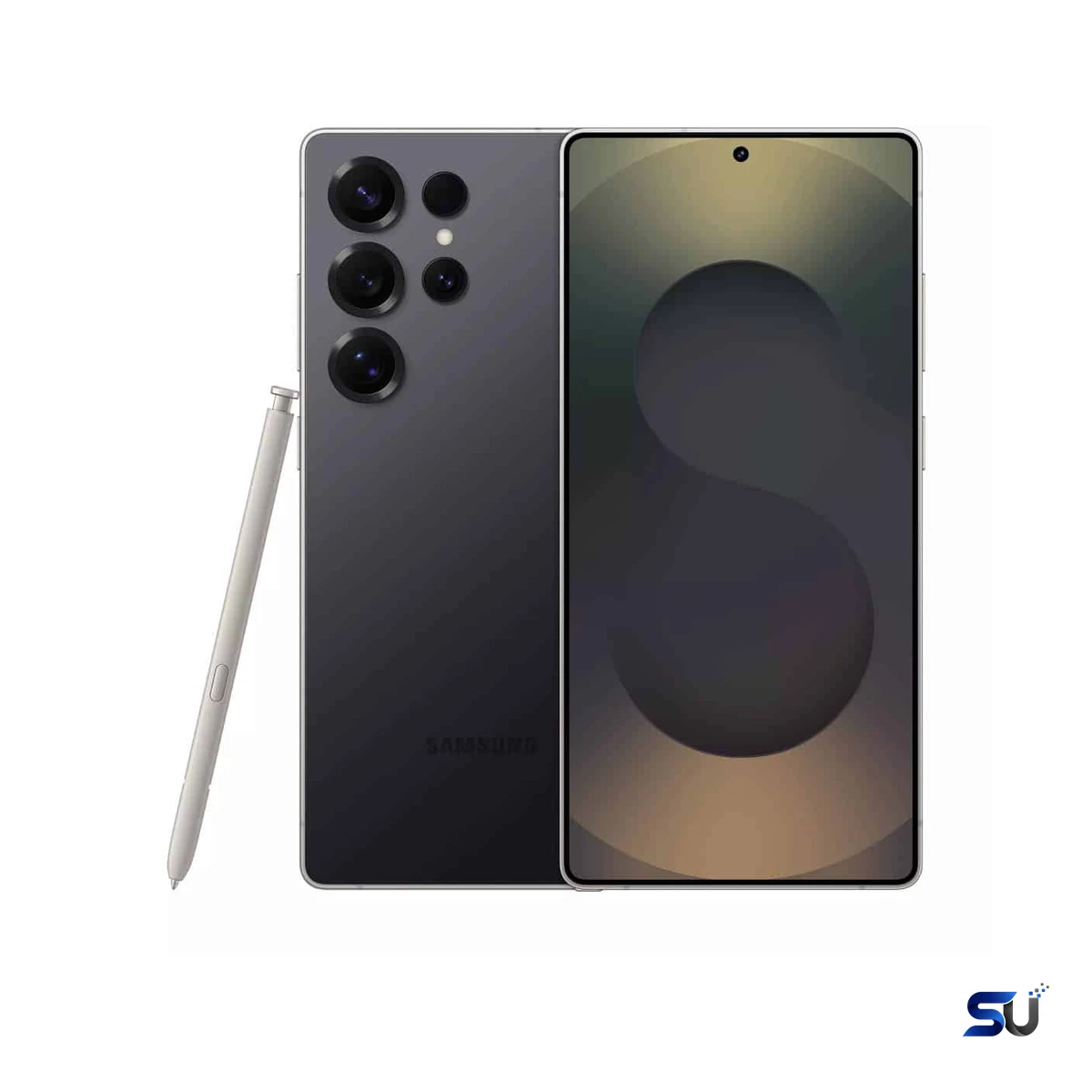
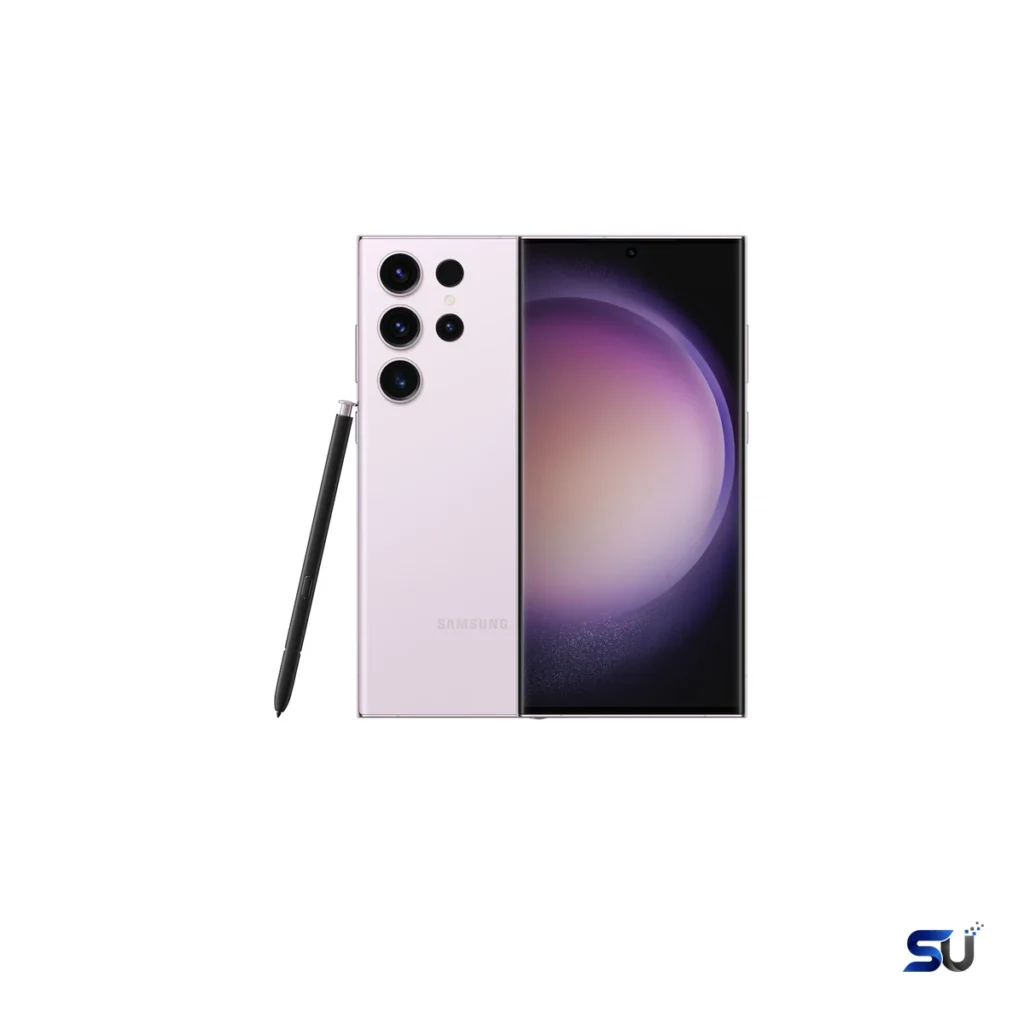
The Samsung Galaxy S23 Ultra 12GB 512GB is Samsung's early-2023 flagship phone, and it remains one of the most complete devices the company has shipped. It pairs a 200MP quad camera with a 6.8-inch QHD+ 120Hz AMOLED display. Meanwhile, the Snapdragon 8 Gen 2 for Galaxy chipset drives 12GB of RAM and 512GB of fast UFS 4.0 storage. In addition, a built-in S Pen turns the large screen into a note-taking canvas. This configuration targets buyers who want maximum capability in one device.
The Samsung Galaxy S23 Ultra 12GB 512GB is Samsung's early-2023 flagship phone, and it remains one of the most complete devices the company has shipped. It pairs a 200MP quad camera with a 6.8-inch QHD+ 120Hz AMOLED display. Meanwhile, the Snapdragon 8 Gen 2 for Galaxy chipset drives 12GB of RAM and 512GB of fast UFS 4.0 storage. In addition, a built-in S Pen turns the large screen into a note-taking canvas. This configuration targets buyers who want maximum capability in one device.
For practical buyers, the appeal is straightforward. You get class-leading zoom photography, smooth everyday performance, and a battery that comfortably lasts a full day. However, the 234g weight and tall frame demand two-handed use most of the time. The sections below explain every specification in plain terms, so you can judge whether this phone fits your needs.
Samsung announced the Galaxy S23 Ultra on February 1, 2023, and released it on February 17, 2023. Specifically, the unit covered here carries model number SM-S918B/DS. It ships in the United States with 12GB of RAM and 512GB of storage. This is the top mainstream configuration, sitting above the 8GB/256GB base model. In practice, the extra RAM keeps more apps alive in the background. Meanwhile, 512GB suits buyers who shoot lots of photos and 4K or 8K video.
The phone launched with Android 13 and One UI 5.1. Samsung promised four generations of OS upgrades and five years of security updates for this series. As a result, the device stays current far longer than most Android phones. That long support window also protects resale value. For buyers who keep phones for three or four years, this matters.
The Samsung Galaxy S23 Ultra 12GB 512GB packs the following headline hardware:
Overall, these specs place the phone firmly in the ultra-premium tier. Next, each area gets a closer look in practical terms.
The screen measures 6.8 inches diagonally and uses Samsung's Dynamic AMOLED 2X technology. Resolution reaches 3088 x 1440 pixels, marketed as QHD+. At this pixel density, text looks razor sharp and fine photo detail stays crisp. In practice, you notice the clarity when reading small fonts or editing images. Finally, colors look rich, and deep blacks give movies extra punch.
The refresh rate adapts between 1Hz and 120Hz based on screen content. Static pages drop to low refresh rates to save battery. Scrolling and gaming jump to 120Hz for extra smoothness. High refresh motion makes the interface feel instant and cuts blur in fast games. Peak brightness hits 1750 nits, so the screen stays readable under direct sunlight. HDR10+ support adds richer contrast in supported movies and shows.
The display curves gently at the edges rather than sitting flat. The curve gives the phone a premium look. Still, some users prefer flat screens for tempered-glass protectors. Corning Gorilla Glass Victus 2 covers the front and back for improved drop and scratch resistance. The large canvas suits split-screen multitasking, video watching, and S Pen writing. However, one-handed use is difficult, so buyers with smaller hands should try the size first.
The rear camera array is the headline feature. First, a 200MP main sensor leads, backed by three supporting cameras. Together they cover ultrawide, 3x telephoto, and 10x periscope zoom. Optical stabilization appears on the main, 3x, and 10x cameras. As a result, handheld shots stay sharp even at long zoom distances. For buyers who photograph concerts, wildlife, or distant landmarks, this flexibility is rare.
The 200MP wide camera uses an f/1.7 lens with multi-directional phase-detection autofocus and optical image stabilization. By default, it bins pixels down to 12MP for cleaner, brighter photos. You can also shoot at full 200MP for maximum detail in good light. In practice, pixel binning gives the best of both worlds: sharp daylight shots and usable low-light images. Night mode stacks multiple frames to pull detail from dark scenes. The large sensor also enables natural background blur in close-up shots.
The 12MP ultrawide camera captures a 120-degree field of view at f/2.2. It suits landscapes, architecture, and group photos. Next, the 10MP 3x telephoto offers f/2.4 optics with stabilization for portraits and mid-range zoom. Then the 10MP periscope reaches 10x optical zoom at f/4.9, again with stabilization. Samsung's Space Zoom extends to 100x digitally, although quality drops heavily past 30x. Still, even 10x optical shots look impressively detailed. For practical use, the two telephoto lenses cover almost every framing need without moving your feet.
The 12MP front camera uses an f/2.2 lens with dual-pixel autofocus. It records 4K video at 30 or 60fps, which is excellent for vlogging. Video from the rear cameras reaches 8K at 24 or 30fps. In addition, 4K recording runs up to 60fps, and slow motion hits 240fps at 1080p. HDR10+ video and gyro-based stabilization keep footage smooth and punchy. For most creators, the 4K60 mode offers the best balance of quality and file size. 8K remains a niche option because files grow enormous.
Samsung used Qualcomm's Snapdragon 8 Gen 2 for Galaxy in every region for this series. This is an overclocked version of the standard 8 Gen 2, with the prime Cortex-X3 core running at 3.36GHz. The chip uses a 4nm process, which balances speed and efficiency. In everyday terms, apps open instantly and heavy games run smoothly. Multitasking stays fluid because the chip rarely breaks a sweat.
The octa-core CPU combines one 3.36GHz Cortex-X3 prime core, two 2.8GHz Cortex-A715 performance cores, two 2.8GHz Cortex-A710 cores, and three 2.0GHz Cortex-A520 efficiency cores. The Adreno 740 GPU handles graphics. Together, they run demanding games like Genshin Impact at high settings without stutter. The large vapor-chamber cooling system helps sustain performance during long sessions. As a result, frame rates stay stable instead of dropping after ten minutes. Casual users simply notice that everything feels fast.
This configuration includes 12GB of LPDDR5X RAM. That is plenty for heavy multitasking, and it future-proofs the phone for years. Storage uses the UFS 4.0 standard at 512GB, which reads and writes far faster than older UFS 3.1. App installs, file transfers, and 4K video editing all benefit. However, there is no microSD slot, so 512GB is your ceiling. Buyers should weigh their photo and video habits before choosing. Cloud storage or a USB-C drive can cover overflow.
The 5000mAh battery is large by flagship standards. In real-world use, it comfortably lasts a full day of heavy use. Lighter users can stretch it toward two days. Independent lab testing recorded a 126-hour endurance rating with 13 hours and 24 minutes of active use. Standby drain is low, so the phone sips power overnight. For travelers, that endurance means less charger anxiety.
Wired charging runs at 45W with USB Power Delivery 3.0. A compatible charger refills about 65% in 30 minutes. Note that Samsung does not include a charger in the box, so you need your own 45W adapter for top speed. Wireless charging works at up to 15W with Qi pads. Reverse wireless charging at 4.5W can top up earbuds or a smartwatch in a pinch. Overall, charging is fast but not class-leading, since some rivals exceed 65W.
The phone measures 163.4 x 78.1 x 8.9 mm and weighs 234g. It feels dense and solid, with flat sides and a slightly curved screen. The frame uses Armor Aluminum, which Samsung says resists dents better than standard aluminum. Gorilla Glass Victus 2 covers the front and back. An IP68 rating means the phone survives submersion in 1.5 meters of fresh water for 30 minutes. Dust stays out too. In practice, it handles rain, spills, and dusty pockets without drama.
Color options include Phantom Black, Cream, Green, and Lavender as standard finishes. Samsung also sold exclusive colors - Graphite, Sky Blue, Lime, and Red - through its own store. Availability varies by region and retailer. The ultrasonic in-display fingerprint sensor unlocks quickly and works with slightly damp fingers. Stereo speakers round out the package with loud, clear output.
The phone launched with Android 13 and Samsung's One UI 5.1 interface. One UI adds features like Samsung DeX, which turns the phone into a desktop-like experience on an external display. It also includes deep S Pen integration, Knox security, and extensive customization. Samsung committed to four generations of Android OS upgrades for this series. In addition, it promised five years of security patches. Consequently, that support runs well past the typical two-to-three-year ownership cycle. For long-term buyers, few Android phones match this policy.
The Samsung Galaxy S23 Ultra 12GB 512GB supports 5G on both sub-6GHz and mmWave bands. Actual speeds depend on your carrier and location. Dual SIM support combines a nano-SIM with eSIM, so you can run two lines. Wi-Fi 6E connects to the less congested 6GHz band where routers support it. Bluetooth 5.3 pairs with modern earbuds and watches using less power. NFC handles contactless payments and tap-to-pair accessories.
The USB-C port follows the USB 3.2 standard, which moves files much faster than USB 2.0. It also outputs video for DeX or screen mirroring. Ultra-wideband (UWB) helps locate Samsung SmartTags with precision. Satellite positioning covers GPS, GLONASS, BeiDou, Galileo, and QZSS for accurate navigation. The built-in S Pen deserves a mention too. It slides into a silo at the phone's base and charges automatically. Beyond writing, it works as a remote shutter and presentation clicker over Bluetooth.
Lab testing gives useful context for the spec sheet. Published results for this exact device include an AnTuTu v9 score of 1,241,531. Geekbench 5.1 recorded a multi-core score of 4,927. These are flagship-tier numbers for the Snapdragon 8 Gen 2 generation. As a result, they translate into fast app launches and smooth gaming in real use. Synthetic scores never tell the whole story, however, so treat them as one data point.
Battery testing recorded a 126-hour endurance rating with 13 hours and 24 minutes of active use. The display measured up to 1,274 nits in testing, below the 1,750-nit peak claim but still very bright. Loudspeaker testing returned -25.6 LUFS, rated as very good. Charging tests showed about 65% refilled in 30 minutes on a 45W adapter. Overall, the lab data backs up the spec sheet without surprises.
The Samsung Galaxy S23 Ultra 12GB 512GB has clear practical strengths:
Buyers should weigh these factual limitations:
This phone suits photography enthusiasts who want real optical zoom without carrying a camera. It also fits power users who edit video, multitask heavily, or use DeX as a portable workstation. Note-takers benefit from the siloed S Pen, which no other mainstream flagship includes. Business users gain Knox security and years of updates. In short, it rewards buyers who use their phone as a primary creative and productivity tool.
It is less ideal for buyers who prioritize compact size or one-handed comfort. Budget-conscious shoppers can find strong mid-range phones for far less. Those who rarely use the camera zoom or S Pen pay for features they may not touch. If 512GB exceeds your storage needs, the 256GB configuration saves money. Consider your actual usage before paying the ultra-premium price.
No. This configuration has no microSD slot, so storage stays fixed at 512GB. That is generous for most users, holding tens of thousands of photos. Heavy 8K video shooters should plan around it. Cloud storage, USB-C flash drives, or wireless transfer to a computer cover overflow. Therefore, check your current storage use before buying.
Yes, it carries an IP68 rating. That means it withstands submersion in up to 1.5 meters of fresh water for 30 minutes. It also resists dust fully. However, the rating does not cover salt water, chlorinated pools, or high-pressure jets. In addition, liquid damage usually falls outside warranty coverage. Instead, treat water resistance as insurance, not an invitation to swim with the phone.
Only memory and storage differ. Both share the same chipset, cameras, display, battery, and build. The 12GB model keeps more apps in memory during heavy multitasking. The 512GB storage doubles space for photos, videos, and games. If you upgrade phones every two years and store photos in the cloud, the base model may suffice. Power users and long-term owners gain more from this configuration.
Yes. The phone supports 5G on sub-6GHz and mmWave bands, plus 4G LTE fallback. It works across major US carriers. Still, exact band support varies by model number, so confirm compatibility with your carrier before importing a unit. Dual SIM with nano-SIM and eSIM lets you run personal and work lines together. Finally, travelers can add a local eSIM abroad without swapping cards.
Samsung promised four generations of Android OS upgrades and five years of security updates for the S23 series. The phone launched with Android 13, so support extends several versions beyond that. Monthly or quarterly security patches keep the device protected. This long window beats most Android rivals. For buyers who keep phones for years, it is a genuine advantage.
The S Pen charges automatically when docked in its silo inside the phone. It uses a supercapacitor, so a short docking time restores its charge. Bluetooth features like remote camera shutter and presentation controls need that charge. Basic writing and navigation work passively without power. If the pen runs flat, docking it for a few minutes brings it back. You never need a separate charger for the pen.
The Samsung Galaxy S23 Ultra 12GB 512GB remains a strong choice for buyers who want Samsung's most capable phone from this generation. Its 200MP camera system, bright 120Hz display, and long software support cover the essentials. The 234g weight and large frame are the main trade-offs. Ultimately, buyers who accept the size get a phone that stays fast and current for years.