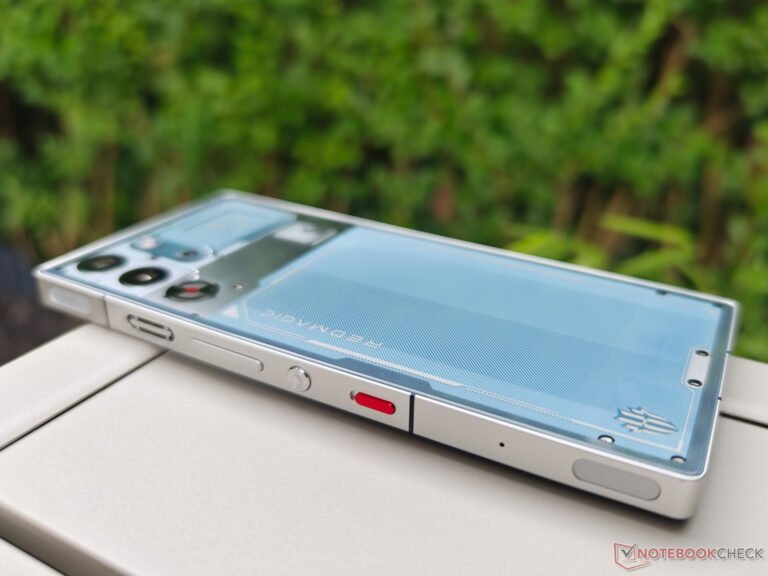
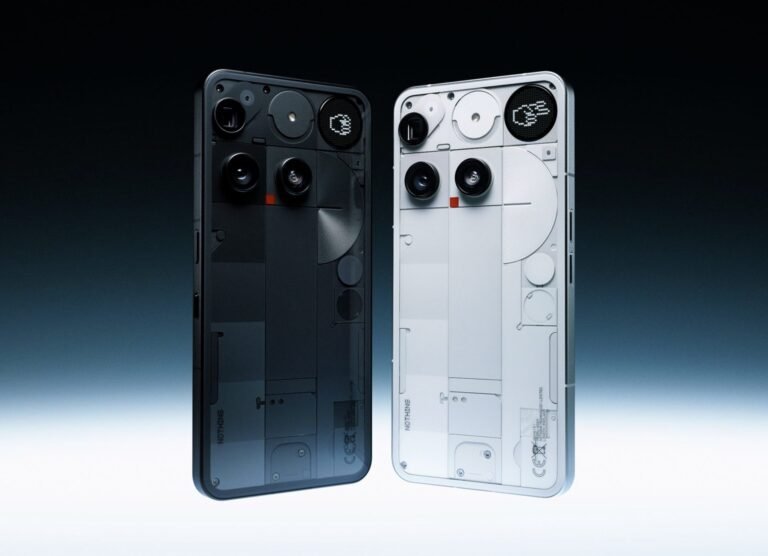
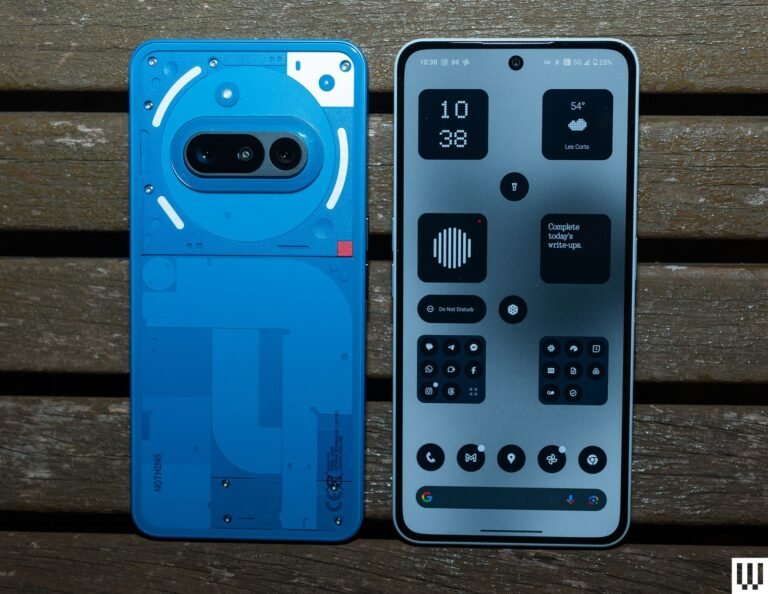
Nothing has given this model a difficult job. It must feel more special than a normal mid-range phone without becoming so expensive that a discounted flagship looks smarter. The Nothing Phone 4a Pro answers with an unusual design, a large screen, clean software and a periscope camera. The question is whether those strengths justify $599 for the 12GB/256GB version.
There is plenty to like here. The display is large and smooth, the interface avoids unnecessary clutter, and 256GB gives games, photos and downloaded media useful room. Its camera system is more flexible than most phones in this price range. Still, the IP65 rating, missing wireless charging and mixed camera processing make the full-price decision less obvious.
Nothing Phone 4a Pro review: quick verdict
This is a good choice for someone who wants a big Android phone that does not look like every rival. The 6.78-inch AMOLED screen is one of its main attractions. Nothing OS 4.1 also gives Android 16 a clean, distinctive look without making common tasks difficult.
The 12GB of RAM is generous, although the 256GB of storage is the more practical reason to choose this version. Extra memory helps when several apps stay open, but it cannot turn the Snapdragon 7 Gen 4 into a flagship chip. Everyday work should be fast, while demanding games may require sensible graphics settings.
The cameras create the strongest case for the Pro name. A 50MP main camera and 50MP periscope telephoto give more framing options than a simple dual-camera phone. The 8MP ultra-wide is less impressive, and independent reviews report inconsistent processing in difficult light. This is a flexible camera phone, not the safest point-and-shoot option.
Pros and cons
Pros
- Large and smooth 144Hz AMOLED screen
- Clean Nothing OS software
- Useful periscope telephoto camera
- 12GB RAM and 256GB storage
- Dependable global battery capacity
- Distinctive design with practical notification features
Cons
- No wireless charging
- IP65 protection trails stronger rivals
- Camera results can vary in difficult light
- The 210g body will feel large to some people
- No expandable storage
- Regional carrier and update support need checking
Important specifications
| Feature | Specs Universe value |
|---|---|
| Display | 6.78-inch AMOLED, 1264 × 2800, 144Hz |
| Processor | Qualcomm Snapdragon 7 Gen 4 |
| Memory | 12GB RAM, 256GB UFS 3.1 storage |
| Rear cameras | 50MP main + 50MP periscope telephoto + 8MP ultra-wide |
| Front camera | 50MP |
| Battery | 5,080mAh global / 5,400mAh India |
| Charging | 50W wired; no wireless or reverse charging |
| Software | Android 16 with Nothing OS 4.1 |
| Protection | IP65 |
| Dimensions | 163.66 × 76.62 × 7.95mm |
| Weight | 210g |
| Colors | Silver and Black; availability varies |
These values come from the published Nothing Phone (4a) Pro 12GB specifications. The battery difference matters when comparing regional reviews. A result from the 5,400mAh India version should not be presented as evidence for the 5,080mAh global model.
A design that earns attention
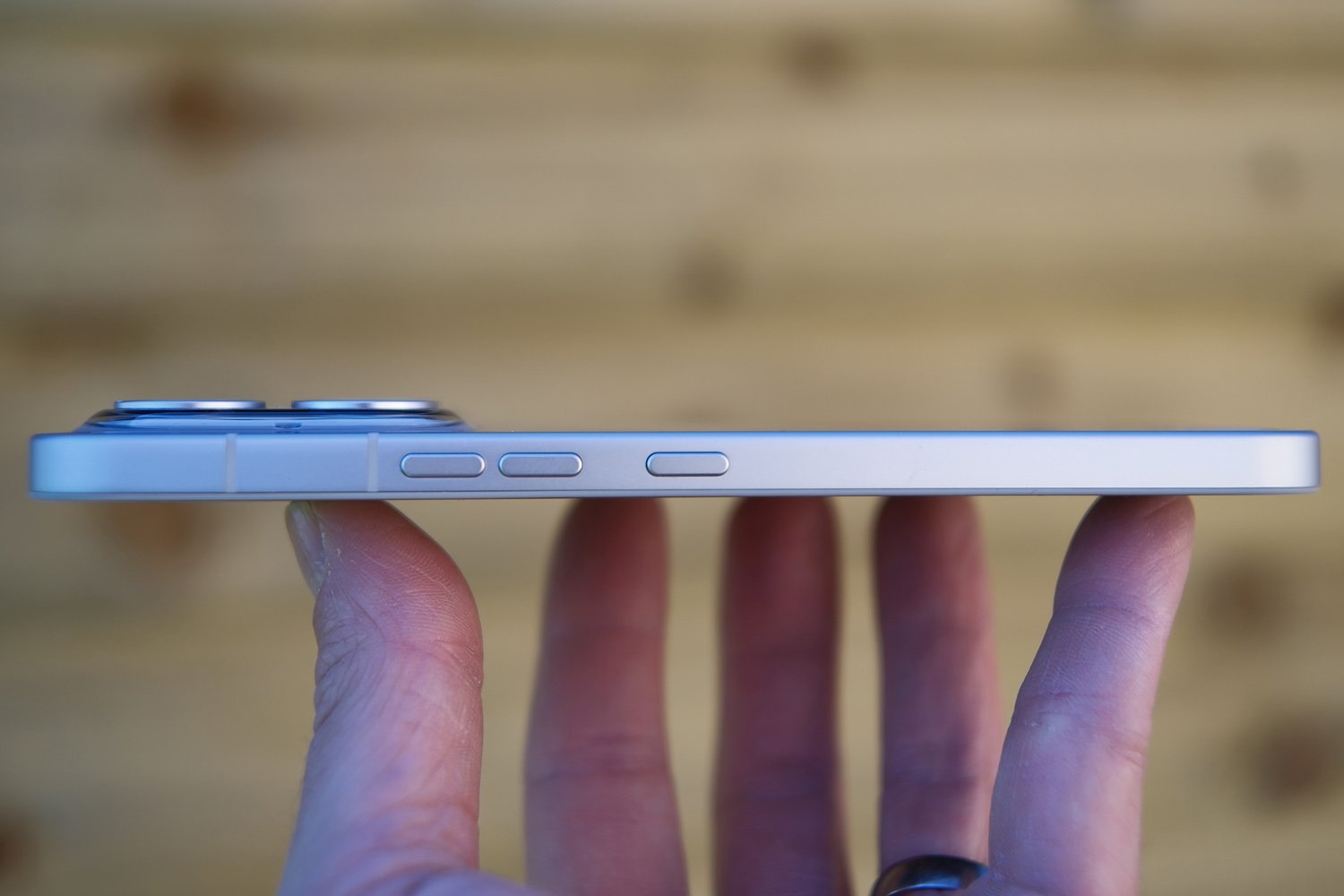
Nothing has kept enough of its visual style to make the phone easy to recognize. The published specification page lists an aluminium frame with glass on the front and rear. Silver makes the hardware details more obvious, while Black looks quieter. Availability can vary, so the exact color choice may depend on the retailer.
The rear notification area is more than decoration. It can show simple information without requiring the main screen. That is useful for timers, selected alerts and quick status checks. It will not change how everyone uses a phone, but at least it has a clear purpose.
Size is the tradeoff. At 163.66mm tall, 76.62mm wide and 210g, this is a substantial phone. The 7.95mm thickness keeps it from feeling needlessly bulky on paper, but a case will add more width and weight. Anyone moving from a compact model should not ignore those numbers.
The IP65 rating provides useful dust and water protection, though several competitors offer IP68. We would be comfortable with ordinary rain and careful daily use. We would not treat it like a phone designed for regular immersion.
The screen carries the experience
The 6.78-inch AMOLED panel gives video, maps, games and long articles plenty of room. Its 1264 × 2800 resolution keeps text and interface elements sharp. The refresh rate reaches 144Hz, so supported movement and scrolling can look very smooth.
A 144Hz label does not mean every app runs at that rate all the time. Software, power settings and the content itself determine what appears on screen. Even so, the combination of AMOLED contrast, high resolution and a fast refresh rate is strong for this class.
Independent reviews consistently praise outdoor visibility. The Specs Universe page also records a 90Hz base PWM measurement and a 2,173Hz secondary measurement, close to the listed 2,160Hz nominal figure. People who are sensitive to screen flicker should still view the phone in person when possible, because comfort varies.
Performance and gaming
The Qualcomm Snapdragon 7 Gen 4 sits at the center of the phone. It is paired here with 12GB of physical RAM and 256GB of UFS 3.1 storage. That combination suits messaging, social apps, navigation, streaming and normal photo editing. It should also keep several apps available without frequent reloads.
Specs Universe records a Geekbench 6.7 result of 1,320 for single-core work and 4,188 for multi-core work. Those figures help place the processor, but they are not a promise that every app will behave identically. Software version, temperature and background activity can change a benchmark result.
There is no independently verified AnTuTu score or gaming frame-rate result on the device page, so we will not invent one. Published reviews describe everyday performance as smooth. For demanding games, the sensible approach is to adjust graphics settings instead of expecting a mid-range processor to behave like the latest flagship.
The page reports no significant throttling in sustained-load testing. That is encouraging, but game behavior can still vary by title and update. The 12GB RAM is useful for multitasking. The 256GB capacity matters more if large games or offline video are part of the plan, especially because expandable storage is not supported.
Nothing Phone 4a Pro camera
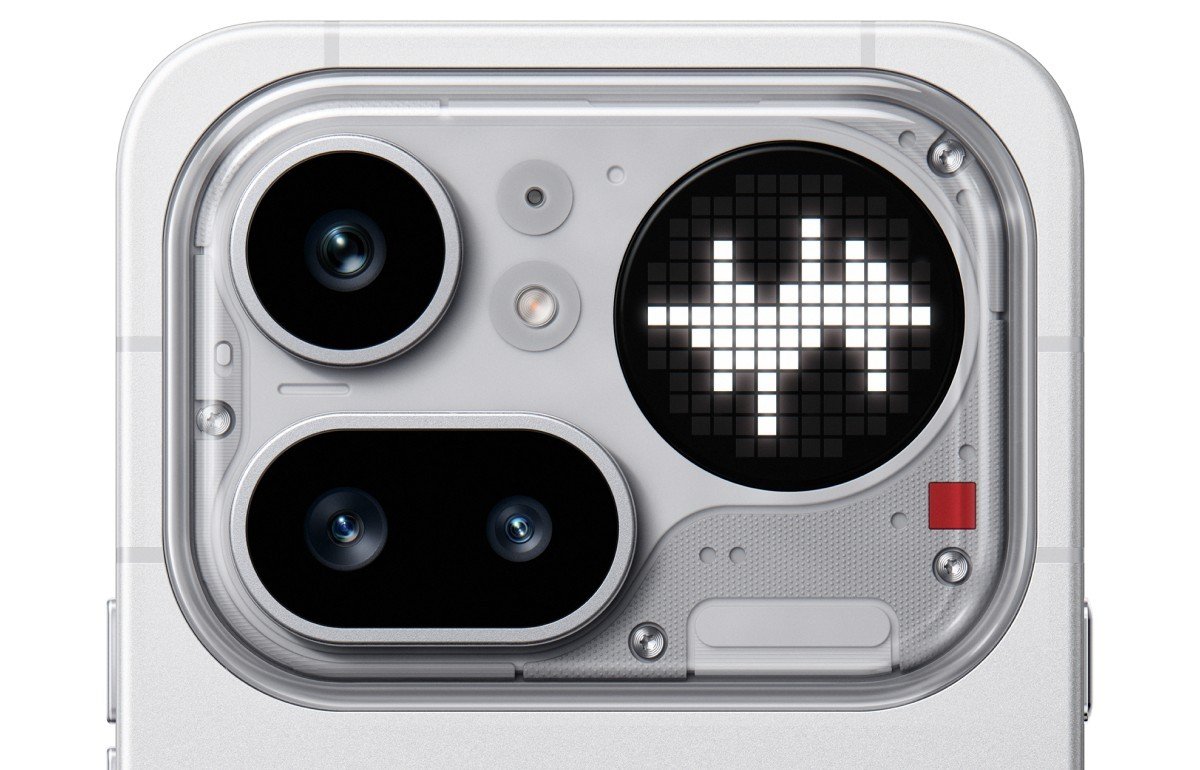
The rear system combines a 50MP main camera, a 50MP periscope telephoto and an 8MP ultra-wide. That gives the phone three distinct viewpoints. The main camera handles ordinary scenes, the periscope helps with distant subjects, and the ultra-wide fits more into the frame.
The telephoto is the most interesting addition. Many mid-range phones fill the rear panel with cameras but offer little real flexibility. A dedicated periscope changes how portraits, buildings, signs and stage shots can be framed. Up to 140x digital zoom is available, although extreme digital magnification should be treated as an occasional tool rather than the normal shooting mode.
Independent testing gives the main camera a generally positive daylight report. Detail can be good, and the telephoto can produce useful results at sensible magnification. The common concern is consistency. High-contrast scenes, low light and movement can expose processing or exposure problems. A phone with more dependable automatic processing may produce fewer failed shots.
The 8MP ultra-wide is the weakest member of the group. It remains useful for a large building or crowded room, but it cannot match the detail from either 50MP camera. That difference becomes clearer after dark. A Pro name does not make every lens equally good.
The front camera is 50MP, matching the Specs Universe device record. Video recording reaches 4K, and optical image stabilization is included for the supported rear camera. These features add useful options, but they do not remove the need for stable processing. Repeated owner discussions also praise the available zoom while raising concerns about difficult lighting. One comment is not proof; the repeated pattern is simply worth knowing.
Software stays clean
Android 16 and Nothing OS 4.1 provide the software base. Nothing keeps familiar Android behavior while changing icons, widgets, the lock screen and several quick controls. The monochrome option looks tidy, though colorful icons can be faster to recognize. Fortunately, the visual style is a choice rather than a rule.
The Essential Key can capture information for Nothing’s organizational tools. It may help if screenshots, reminders and short notes often disappear into different apps. If an existing notes system already works, the button is less important. We like that the feature is available without making the whole interface depend on it.
Update support must be checked for the exact market and model. The Specs Universe record does not assign one universal promise; it tells readers to verify the regional support page. That is the responsible approach for a phone sold through different channels. US purchasers should confirm both the software commitment and warranty terms before ordering.
Nothing Phone 4a Pro battery life and charging
The global model has a 5,080mAh battery, while the India version has 5,400mAh. This US-focused assessment therefore uses the 5,080mAh figure when discussing the likely experience. Independent reviews generally describe comfortable full-day use, but screen brightness, mobile signal, gaming and camera work can change the result substantially.
The Specs Universe battery test records about 18 hours of Wi-Fi web use. That is a defined test result, not a promise of 18 hours for every person. Mixed use includes standby time, cellular connections, video, location services and background apps, so real endurance will differ.
Wired charging reaches 50W. The recorded charging test shows 50 percent in 22 minutes, 80 percent in 38 minutes and a full charge in 67 minutes. Those times make a short top-up useful before leaving home. Charger choice and temperature can affect the result.
Wireless charging and reverse charging are not supported. That is easy to accept if a cable is already the normal routine. It is more frustrating at $599 when a charging pad is already on the desk or bedside table.
Connectivity and US use
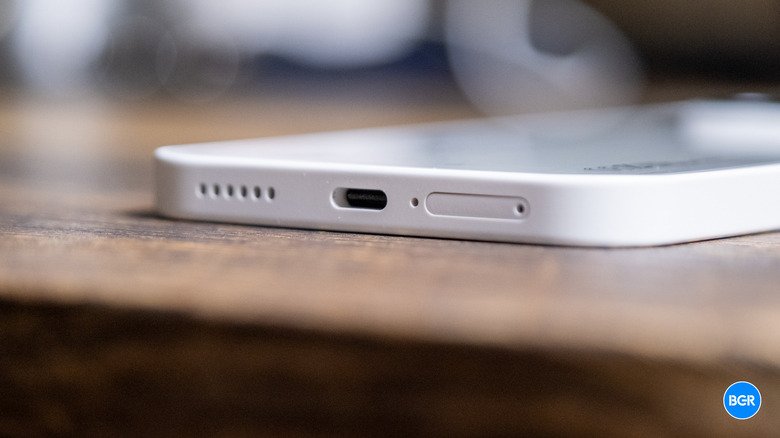
The phone supports 2G, 3G, 4G LTE and 5G, along with Wi-Fi 6, Bluetooth 5.4, NFC and USB Type-C. It uses dual nano-SIM cards, while eSIM support can vary by region. Navigation support includes GPS, A-GPS, GLONASS, Galileo and BeiDou.
That list does not guarantee activation on every US carrier. Network bands, carrier approval and the seller’s model number all matter. Confirm compatibility with the chosen carrier before the return window closes. Buying through an authorized US channel also makes warranty questions easier than importing a regional version.
Sound, security and daily controls
Specs Universe records a loudspeaker result of 88.9dB. A single number cannot describe balance, bass or clarity, but it gives a useful indication of available volume. Published listening impressions should guide the final judgment on sound quality. Headphones remain the better option when detail or privacy matters.
An optical fingerprint sensor sits under the display. Its position keeps the front clean and makes unlocking convenient when the phone rests on a table. As with any optical reader, a dry finger, a poor screen protector or careless placement can affect recognition. A PIN remains important as the backup.
The physical controls include volume, power and Essential Key buttons. There are no shoulder triggers, which is expected because this is not a dedicated gaming phone. The extra key is useful only if Nothing’s capture and organization features become part of the daily routine. Otherwise, it is simply another button to learn.
The linear vibration motor should provide clearer feedback than a basic rotating motor, although Specs Universe has not supplied a hands-on judgment about its feel. That distinction matters. A specification can identify the motor type, but it cannot prove that every tap feels precise. The same caution applies to speaker tone and button feedback.
Price and the 12GB decision
The US launch price is $499 for the 8GB/128GB configuration and $599 for 12GB/256GB. The lower price is attractive because the screen, processor and camera concept remain central to the phone. Paying another $100 is mainly about memory and storage.
We would choose 12GB/256GB for large games, regular 4K recording or a substantial offline media library. For lighter use and cloud storage, 8GB/128GB should be enough. The extra RAM may improve multitasking, but 256GB is the part most likely to remain useful over several years.
At $599, compare sale prices carefully. A discounted higher-end phone may offer stronger performance, tougher water protection or longer support. If this version falls closer to $499, its storage, screen and periscope camera make much more sense together.
Three realistic alternatives
Google Pixel 10a: Choose the Pixel for more dependable automatic photography, a smaller body and a longer published software commitment. Choose Nothing for the larger 144Hz screen, more unusual design and dedicated periscope camera.
Samsung Galaxy S25 FE: Samsung makes sense when a sale brings it close to this price. It offers a familiar ecosystem and stronger water protection. Nothing feels less conventional and gives its screen and software a clearer visual identity.
OnePlus 13R: Consider the OnePlus when performance and fast charging come first, especially if remaining stock receives a discount. The Nothing phone is the more interesting choice for design and a periscope-based camera system. Availability and warranty coverage should decide any purchase of an older model.
Who should buy it?
- Buy it if a large, smooth screen and distinctive design matter every day.
- Choose it if a periscope camera is more useful than the safest automatic photo processing.
- Pick 12GB/256GB when storage is a real need, preferably at a discount.
- Skip it if wireless charging, compact size or IP68 protection is essential.
- Keep a recent Nothing phone if it still works well; design changes alone are not enough reason to upgrade.
Nothing Phone 4a Pro review verdict
The Nothing Phone 4a Pro is worth considering for its 6.78-inch AMOLED screen, clean software and flexible rear camera system. It looks different without making daily use difficult. The 12GB/256GB version also provides enough memory and storage for heavier use.
The main reason not to buy it is value at $599. No wireless charging, IP65 protection and inconsistent camera processing leave room for stronger alternatives. Carrier compatibility and regional software support also deserve a check before purchase.
We would buy the 8GB/128GB model at $499 if its storage is sufficient. The reviewed 12GB/256GB version becomes easier to recommend during a good sale. Choose it for the bigger storage, large screen and periscope camera—not because 12GB of RAM makes it a flagship.