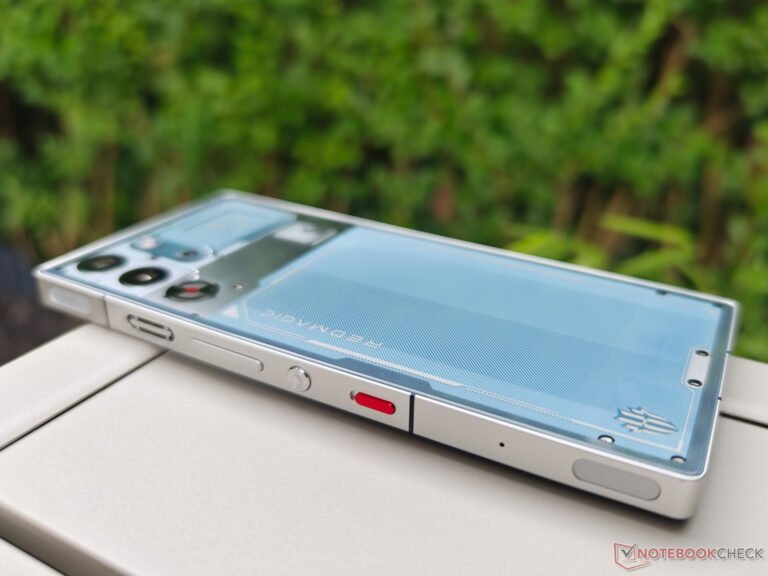
Nothing wanted its third main phone to compete at a higher level, and that decision changed the question around it. The Nothing Phone 3 is no longer the obvious alternative for someone trying to spend less. It is a $799 phone with bold design, fast hardware, a flexible camera system and software that still feels different from mainstream Android.
That makes the buying decision more demanding. At this price, personality is not enough. The phone must also deliver strong performance, dependable battery life, useful cameras and support that makes long ownership realistic. It succeeds in most of those areas. The harder problem is that Google, Samsung and OnePlus offer excellent alternatives, often with clearer strengths.
Nothing Phone 3 review: quick verdict
The Nothing Phone 3 is a good phone for someone who is tired of safe, predictable hardware. Its Glyph Matrix gives the back a practical visual feature, Nothing OS remains clean, and the 6.67-inch AMOLED screen is sharp and smooth. The Snapdragon 8s Gen 4 is fast enough for demanding apps and games, even though it is not the fastest flagship processor of its generation.
The 12GB/256GB version is the sensible configuration for most people. UFS 4.0 storage is fast, 256GB offers useful space, and 12GB of RAM is already generous. The 16GB/512GB option makes sense for a large offline library or frequent 4K recording, not because ordinary apps need 16GB.
Camera hardware looks strong on paper, with three 50MP rear cameras and a 50MP front camera. Independent reviews show that the main and telephoto cameras can take impressive photos. They also show inconsistent color and processing between lenses. That keeps the phone behind the safest camera choices at this price.
We like the Phone (3), especially when its unusual design is part of the appeal. We are less convinced by the original $799 price. A meaningful discount changes the recommendation because the core experience is strong and the phone has aged well through software updates.
Pros and cons
Pros
- Distinctive design with a useful Glyph Matrix
- Sharp 120Hz AMOLED screen
- Fast everyday performance
- Flexible triple 50MP rear cameras
- Strong 5,150mAh battery
- Wireless and reverse charging
- Five Android upgrades and seven years of security updates
Cons
- Original $799 price is difficult to defend
- Camera processing is not always consistent
- 218g body is heavy
- Performance trails the fastest flagship chips
- No expandable storage
- Glyph Matrix will not matter to everyone
Important specifications
| Feature | Nothing Phone (3) 12GB |
|---|---|
| Display | 6.67-inch AMOLED, 1260 × 2800, 120Hz |
| Processor | Qualcomm Snapdragon 8s Gen 4 |
| Graphics | Adreno 825 |
| Memory | 12GB RAM, 256GB UFS 4.0 storage |
| Rear cameras | 50MP main with OIS + 50MP periscope telephoto + 50MP ultra-wide |
| Front camera | 50MP |
| Battery | 5,150mAh |
| Charging | 65W wired; wireless and reverse charging supported |
| Software | Android 15 with Nothing OS 3.5 |
| Support | Five Android version upgrades and seven years of security updates |
| Protection | IP68 |
| Dimensions | 160.6 × 75.59 × 8.99mm |
| Weight | 218g |
| Colors | White and Black |
These hard specifications come from the published Nothing Phone (3) 12GB device page. The performance figures discussed below are clearly identified because the recorded reference unit used 16GB of RAM. They should not be presented as direct testing of this 12GB version.
The design refuses to disappear
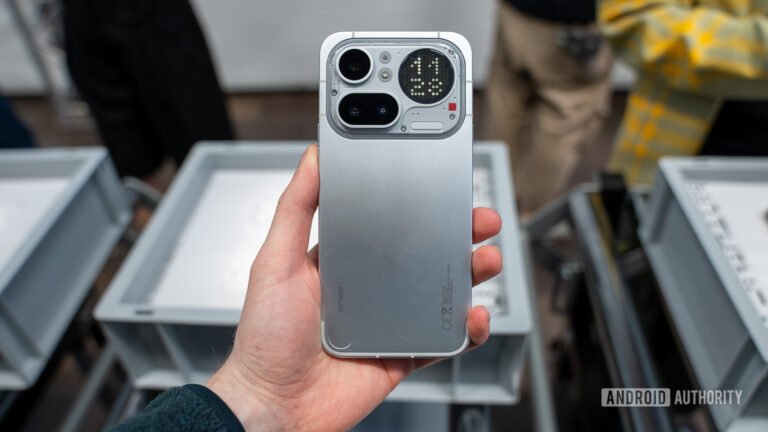
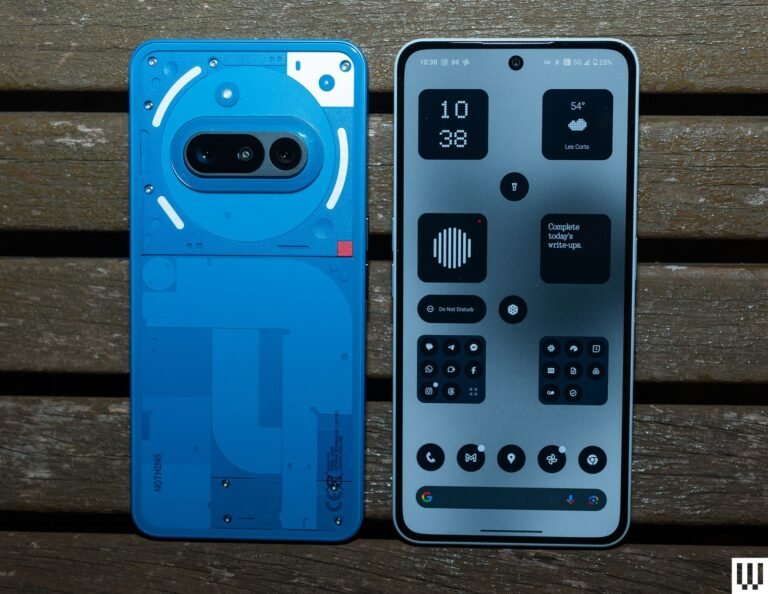
Most expensive phones try to look elegant without attracting too much attention. Nothing takes the opposite route. The camera arrangement is deliberately uneven, the transparent details remain visible, and the small circular Glyph Matrix gives the rear panel a clear focal point. Some people will love it. Others will decide against the phone before reaching the specifications.
That division is not a failure. A distinctive product should not have to please everyone. The White finish makes the internal-style details easier to see, while Black is less loud. Both use the aluminium frame and glass construction listed on the Specs Universe page.
The Glyph Matrix replaces the long light strips used by earlier Nothing phones. It can show notification symbols, a timer, battery information and simple visual tools. A small button on the back adds interaction. Published reviews often describe the feature as fun rather than essential, which feels accurate. Checking a timer without waking the full screen is useful. Playing a tiny rear-screen game is a novelty.
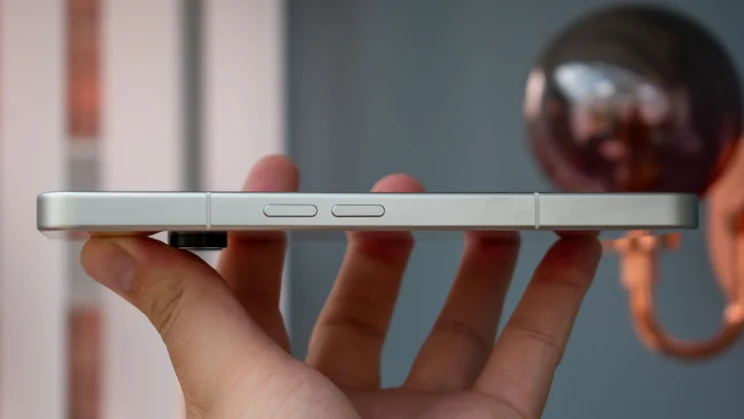
The physical size is more important than the playful details. At 160.6mm tall, 75.59mm wide and 8.99mm thick, the phone occupies a lot of space. Its 218g weight is noticeable too. A case adds more. This is not the right choice for someone who wants a light phone that disappears into a pocket.
IP68 protection is reassuring at this price. It does not make water damage impossible, but it places the phone closer to established flagship expectations. The front uses Corning Gorilla Glass Victus 2 according to the canonical device record. Specs Universe has not performed its own drop test, so we would still use a case.
A strong screen without unnecessary size
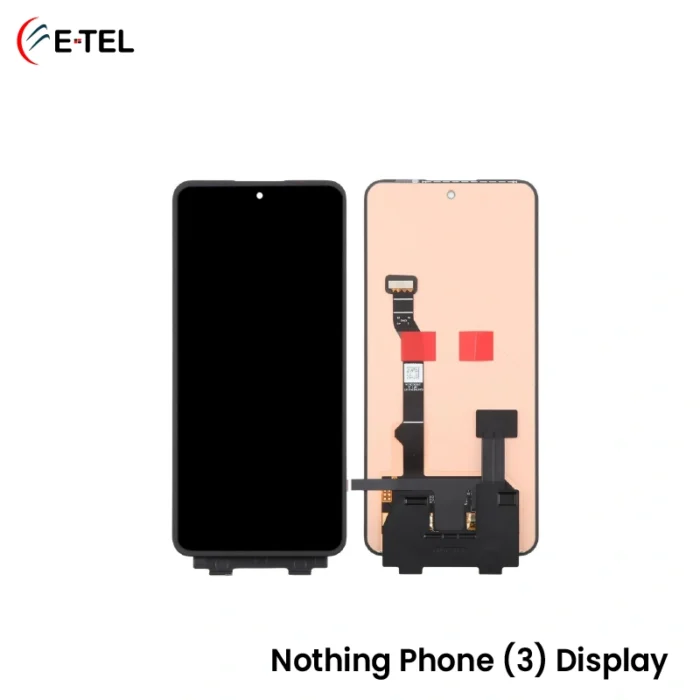
The 6.67-inch AMOLED screen is large enough for video, maps and games without pushing into the biggest-phone category. Its 1260 × 2800 resolution keeps text sharp, while the 120Hz refresh rate makes supported motion look smooth. This is one of the easiest parts of the phone to recommend.
Specs Universe lists a brightness value of 4,500. Real outdoor visibility depends on how long the screen can hold a high level, not only the peak number. Independent reviews generally report good visibility in daylight. AMOLED contrast also helps video and dark interface elements look clean.
Refresh behavior is not the same as a more advanced LTPO panel that can move through a wider range to save power. That does not make normal use feel slow. It simply means Nothing has not used every display technology available in more expensive flagships.
Specs Universe records a 90Hz base PWM figure and a 1,086Hz secondary measurement. Sensitivity to flicker differs from person to person, so anyone who experiences eye strain with OLED screens should view the phone before committing. A specification cannot decide personal comfort.
Nothing Phone 3 performance and gaming
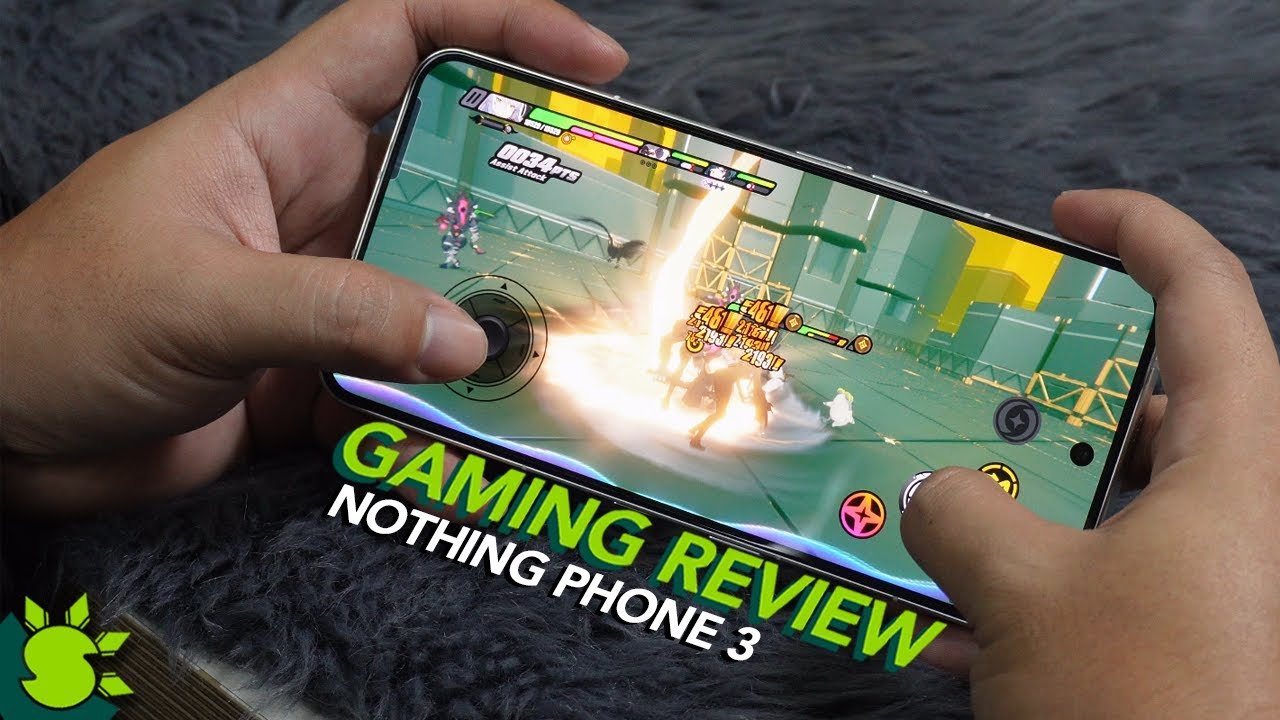
The Snapdragon 8s Gen 4 is a fast processor. It is not the top Snapdragon chip of its generation, which matters when the phone is compared with the strongest $799 rivals. In daily use, that difference is much less dramatic. Published reviews consistently describe quick app launches, smooth navigation and dependable multitasking.
Our reviewed configuration combines 12GB of physical RAM with 256GB of UFS 4.0 storage. That is enough memory for heavy multitasking, while the faster storage helps app installation and large file transfers. There is no microSD expansion. Anyone who keeps years of video offline should decide between 256GB and the larger configuration before buying.
Benchmarks, games and sustained heat
Specs Universe lists a Geekbench 6.7 result of 2,212 single-core and 7,161 multi-core. It also lists an AnTuTu v10 score of 1,975,046. Both came from a 16GB reference unit. The processor is the same, but memory, software and temperature can influence results, so those numbers provide context rather than a guaranteed score for the 12GB phone.
Recorded game tests reached 60.0 frames per second in Genshin Impact at the highest setting. PUBG reached 119.7fps on Smooth, 59.9fps on HD and 39.9fps on Ultra HD. Those results show strong gaming ability. They also show why graphics settings matter more than a simple claim that every game runs at its maximum.
Heat is the concern during long sessions. The recorded stress results show 63.8 percent stability in 3DMark Wild Life and 61.9 percent in Wild Life Extreme, with a maximum surface temperature of 52.1°C. That is hot enough to matter. A case, room temperature and game workload can change the experience, but this is not the phone’s strongest area.
Four 50MP cameras need consistent processing
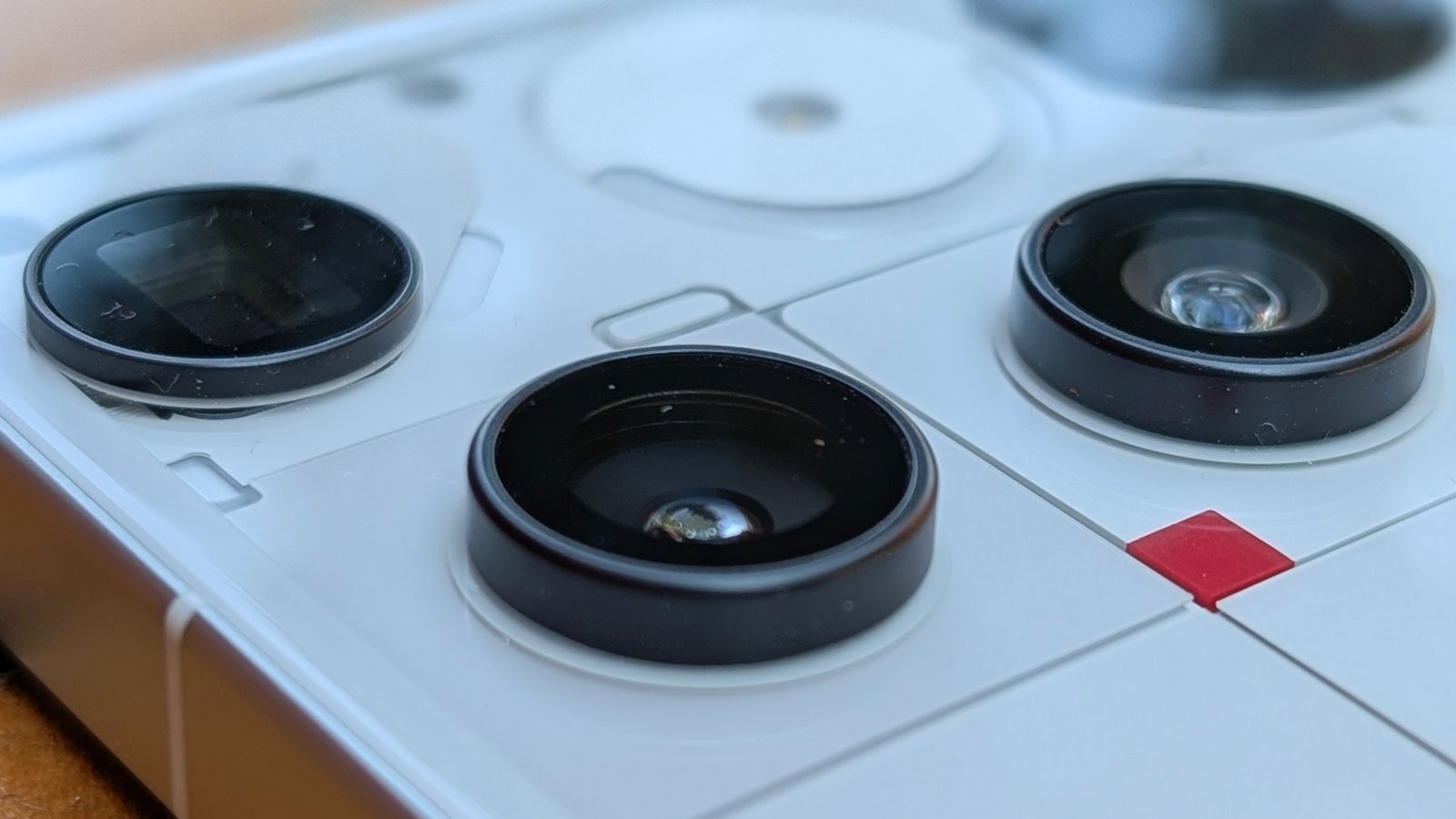
Camera hardware is easy to understand. On the rear, a 50MP main camera with optical stabilization sits beside a 50MP periscope telephoto and a 50MP ultra-wide. The front camera is also 50MP. Video recording reaches 4K.
For ordinary photos, the main camera is the safest choice. Independent reviews praise its daylight detail and generally natural color. It also benefits from OIS when light falls or the shutter needs to stay open longer. Results can look very good.
The telephoto adds useful reach
The periscope camera adds genuine flexibility. It can frame a portrait, stage or distant detail without depending entirely on a crop from the main sensor. The Specs Universe page describes optical telephoto zoom with high-resolution digital zoom, so we will not insert a different numerical zoom claim from another listing.
The ultra-wide gives the camera system a third useful view, but published testing often places it behind the main camera for fine detail. More importantly, consistency between all three lenses needs work. Several reviews report shifts in color, exposure or processing when moving from one camera to another. The phone can take excellent images, yet it does not always remove uncertainty from the process.
Owner feedback is similarly mixed. Recurring positive themes include the telephoto camera, selfies and improved results after software updates. Complaints tend to focus on processing choices, camera-app behavior and occasional differences in third-party apps. These reports identify areas to watch; they do not prove that every unit behaves the same way.
Google remains the easier recommendation for someone who wants dependable automatic photography. Nothing is more interesting when multiple focal lengths and the unusual rear design matter. We expected a little more consistency at $799.
Nothing OS is still a reason to buy
The phone launched with Android 15 and Nothing OS 3.5. The interface keeps Android familiar while changing its visual tone through monochrome icons, dot-based type, custom widgets and detailed lock-screen controls. It feels deliberate without burying basic settings.
Nothing’s monochrome style looks tidy, but it can make apps harder to identify quickly. Color is useful information. Fortunately, the theme is optional, so the phone does not force every owner into one visual system.
The Essential Key captures screenshots, voice notes and information for Essential Space. It can help organize reminders or material that would otherwise disappear in a gallery. Its value depends on habit. If another notes app already handles that job, the extra button may remain mostly unused.
Software support is strong enough for long ownership. The Specs Universe record lists five Android version upgrades and seven years of security updates. That is a clear improvement over short mid-range promises, although Google and Samsung still set a demanding standard in this area.
Battery life and charging
The 5,150mAh battery gives the phone a solid foundation. Published experiences range from comfortable full-day use to much longer results with lighter workloads. Gaming, camera use, weak signal and maximum brightness will reduce that margin. The broader evidence suggests that most people should finish a normal day without anxiety.
Specs Universe records 18 hours and 23 minutes in a Wi-Fi web test. That is a controlled result, not a promise for mixed cellular use. It is still useful because the method gives the battery a consistent workload.
Wired charging reaches 65W. The recorded test reached 80 percent in 34 minutes and completed a full charge in 55 minutes. That makes a short charge before leaving home genuinely useful. The result may change with charger compatibility, temperature and activity during charging.
Wireless charging is supported, as is reverse charging. These features make the Phone (3) easier to fit into an existing charging routine than Nothing’s cheaper models. They also help justify its move into a higher price class.
What daily ownership is likely to feel like
The best part of this phone is not one benchmark or camera sensor. It is the combination of a fast interface, a clear screen and small ideas that make the product feel less anonymous. Nothing has built a recognizable system across the hardware and software. Even the settings, widgets and rear display appear to belong to the same phone.
That consistency matters after the first week, when the surprise of the design begins to fade. The Glyph Matrix can remain useful for chosen alerts and timers. Essential Space can keep captured information together. Neither feature is necessary, but both can earn a place in a routine if they are set up with purpose.
The tradeoffs become clearer over time
The size and heat are more likely to cause friction. A 218g phone does not become lighter because the design looks interesting. Long gaming sessions can also expose the thermal limits recorded in stress testing. These are ordinary physical compromises, and they deserve more attention than the novelty of a tiny animation on the back.
Published long-term impressions suggest that software updates have improved several rough edges, especially around cameras and general stability. Owner reports are not completely consistent, which is normal. Some people praise the battery and smooth software, while others mention camera behavior or third-party app problems. The useful conclusion is not that one side is right. It is that the return period should be used to check the apps, network and camera situations that matter personally.
We would also resist buying the phone only because it is unusual. Design can be a valid reason to prefer one good phone over another, but the rest of the experience still has to fit. Here, it mostly does. Performance is strong, storage is sensible, the battery has good evidence behind it, and the support promise is long enough to make keeping the phone realistic.
Connectivity, sound and US use
Connectivity includes 5G, Wi-Fi 7, Bluetooth 6.0, NFC and USB Type-C. The phone uses dual nano-SIM cards, while eSIM availability can vary by region. Navigation support includes GPS, A-GPS, GLONASS, Galileo and BeiDou.
US compatibility still deserves a check. A general 5G label does not guarantee every carrier feature or activation path. Confirm the exact model number and IMEI with the chosen network, especially when buying from a marketplace or importing. Authorized US stock also provides clearer warranty protection.
The recorded loudspeaker measurement is 93.2dB, which suggests plenty of available volume. Loudness does not describe tonal balance or clarity, so published listening impressions remain important. The optical fingerprint sensor sits under the display, and a linear vibration motor provides touch feedback.
Price, storage and upgrade advice
The US launch price was $799 for 12GB/256GB and $899 for 16GB/512GB. The base configuration is the better fit for most people. It already has enough RAM, and 256GB is comfortable unless large games, offline video or frequent 4K recording dominate storage use.
Current discounts matter more than the launch story. At $799, the phone competes directly with models that offer faster chips, more consistent cameras or deeper retail support. Closer to $600, its design, battery and storage become much easier to defend.
Phone (2) owners should upgrade only when the better protection, telephoto camera, longer support and faster hardware solve a real need. The Phone (3) is clearly more capable, but a working Phone (2) does not become poor because a newer model exists. Phone (3a) Pro owners should be even more cautious if their current performance is satisfactory.
Three alternatives that make sense
Google Pixel 10: Choose the Pixel for easier point-and-shoot photography, Google’s software features and broad US carrier confidence. Choose Nothing for the bolder design, Glyph Matrix and a different approach to Android.
Samsung Galaxy S25: Samsung is the safer compact flagship with stronger retail and service reach. Nothing gives you a larger battery, a more unusual interface and hardware that attracts attention. Sale prices should decide this comparison.
OnePlus 13: OnePlus is the performance-led alternative, with a stronger case for demanding games and fast charging. Nothing has the cleaner visual identity and longer conversation value. Choose based on whether speed or design matters more.
Who should buy it?
- Buy it if you want a fast Android phone that looks genuinely different.
- Choose it if the Glyph Matrix and clean Nothing OS add value to daily use.
- Consider it when a discount brings the 12GB/256GB version closer to upper-mid-range pricing.
- Skip it if the fastest processor or most dependable automatic camera is the priority.
- Keep a recent Phone (2) or Phone (3a) Pro unless the newer camera and support package solve a clear problem.
Nothing Phone 3 review verdict
The Nothing Phone 3 is worth considering because it combines fast performance, a strong screen, useful battery life and flexible cameras with a design that does not imitate every rival. Nothing OS and the Glyph Matrix give it a clear reason to exist.
The main reason not to buy it is value at the original $799 price. Camera processing needs more consistency, and the Snapdragon 8s Gen 4 cannot match the fastest flagship chips during sustained work. The 218g body will also be too heavy for some people.
We would choose the 12GB/256GB version and look for a meaningful discount. Buy it for the software, design, periscope camera and long support—not because it wins every specification comparison. Anyone who wants the safest camera or maximum gaming speed has better alternatives.