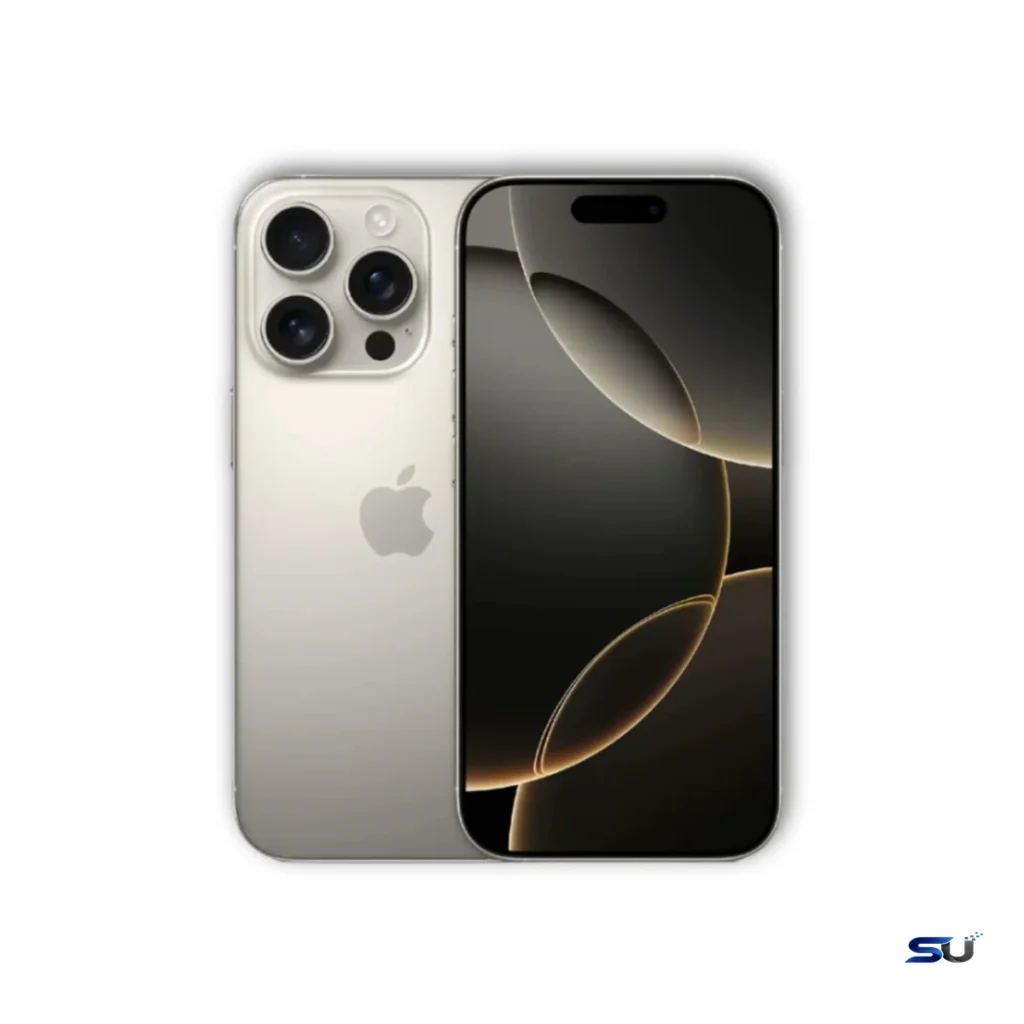
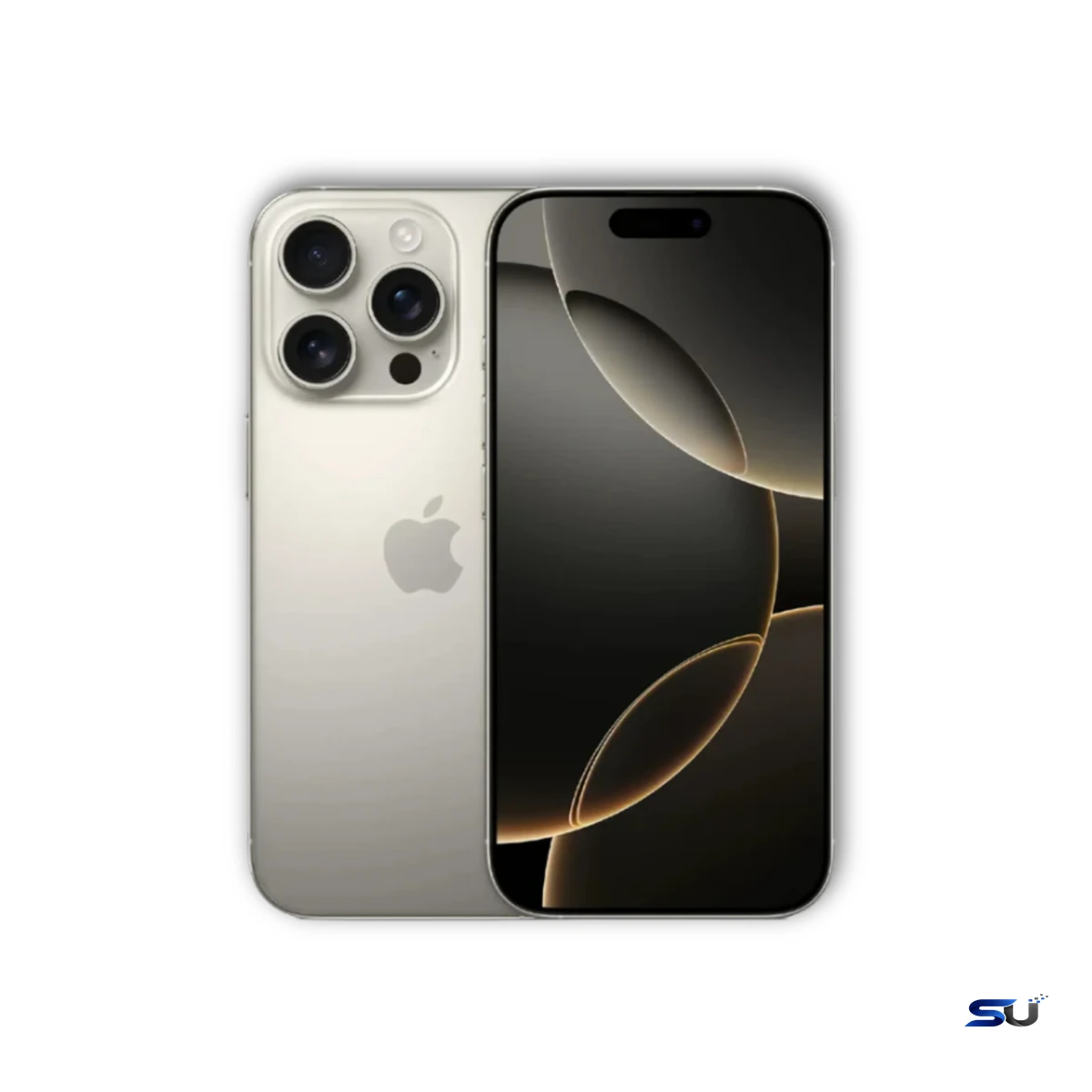
Last year's Pro is this year's smart buy. The Apple iPhone 16 Pro 8GB still brings the A18 Pro, Camera Control, and a 48MP triple camera — pro features that haven't aged a day.
Apple launched the iPhone 16 Pro in September 2024 at $999, and a year later it sits in an interesting spot. It's no longer the newest Pro, yet almost everything that made it great still holds up. The Apple iPhone 16 Pro 8GB gives you the same chip, the same camera hardware and the same titanium build as launch day, just at a friendlier price on the used and refurbished market.
In this guide, we'll walk through every part of the phone: design, display, performance, cameras, battery and software. By the end, you'll know exactly what this phone offers and who it's best suited for.
Overview
The Apple iPhone 16 Pro 8GB is Apple's 6.3-inch flagship from the 2024 lineup. It pairs the A18 Pro chip with 8GB of RAM and a triple camera system led by a 48MP Fusion main sensor. Storage starts at 128GB and runs up to 1TB, all of it fast NVMe.
What sets the Pro apart from the standard iPhone 16 is the extras list: a 120Hz ProMotion display, the 5x tetraprism telephoto, the grade-5 titanium frame and the Camera Control button. In addition, you get USB-C with USB 3 speeds and Wi-Fi 7, features the regular model skips.
Compared with the 16 Pro Max, the differences are few. The smaller Pro has the same chip, the same cameras and the same build materials. You mainly give up screen size and some battery capacity. For many buyers, that's a trade worth making.
Design and Build Quality
Apple kept the familiar iPhone shape but refined it. The frame uses grade-5 titanium, which is strong yet light. As a result, the phone weighs just 199 grams despite the premium materials. It measures 149.6 x 71.5 x 8.25 mm, so it stays comfortable for one-handed use.
Around the back you'll find textured matte glass, which resists fingerprints far better than glossy finishes. The front uses the latest-generation Ceramic Shield. Apple claims improved crack resistance over previous versions, and independent drop tests back that up.
Two new controls define this generation. The Action button replaces the old mute switch and can launch the camera, the flashlight or any shortcut you assign. Below it on the right edge sits Camera Control, a sapphire-covered button with haptic feedback that opens the camera and adjusts settings with swipes.
On top of that, the phone carries an IP68 rating. That means it survives dust and submersion in up to 6 meters of water for 30 minutes. Still, Apple doesn't cover liquid damage under warranty, so don't take it swimming.
Colours and Finishes
Apple sells the 16 Pro in four titanium finishes: Black Titanium, White Titanium, Natural Titanium and Desert Titanium. The last one is new for this generation: a warm, bronze-like tone. All four share the same brushed texture on the frame.
Display
The 6.3-inch LTPO Super Retina XDR OLED is one of the best screens on any phone. Resolution comes in at 2622 x 1206, which keeps text razor sharp. Thanks to the LTPO backplane, the refresh rate drops as low as 1Hz for the always-on display and climbs to 120Hz when you scroll or play games.
Brightness is excellent. Apple rates peak outdoor brightness at 2000 nits, so the screen stays readable in direct sunlight. At the other end, minimum brightness drops to 1 nit, which is easy on the eyes at night.
HDR content looks superb with Dolby Vision and HDR10 support. Colours are accurate out of the box, and True Tone adjusts the white balance to your surroundings. Meanwhile, the Dynamic Island houses the TrueDepth camera and doubles as a live hub for timers, music and navigation.
In addition, the always-on display shows time, widgets and notifications at a glance without waking the phone. When you pick it up, the screen ramps up smoothly. This seamless experience shows the benefit of Apple's tight hardware and software integration.
Performance
The A18 Pro is a 3nm chip with a 6-core CPU and a 6-core GPU. Paired with 8GB of RAM, it handles everything from 4K video editing to console-style games without breaking a sweat. App launches feel instant, and multitasking stays smooth even with dozens of apps open.
Storage uses fast NVMe, with options of 128GB, 256GB, 512GB and 1TB. There's no microSD slot, so choose your capacity carefully at purchase.
The Apple iPhone 16 Pro 8GB also leads on machine learning. Its 16-core Neural Engine powers Apple Intelligence features and computational photography. Everything runs cool and quiet thanks to the improved thermal design.
Gaming
This is a serious gaming phone. The GPU supports hardware-accelerated ray tracing, and the A18 Pro trades blows with dedicated gaming phones. Demanding titles like Assassin's Creed Mirage run at smooth frame rates with console-quality visuals.
For longer sessions, the improved thermal design keeps frame rates steady without throttling. In addition, the 120Hz ProMotion display makes fast-paced games feel responsive, while the bright OLED panel keeps visuals clear. Battery drain during gaming is noticeable, however, so keep a charger nearby for marathon sessions.
Camera System
The triple camera is the headline act. The 48MP Fusion main camera uses a second-generation quad-pixel sensor with an f/1.78 aperture. In practice, that means sharp 24MP photos by default and full 48MP ProRAW when you want maximum detail.
Next up is the 48MP ultrawide — a big upgrade over older iPhones. It captures far more detail than the 12MP shooters of the past, and doubles as a capable macro camera.
Then there's the 12MP telephoto with a 5x tetraprism design, the same periscope-style zoom as the Max. Optical quality stays strong through the full 5x range, and digital zoom stretches to 25x.
Video is equally strong. You can record 4K Dolby Vision at up to 120fps for buttery slow motion. Four studio-quality mics with Audio Mix let you tune the sound after recording.
Camera Control changes how you shoot. A click opens the camera, another click takes the photo, and swipes adjust exposure or zoom. It takes practice, but it becomes second nature.
Photographic Styles and ProRAW
For enthusiasts, the 16 Pro offers extensive manual control. You can shoot 48MP ProRAW for maximum editing latitude, or use the default 24MP output for smaller files. Furthermore, the latest Photographic Styles let you customize tone and color to match your taste. Consequently, the camera adapts to both casual shooters and serious photographers.
Battery Life and Charging
The Apple iPhone 16 Pro 8GB packs a 3582mAh battery. Apple rates it for up to 27 hours of video playback — a solid 4 hours more than the iPhone 15 Pro. Real-world use comfortably stretches through a full day.
Charging is quick by iPhone standards. A 20W or higher adapter takes the phone to 50% in around 30 minutes. MagSafe charging hits 25W, while Qi2 manages 15W. That's the difference between 50% in 30 minutes and 50% in 45.
That said, there's no charger in the box, just a braided USB-C cable. Battery health features like the 80% charge limit help the battery last for years.
Furthermore, optimized charging learns your daily routine and delays charging past 80% until you need it. This reduces long-term battery wear. Meanwhile, the manual 80% limit option gives you direct control if you prefer to maximize battery lifespan from day one.
Connectivity and Ports
The 16 Pro supports 5G on both sub-6 GHz and mmWave, plus Gigabit LTE as a fallback. In the US it ships with dual eSIM and no physical SIM tray; other regions get nano-SIM plus eSIM.
Wi-Fi 7 (802.11be) with 2x2 MIMO delivers faster speeds on compatible routers. Bluetooth 5.3 handles audio and accessories, and the second-gen Ultra Wideband chip powers precise Find My tracking.
The USB-C port supports USB 3 speeds up to 10Gb/s alongside DisplayPort output. That means fast file transfers and easy connection to external displays.
Software and Apple Intelligence
The phone launched with iOS 18 and is upgradable to iOS 26. Apple typically delivers five or more years of updates, so this phone will stay current well into the next decade.
Apple Intelligence is the software story here. Writing Tools proofread and rewrite text anywhere. Notification summaries catch you up at a glance. Visual Intelligence identifies objects through the camera. The A18 Pro's Neural Engine runs it all on-device.
Face ID remains the biometric system: fast, secure and working in the dark. There's no fingerprint sensor, and honestly you won't miss it.
Apple Intelligence Features
Writing Tools work across apps to proofread, summarize and rewrite text. Notification summaries condense long threads into scannable lines. Visual Intelligence, triggered by Camera Control, identifies restaurants, translates signs and adds events to your calendar.
Privacy and On-Device Processing
Moreover, Apple's approach to AI prioritizes privacy. The A18 Pro's Neural Engine handles most Apple Intelligence tasks on-device, so your data never leaves the phone. Similarly, when cloud processing is needed, Private Cloud Compute extends iPhone privacy protections to the server. As a result, you get powerful AI features without sacrificing privacy.
Pros and Cons
Pros:
- A18 Pro chip still among the fastest in any phone
- Excellent 48MP triple camera with 5x telephoto
- Bright 120Hz LTPO OLED display
- Premium titanium build at just 199 grams
- 25W MagSafe and Qi2 wireless charging
- Long software support with Apple Intelligence
Cons:
- Base storage still 128GB with no expansion
- Charging speeds trail Android flagships
- No charger included in the box
- Camera Control takes time to master
Frequently Asked Questions
Is the Apple iPhone 16 Pro 8GB still worth buying in 2026?
Yes, for the right buyer. The A18 Pro, the camera system and the titanium build haven't aged, and prices on the used market make it a strong value. Just make sure you're comfortable with 128GB of base storage.
What's the difference between the iPhone 16 Pro and the 16 Pro Max?
Size and battery. The Pro has a 6.3-inch display and a 3582mAh battery, while the Max stretches to 6.9 inches with a bigger cell. Cameras, chip and build are identical.
Does the iPhone 16 Pro support Apple Intelligence?
Yes. The A18 Pro and 8GB of RAM meet the requirements, so you get Writing Tools, notification summaries and Visual Intelligence. Some features need iOS 18.1 or later.
How fast does the iPhone 16 Pro charge?
Over USB-C with a 20W+ adapter, it reaches 50% in about 30 minutes. MagSafe delivers up to 25W with a 30W adapter, while Qi2 tops out at 15W.
Is the iPhone 16 Pro waterproof?
It's water resistant, not waterproof. The IP68 rating covers submersion up to 6 meters for 30 minutes, but liquid damage isn't covered by warranty.
Does the iPhone 16 Pro have a SIM tray?
In the US, no — it's dual eSIM only. Other regions ship with a nano-SIM tray alongside eSIM support.
Pricing and Availability
The Apple iPhone 16 Pro 8GB launched at $999 for the 128GB model. Higher storage tiers cost more, topping out at the 1TB version. Apple discontinued it when the iPhone 17 Pro arrived, but carriers and retailers still stock it.
Refurbished units from reputable sellers often include a fresh battery and a warranty. Prices vary by condition and storage, so compare a few listings before buying.
What's in the Box
Apple keeps the box minimal. Inside you'll find the iPhone 16 Pro, a braided USB-C charge cable and the usual documentation. There's no charger, no EarPods and no case.
If you don't already own a 20W or higher USB-C charger, you'll need one for the fastest charging speeds. A MagSafe charger is worth considering too.
Is the Apple iPhone 16 Pro 8GB the Right Phone for You?
If you want a compact flagship that does everything well, this is it. The Apple iPhone 16 Pro 8GB gives you Pro cameras, Pro performance and Pro build quality in a phone that fits comfortably in one hand.
Consider the Pro Max if you want the biggest screen and maximum battery life. Look at the standard iPhone 16 if the Pro features don't matter to you. But for everyone in between, the 16 Pro hits the sweet spot. Last year's Pro really is this year's smart buy.