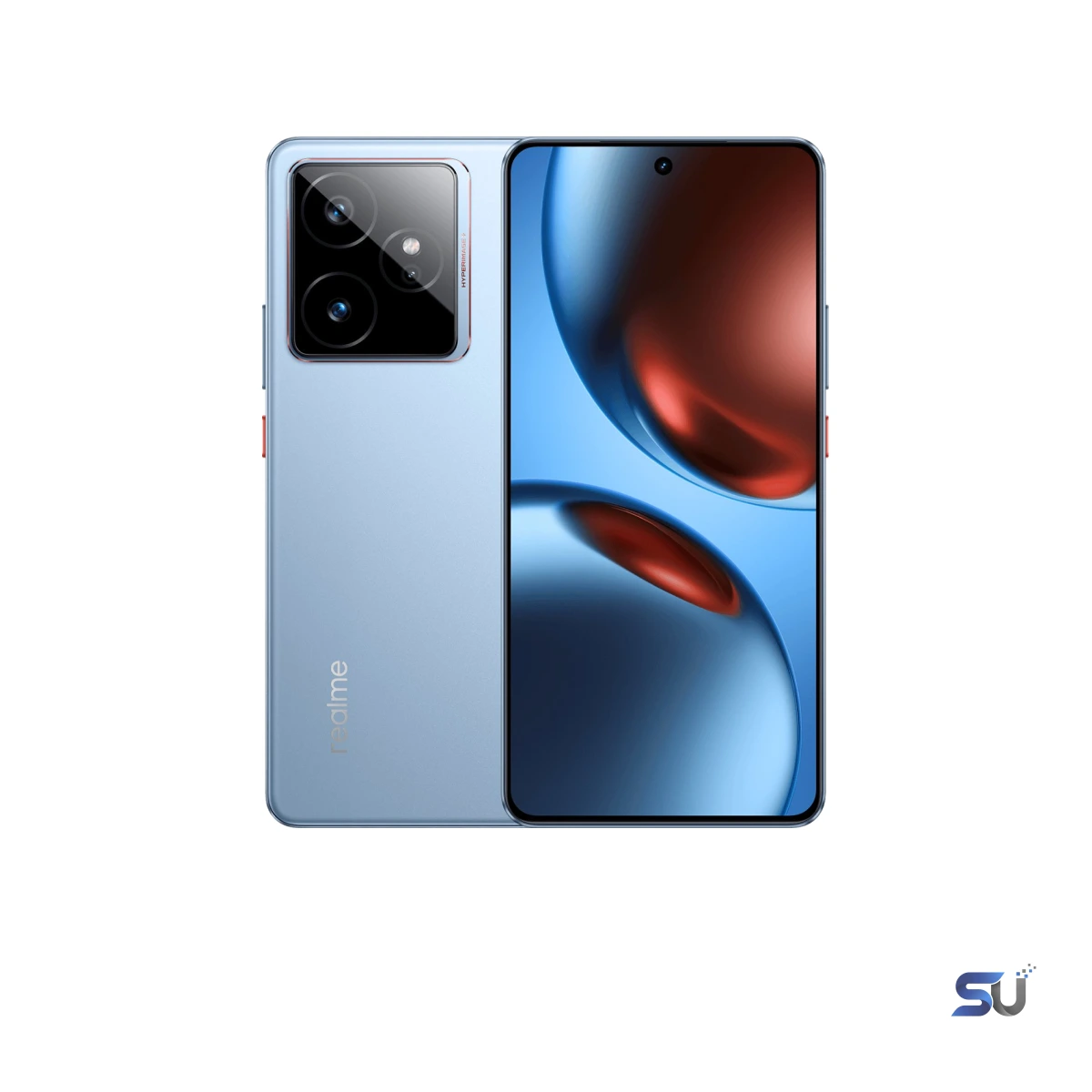

LTPO AMOLED, 120Hz, Dolby Vision, HDR10+
12GB
256GB / 512GB
50MP f/1.8 (wide) Sony IMX906, PDAF, OIS + 50MP f/2.0 (2x telephoto) Samsung S5KJN5, PDAF + 8MP f/2.2 (ultrawide, 112°)
MediaTek Dimensity 9400e (4 nm)
7000 mAh (Si/C Li-Ion; 6850 mAh min)
6.78 inches
LTPO AMOLED, 120Hz, Dolby Vision, HDR10+
1264 x 2780 pixels (~450 ppi)
120
6000
HDR10+, Dolby Vision
Corning Gorilla Glass 7i (ArmorShell glass on some units)
50MP f/1.8 (wide) Sony IMX906, PDAF, OIS + 50MP f/2.0 (2x telephoto) Samsung S5KJN5, PDAF + 8MP f/2.2 (ultrawide, 112°)
32MP f/2.4 (wide) Sony IMX615
2x optical zoom; digital zoom in the camera app
8K@30fps, 4K@30/60/120fps (Dolby Vision), 1080p@30/60/120/240fps, gyro-EIS, OIS; front 4K@30/60fps, 1080p@30/60fps
AI-enhanced Night mode on main and front cameras
OIS on the 50MP main camera (Sony IMX906)
MediaTek Dimensity 9400e (4 nm)
Octa-core (1x3.4 GHz Cortex-X4 + 3x2.85 GHz Cortex-X4 + 4x2.0 GHz Cortex-A720)
Arm Immortalis-G720 MC12
12GB
256GB / 512GB
UFS 4.0
No microSD card slot
162.4 x 76.1 x 8.3 mm
206 g
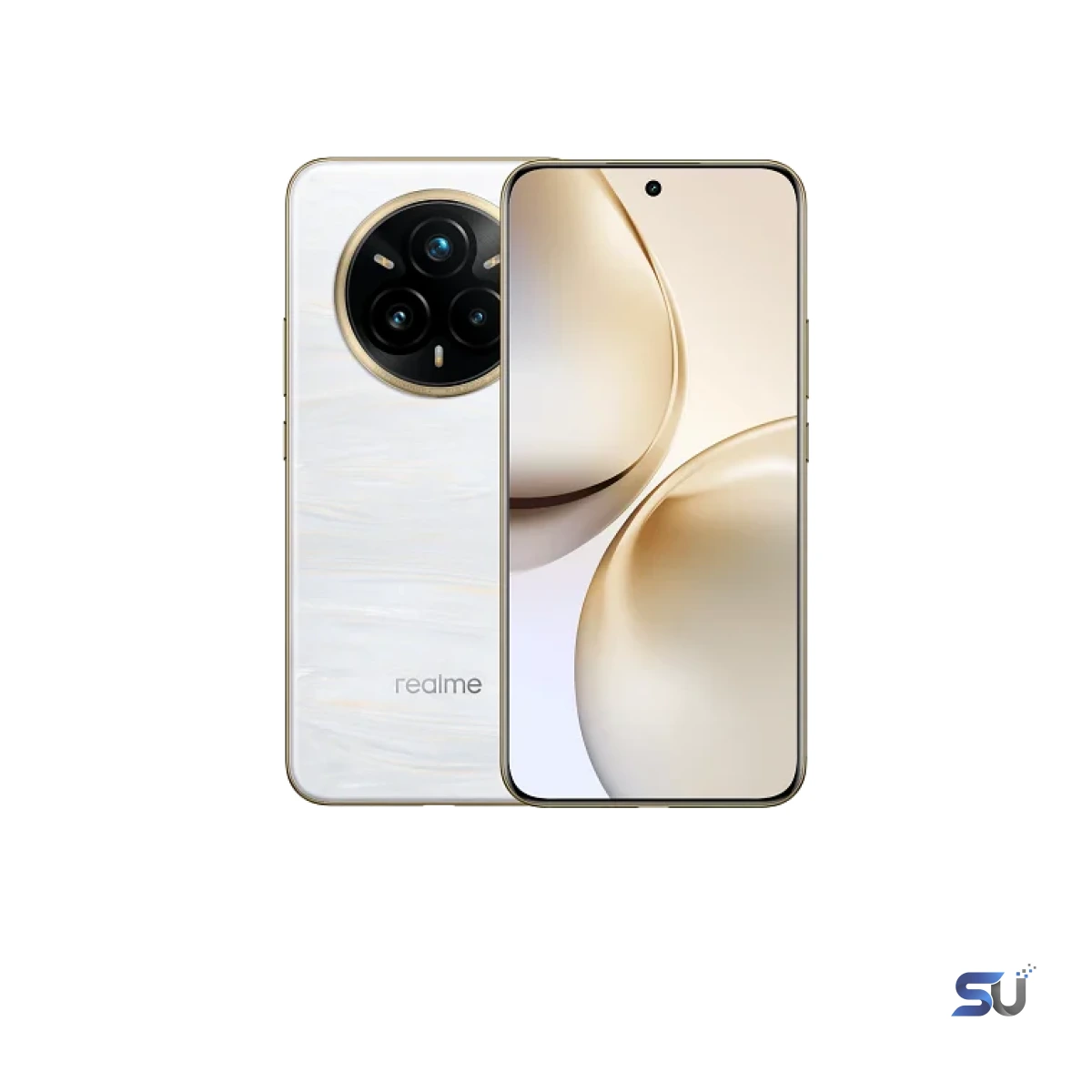
Gorilla Glass 7i front, plastic frame, IceSense graphene back
IP69 (dust-tight; high-pressure water jets; immersible up to 1.5m for 30 min)
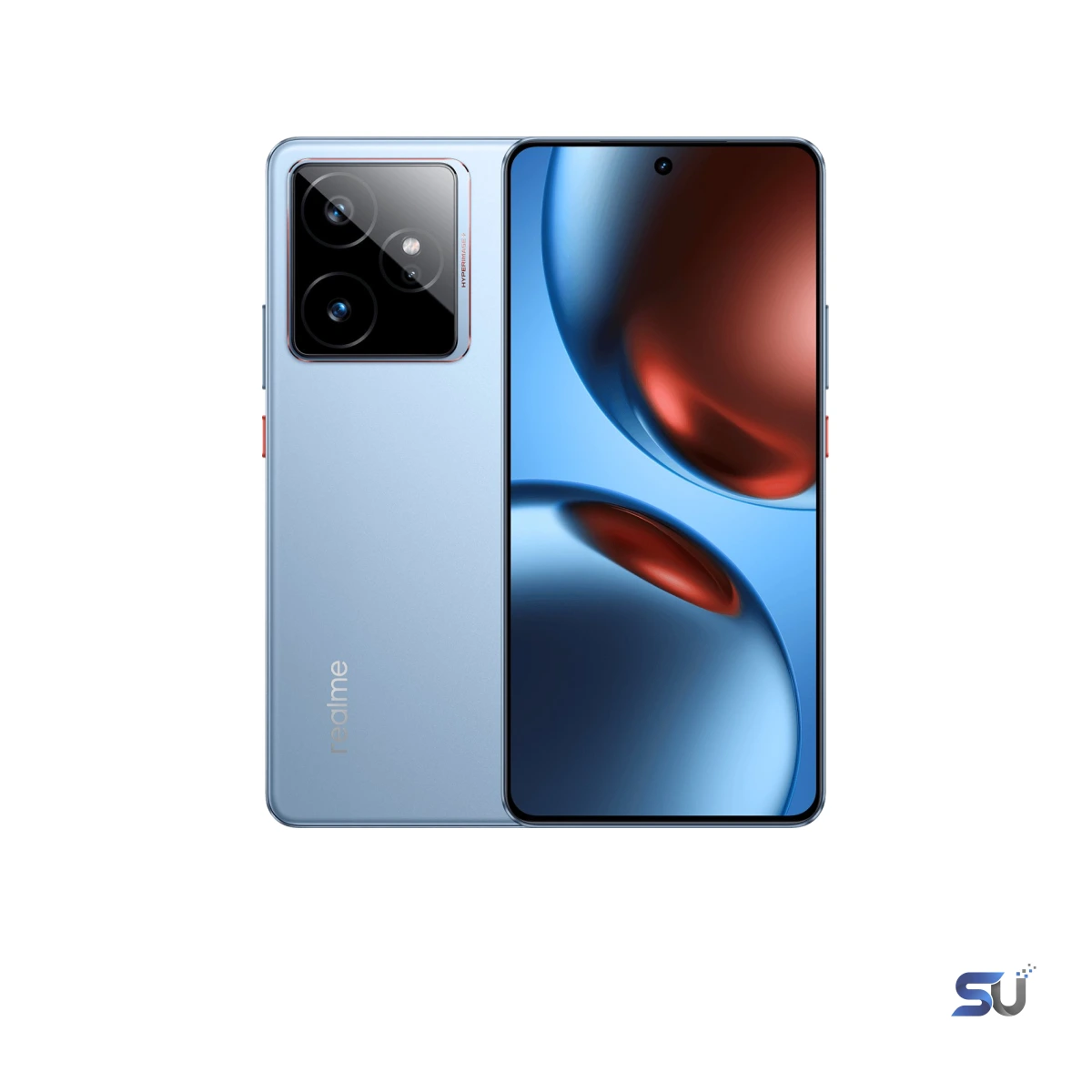
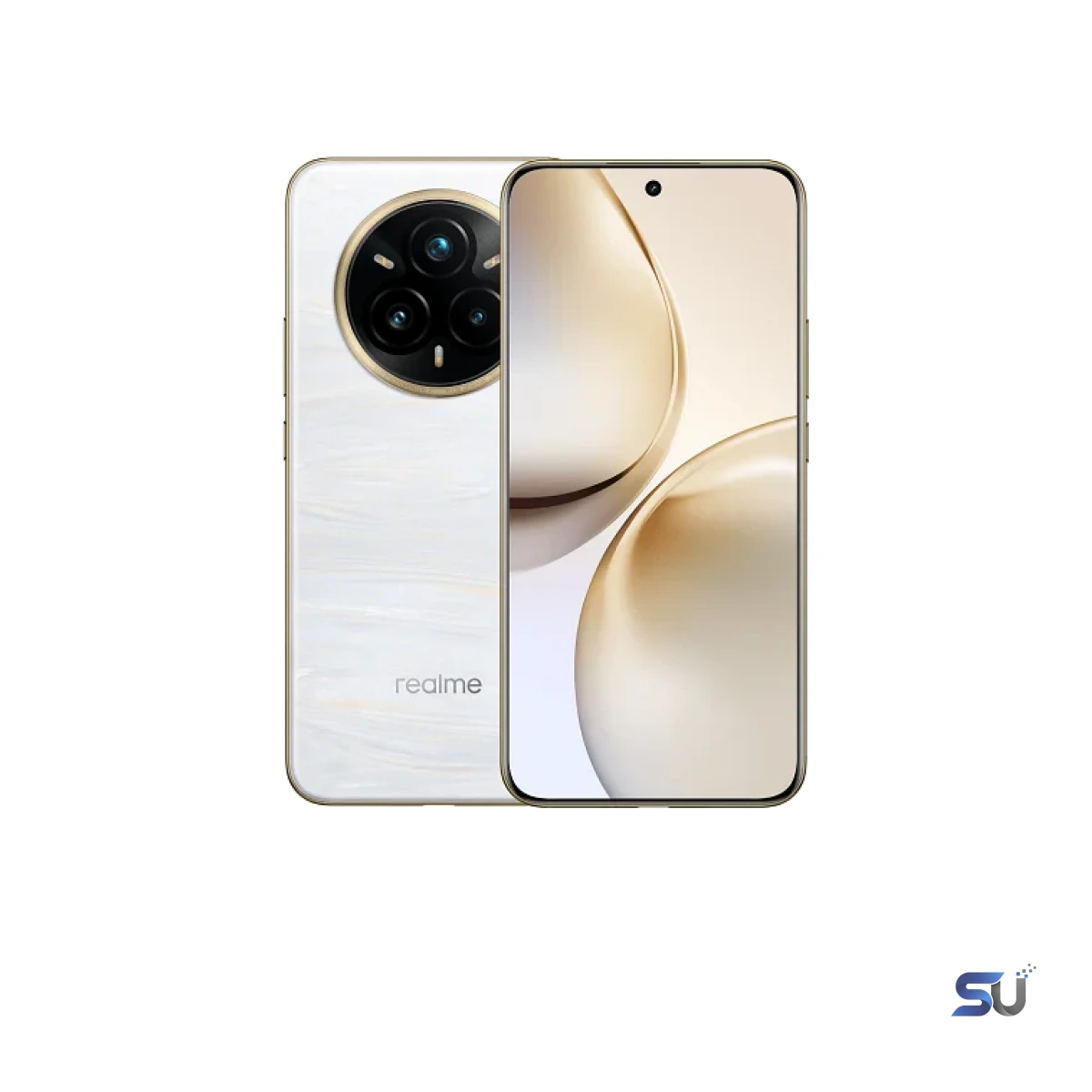
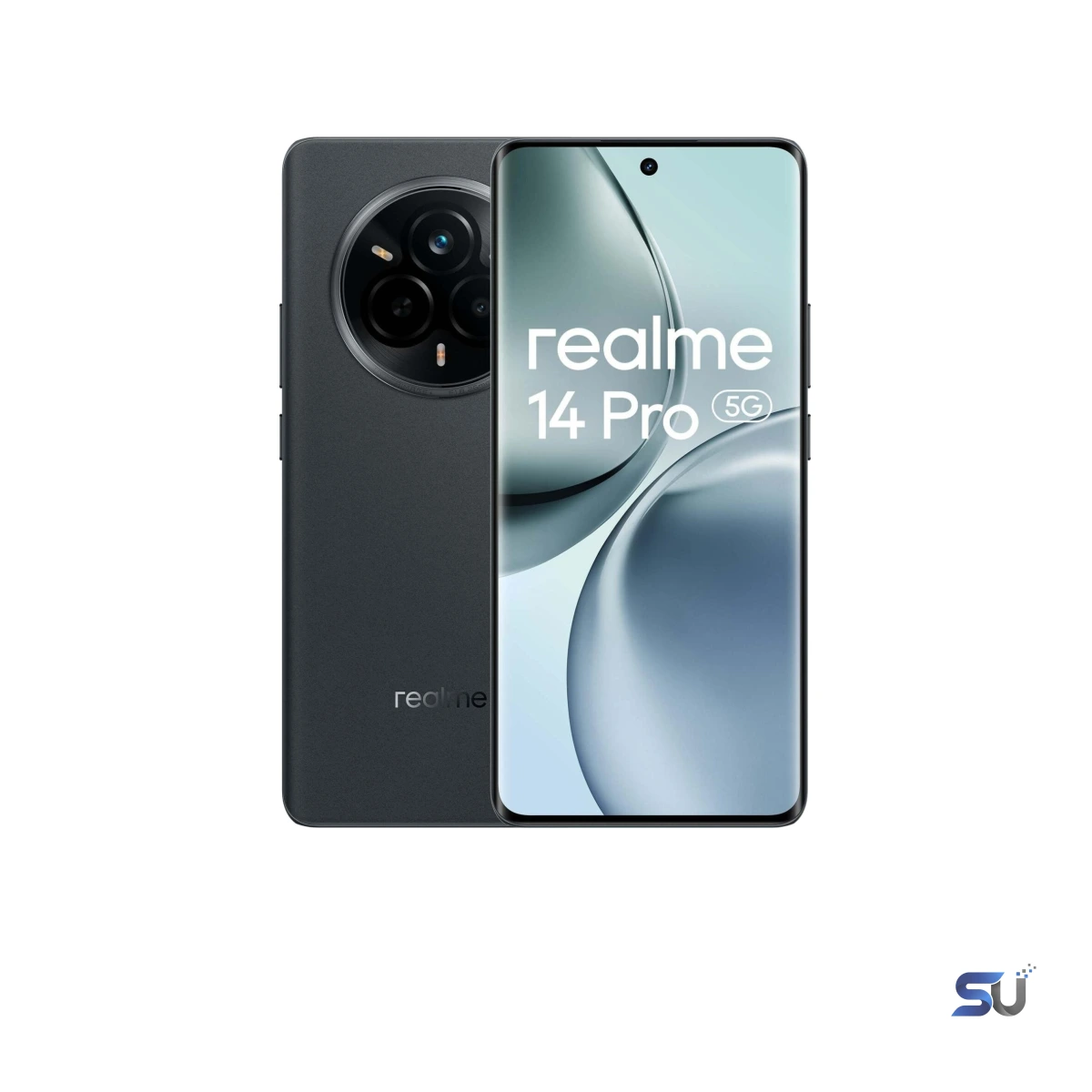
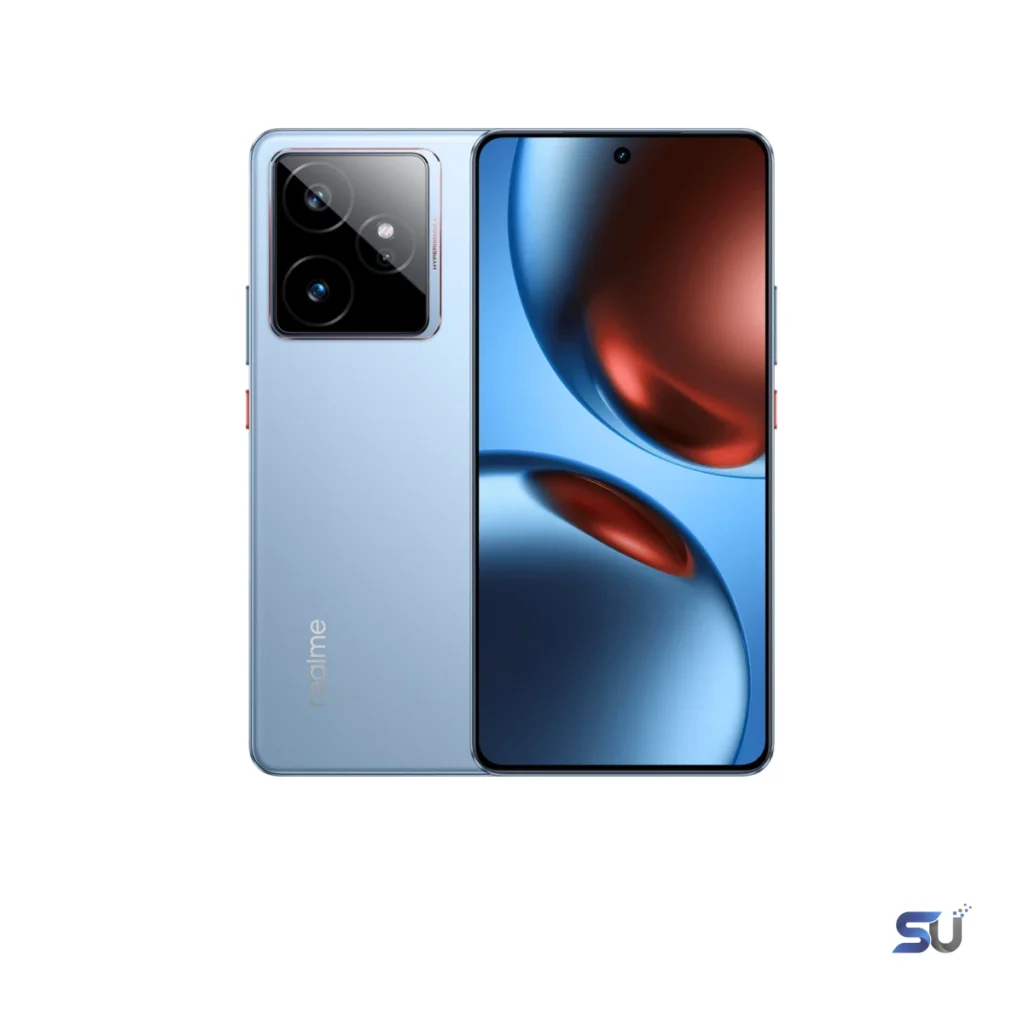
IceSense Black, IceSense Blue
7000 mAh (Si/C Li-Ion; 6850 mAh min)
120W wired (0–50% in ~14 min, 0–100% in ~40 min); bypass charging support
No
7.5W reverse wired
Around 21 hours of active use in independent testing
GSM / HSPA / LTE / 5G
Dual Nano-SIM (eSIM support in select regions)
5.4, A2DP, LE, LDAC, LHDC 5.0
Wi-Fi 802.11 a/b/g/n/ac/6/7, dual-band, Wi-Fi Direct
GPS (L1+L5), GLONASS, GALILEO, BDS, QZSS, NavIC
Yes, 360° NFC
USB Type-C
Under-display optical fingerprint reader, IP69 dust/water resistance, 360° NFC, IR blaster, stereo speakers with Hi-Res audio; no 3.5mm jack, no FM radio
Android 15
Realme UI 6.0
4 major Android upgrades and 6 years of security patches
7412 (GeekBench 6 multi-core; tested on 12GB unit, same Dimensity 9400e)
2141861 (AnTuTu 10; tested on 12GB unit, same Dimensity 9400e)
Up to 120 fps in 20+ top games; 119.5 fps average in a major FPS title (realme lab test)
CPU throttling dip as expected for this silicon; unusually large throttling in graphics-intensive 3DMark stress test (GSMArena)
21:06h active use (GSMArena)
0–50% in ~14 min, 0–100% in ~40 min with 120W wired charging (realme lab figures)
-25.0 LUFS, rated Very good (GSMArena)
2160Hz high-frequency PWM dimming, plus DC dimming
206 g
8.3 mm
Gorilla Glass 7i front, plastic frame, IceSense graphene composite back
Under-display optical fingerprint sensor
EU energy label free-fall Class B (180 falls); ArmorShell protection rated for drops up to 1.5 m
Scratch-test measurements have not been published for this model
Realme does not publish the vibration motor specification for the GT 7
The power and volume buttons deliver a firm, tactile click
Most of us never use a phone one app at a time. Instead, we hop between chats, maps, music and a browser full of tabs. A game waits in the background, and a video call can land at any moment. That constant switching is exactly where the Realme GT 7 12GB earns its keep. Its extra memory keeps more of that chaos ready to resume. So returning to an app rarely means starting it again.
Most of us never use a phone one app at a time. Instead, we hop between chats, maps, music and a browser full of tabs. A game waits in the background, and a video call can land at any moment. That constant switching is exactly where the Realme GT 7 12GB earns its keep. Its extra memory keeps more of that chaos ready to resume. So returning to an app rarely means starting it again.
Of course, memory alone never makes a phone feel fast. The processor, storage speed and cooling all matter just as much. Happily, this handset pairs its 12GB of RAM with a flagship-class chip. It also adds fast flash storage, a huge battery and a very bright screen. So the promise here is refreshingly simple. This is a big, quick phone that should stay quick for years.
This review therefore starts with the memory story. After that, it works through speed, gaming and the screen in turn. Cameras, battery life and software then get their own close look. Finally, a short buying checklist pulls the whole picture together.
Extra RAM does not raise benchmark peaks on its own. Instead, it changes everything that happens between those peaks. Apps stay resident for longer, and games reload far less often. For example, a navigation session can sit safely behind a camera session. Meanwhile, a shopping app keeps its basket exactly where you left it. Over a busy day, those saved seconds quietly add up.
Storage choice matters alongside memory, so pick carefully at checkout. This variant pairs the 12GB of RAM with two storage options. Buyers can choose either 256GB or 512GB of internal space. Both options use fast UFS 4.0 flash, and neither accepts a microSD card. Therefore, heavy gamers and video shooters should lean toward 512GB. Everyone else will find 256GB comfortable for apps, photos and media.
Longevity is the other quiet win with this configuration. Operating systems and apps grow heavier every single year. Extra headroom today therefore becomes smoother multitasking tomorrow and beyond. In short, this version simply ages more gracefully than the 8GB option.
Under the hood sits MediaTek's Dimensity 9400e, built on a 4nm process. Its eight cores lead with one Cortex-X4 running at 3.4GHz. Three more Cortex-X4 cores then follow at 2.85GHz each. Four Cortex-A720 cores at 2.0GHz handle lighter work efficiently. Graphics, meanwhile, come from an Arm Immortalis-G720 MC12 GPU. Together, this hardware sits firmly in flagship territory.
Independent testing recorded 7,412 in the Geekbench 6 multi-core test. AnTuTu 10, meanwhile, returned a score of 2,141,861 points. Crucially, those numbers came from a 12GB unit with this same chip. So they describe this variant directly, not a close cousin. Everyday speed matches the paperwork, too. Apps open instantly, and animations stay fluid under heavy load.
Heat tells a more mixed story, however. The graphene-based IceSense back spreads warmth well during normal use. A large vapour chamber also helps move heat away from the chip. Still, graphics stress tests pushed the GPU into unusually heavy throttling. CPU throttling, by contrast, looked normal for this class of silicon. In practice, real games feel steadier than synthetic torture tests suggest.
Realme rates this phone for 120fps play in over 20 popular titles. In lab testing, a major FPS game averaged 119.5fps across a match. That figure matters because consistency, not peaks, decides how a match feels. Moreover, the touch layer samples inputs at up to 2600Hz, says Realme. Taps and swipes therefore register almost instantly in frantic fights.
Thermal behaviour in real games stays calmer than benchmarks suggest. The cooling system covers a quoted 7,700 square millimetres inside. Consequently, the back panel warms evenly rather than in hotspots. Long sessions therefore stay comfortable to hold and to play. Sound helps immersion as well, with clear stereo output.
Bypass charging adds a thoughtful touch for desk players. Power can feed the phone directly while you play a game. As a result, the battery avoids needless heat and wear during sessions. Testers also rated speaker loudness Very good, at -25.0 LUFS. Dialogue, consequently, stays easy to follow without headphones.
The display measures 6.78 inches and uses LTPO AMOLED technology. Resolution is 1264 by 2780 pixels, working out near 450ppi. Text therefore looks crisp, and photos show fine detail easily. A 120Hz refresh rate also keeps scrolling and gaming smooth. Realme claims peak brightness of 6,000 nits for small highlights.
Independent measurements tell the more useful story, though. Testers recorded about 1,451 nits in auto mode under bright light. That result still places this panel among the brightest around. HDR10+ and Dolby Vision support widen streaming contrast nicely, too. Colours, meanwhile, look vivid without tipping into cartoon territory.
Eye care receives serious attention here as well. The screen combines 2160Hz high-frequency PWM dimming with DC dimming. That pairing should suit viewers who notice flicker at low brightness. Corning Gorilla Glass 7i then guards the front against scratches. Some units, instead, use Realme's own ArmorShell glass up front.
Three proper lenses sit on the back of the Realme GT 7 12GB. The main camera uses a 50MP Sony IMX906 sensor and f/1.8 lens. Optical stabilisation and phase-detection autofocus help it in most light. Beside it, a 50MP Samsung telephoto offers 2x optical zoom. An 8MP ultra-wide then covers groups and landscapes at 112 degrees.
Results from the main and telephoto cameras impressed reviewers most. Shots look detailed, colours stay believable, and night mode works well. AI tools can also steady handheld night video quite noticeably. The ultra-wide, however, is clearly the weakest of the three. It lacks autofocus, and its video tops out below 4K.
Video recording is unusually ambitious for this price bracket. The rear camera shoots 8K at 30fps, plus 4K at 120fps. Dolby Vision recording is also available at 4K resolutions. Around the front, a 32MP Sony IMX615 camera handles selfies. It records 4K video at 30 or 60 frames per second.
The Realme GT 7 12GB hides a 7,000mAh silicon-carbon battery inside. Independent testing returned 21 hours and 6 minutes of active use. Video streaming, remarkably, stretched beyond 27 hours in those tests. Heavy users can therefore expect two days between charges. Lighter users may stretch their runtime even further still.
Charging speeds rescue you when the cell finally runs low. The 120W wired system reaches about 50% in 14 minutes, per Realme. A full charge takes roughly 40 minutes on those lab figures. There is, however, no wireless charging on this phone at all. A 7.5W reverse wired mode can top up accessories instead.
Battery care gets attention, too. Bypass charging, mentioned earlier, protects the cell during long gaming sessions. Slower overnight habits also remain available in the settings menu. Together, these touches suggest the battery should age quite slowly. Still, only a year of ownership will confirm that fully.
At 162.4 by 76.1 by 8.3 millimetres, this is unapologetically large. It weighs 206 grams, yet the balance feels considered in hand. The frame is plastic, while graphene composite forms the IceSense back. That back also helps move heat away from the internals. Buttons, meanwhile, click with a firm and tactile action.
Durability credentials are stronger than most flagships can claim. An IP69 rating covers dust, immersion and high-pressure water jets. The EU energy label also grades free-fall reliability as Class B. Realme, additionally, rates ArmorShell protection for drops up to 1.5 metres. Even so, a sturdy case remains a wise extra purchase.
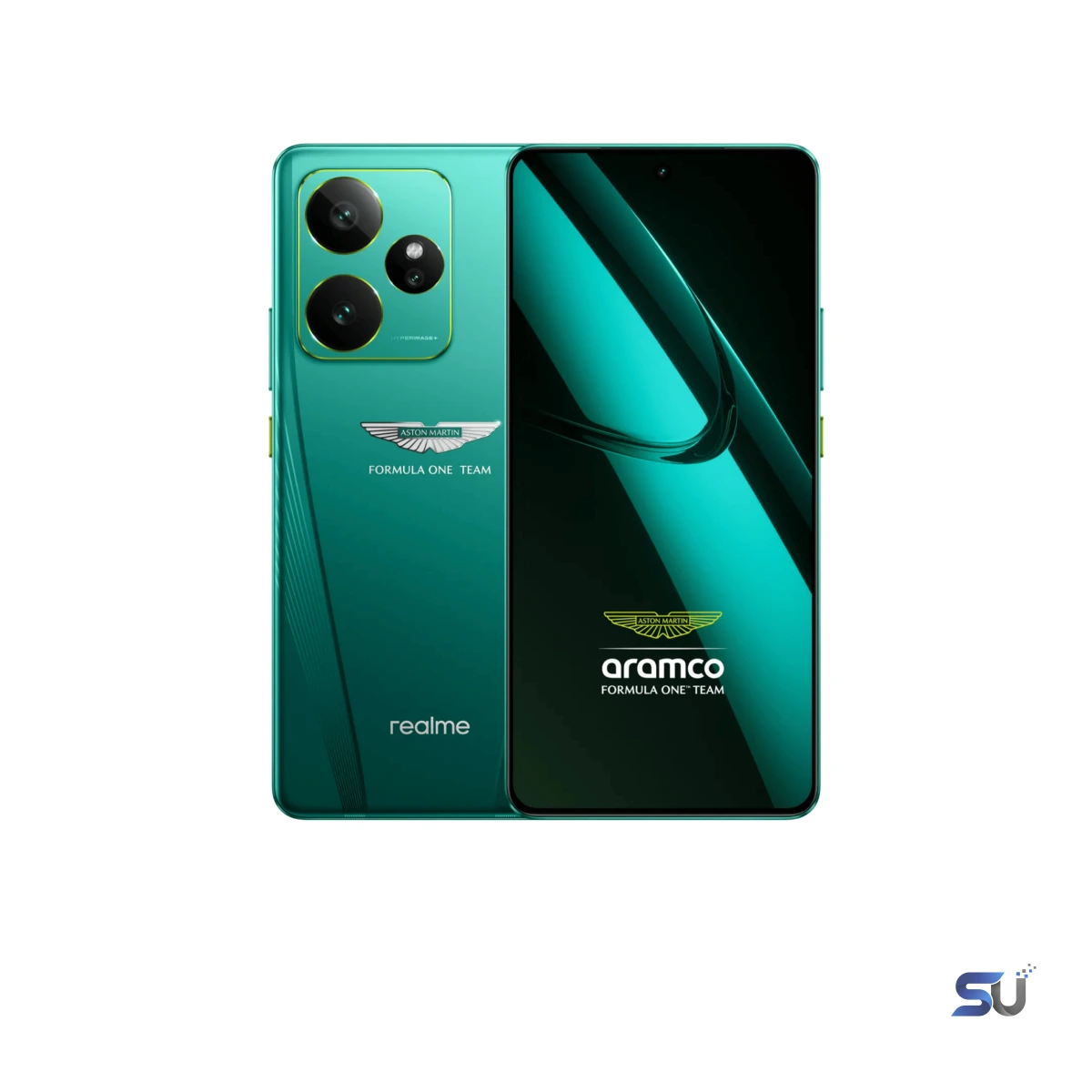
Colour choice is refreshingly simple on this standard model. IceSense Black looks understated and hides everyday marks rather well. IceSense Blue, by contrast, shows off the two-tone design proudly. The Aston Martin Green finish belongs to the separate Dream Edition. It is not part of this standard range at all.
The Realme GT 7 12GB launches on Android 15 with Realme UI 6.0. Most importantly, Realme promises four major Android upgrades for it. Security patches then continue for six years in total. That support window easily outlasts most owners' upgrade cycles. It also protects the phone's resale value later on.
AI features fill much of the software story here. The built-in AI Planner turns a double tap into calendar entries from messages. Photos, meanwhile, benefit from AI Eraser tools that remove strangers from shots. AI Ultra Clarity also sharpens older, softer photos quite noticeably. Google Gemini and Circle to Search are also on board. Some pre-installed apps appear too, although most can be removed.
Everyday security is simple, too. An under-display optical fingerprint sensor unlocks the phone in a blink. That sensor also approves payments inside supported banking apps. Meanwhile, regular Realme UI updates keep refining animations and battery behaviour. The experience, overall, feels polished rather than experimental.
Both SIM slots accept Nano-SIM cards, with 5G on either line. eSIM support also appears in select regions, so check before importing. Wi-Fi 7, Bluetooth 5.4 and 360-degree NFC cover wireless duties fully. An IR blaster can even run your television at home. GPS, additionally, locks on using dual-band signals and several satellite systems.
Small omissions still deserve a mention, though. There is no 3.5mm headphone jack and no FM radio either. USB-C therefore handles charging, audio and data transfers instead. Hi-Res audio support sweetens wired and wireless listening alike. Overall, the checklist feels complete for most buyers today.
For heavy multitaskers and gamers, yes, it is. Apps reload less, games stay resident longer, and the phone should age better. Light users, however, may never notice the difference day to day.
Independent testing measured 21 hours and 6 minutes of active use. Many owners will therefore see two days of normal use. Gaming heavily, of course, shortens that runtime considerably.
No, charging is wired only, at up to 120W. Realme's lab figures claim 50% in 14 minutes for the wired system. A full charge takes about 40 minutes, on those figures.
The standard model comes in IceSense Black and IceSense Blue. Aston Martin Green belongs to the separate Dream Edition instead. That special edition is a different product entirely.
The rating is IP69, the toughest commonly used on phones. It covers complete dust protection, immersion and high-pressure water jets. Still, water damage is never covered by warranty.
Realme promises four major Android upgrades from Android 15 onwards. Security patches run for six years in total. That policy matches or beats most Android rivals here.
There is no microSD slot and no 3.5mm jack. Storage is fixed at 256GB or 512GB instead. For audio, use USB-C or Bluetooth headphones.
Some phones chase camera crowns or folding tricks instead. This one chases stamina, speed and memory headroom above all. The Realme GT 7 12GB delivers all three without a flagship-sized price tag. Its weaknesses are real, yet they are easy to judge beforehand. Nobody, in other words, will miss wireless charging by accident here.
Buy it if your current phone dies early or reloads everything constantly. Skip it if you want a compact handset or magnetic charging. For everyone in between, this is an easy phone to recommend. Few rivals combine this battery, this screen and this much RAM.