A physical rotating bezel can sound old-fashioned until a sweaty hand, winter glove or long list makes touch control annoying. That familiar control is the main reason to consider the Samsung Galaxy Watch8 Classic. The exact 46mm model on Specs Universe combines it with modern Wear OS software, a bright AMOLED screen and Samsung’s broad health platform. It is also large, heavy and expensive enough to demand a clear reason for choosing it over the standard Watch8.
Specs Universe prepared this desk-research assessment from its published device record, Samsung documentation, independent testing and recurring owner feedback. We did not physically test the watch. Battery, comfort and sensor results can change with fit, settings, phone, activity and network use.
Quick verdict
The Samsung Galaxy Watch8 Classic is the best version of Samsung’s current watch for someone who genuinely values tactile navigation and traditional styling. Its stainless-steel case, rotating bezel, Quick Button and 64GB of storage create a more substantial product than the standard model. Wear OS 6 and One UI 8 Watch make everyday apps, payments and notifications useful rather than decorative.
The price and size narrow its audience. At 63.5g before the strap, it is not an ideal sleep watch for every wrist. Battery life remains measured in roughly a day or two, not a week. We recommend it for a Galaxy phone owner who wants the bezel and finds a proper US discount. Everyone else should compare the lighter Watch8 and longer-lasting alternatives first.
Important specifications
| Area | Specs Universe record | Why it matters |
|---|---|---|
| Display | 1.34-inch Super AMOLED, 438 × 438, 3,000 nits peak | Sharp, bright and easy to operate around the bezel |
| Processor | Samsung Exynos W1000, five-core, 3nm | Supports fast menus and modern Wear OS apps |
| Memory | 2GB RAM and 64GB storage | Plenty of room for apps and supported offline media |
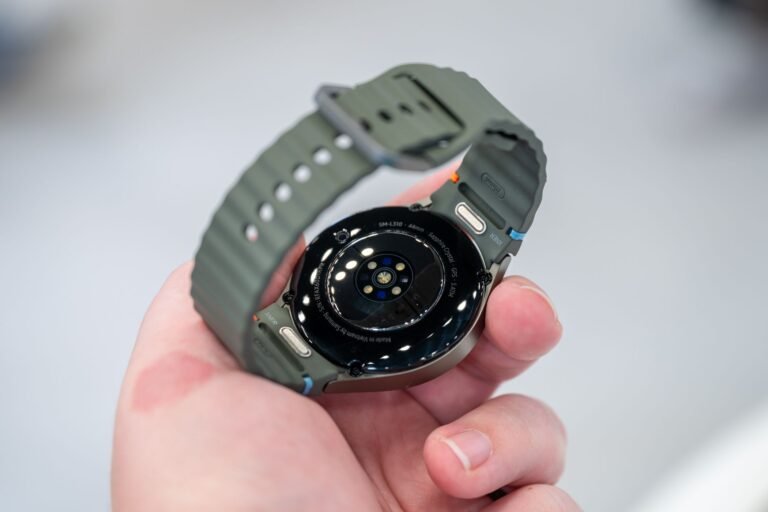
| Case | 46.4 × 46.0 × 10.6mm, 63.5g | Substantial on the wrist, especially during sleep |
| Material | Stainless-steel case | More traditional and premium than the aluminum Watch8 |
| Durability | 5 ATM, IP68 and MIL-STD-810H | Designed for normal exercise and water exposure within guidance |
| Battery | 445mAh; up to 40 hours with AOD off or 30 hours with AOD on | Regular charging remains part of ownership |
| Compatibility | Android 12 or newer with Google Mobile Services | No iPhone support |
These values apply only to the published 46mm Classic record. The standard Watch8 uses a different case, screen, weight, storage capacity and battery. Do not transfer figures between them simply because the software and processor are related.
The rotating bezel earns the Classic name
The bezel is not a visual ornament. It scrolls through menus, notifications and long lists without covering the screen with a finger. Published reviews consistently praise its direct control. Touch remains available, and the added Quick Button provides another shortcut for common tasks.
This approach works particularly well on a watch. A small touchscreen often asks for precise gestures at inconvenient moments. The physical ring gives clear movement and can reduce accidental inputs. Samsung removed the Classic from parts of its earlier lineup, so its return addresses a real preference rather than creating a new problem to solve.
Meanwhile, the stainless-steel case separates this model from the lighter Armor Aluminum Watch8. Black and White are the listed colors. The design has a stronger wrist presence, but the 46.4mm width and 63.5g weight will overwhelm some arms. Trying it on matters more than admiring a product render.
Sapphire crystal protects the 1.34-inch display from routine scratches. The 5 ATM and IP68 ratings support normal swimming, exercise and daily exposure within Samsung’s instructions. MIL-STD-810H testing adds durability context, though no rating makes a watch impossible to damage.
A smaller screen inside a larger body
The Super AMOLED panel measures 1.34 inches and carries a 438 × 438 resolution. Its 3,000-nit peak is built for visibility in strong outdoor light. Always-on display mode keeps the time and key information visible, although it reduces the published battery estimate from 40 to 30 hours.
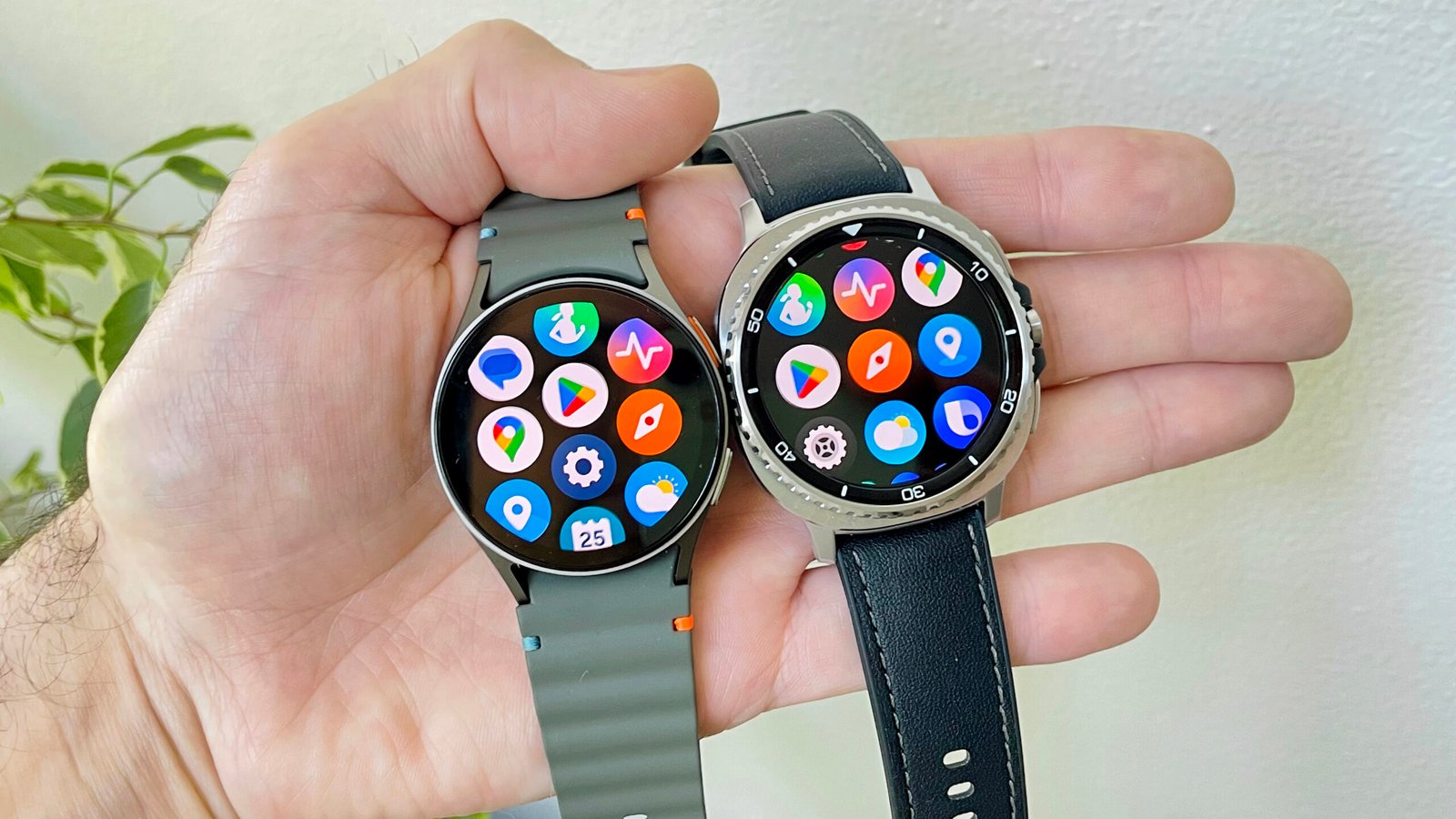
However, the standard 44mm Watch8 has a larger display inside a much lighter case. The Classic’s bezel occupies physical space, and that is the price of tactile control. Anyone who mainly wants maximum screen area should not assume the more expensive model is automatically better.
Colors, text and watch faces benefit from AMOLED contrast. The ring also protects the display edge from some direct knocks. It cannot prevent every scratch or impact, so active use still deserves sensible care.
Samsung Galaxy Watch8 Classic software
The Exynos W1000 combines five CPU cores on a 3nm process with 2GB of RAM. It is not a new chip for this generation, but published testing describes smooth everyday navigation. Wear OS 6 and One UI 8 Watch provide Google and Samsung services, third-party apps, notifications and voice assistance.
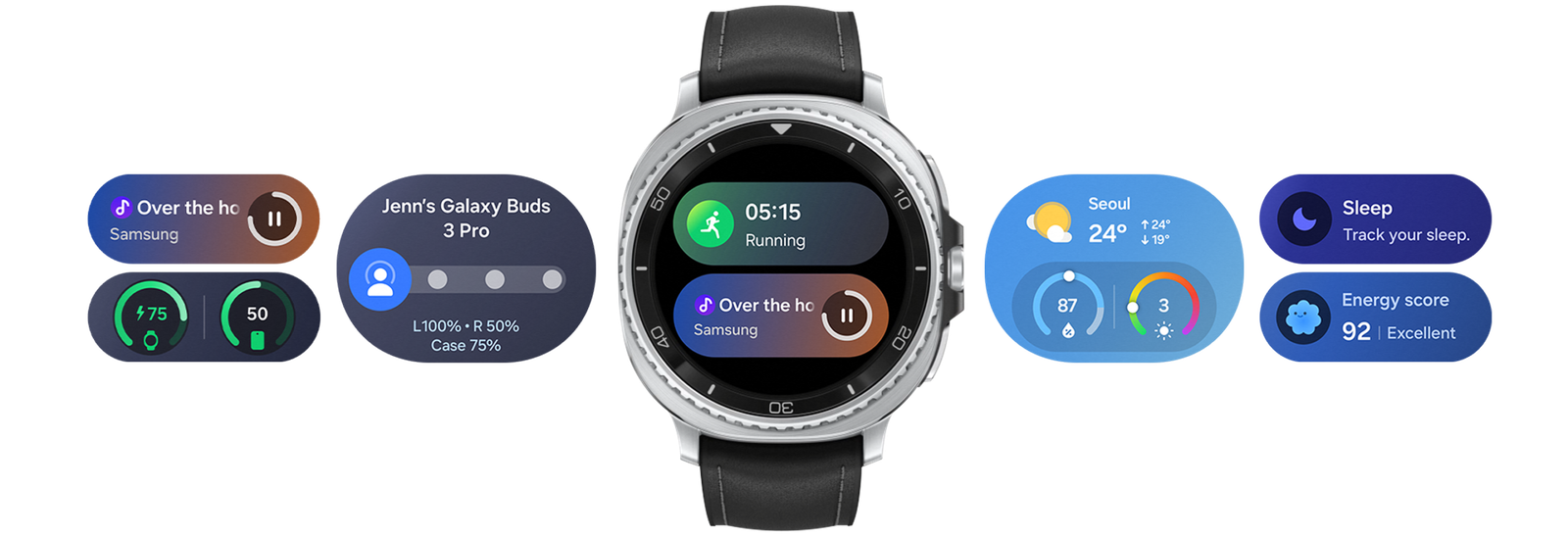
Google Maps, Wallet, media controls and messaging make the watch genuinely useful away from exercise. Samsung’s tiles, Now Bar and health screens organize information for quick viewing. The 64GB storage capacity is generous for a smartwatch and helps if supported apps, music and maps form part of the routine.
In practice, the strongest integration still comes with a Samsung Galaxy phone. Some health features require Samsung software, a supported country or a compatible phone. The Specs Universe record states Android 12 or newer with Google Mobile Services, so iPhone owners should look elsewhere.
No fixed public update term is verified in the canonical device record. Samsung has discussed multi-year support for recent watches, but this article keeps that policy separate from the stored specification. Buy for the software available now, not an assumed feature years away.
Health features are broad, not medical proof
The Specs Universe record includes heart-rate, ECG, SpO2 and sleep tracking. Samsung Health also combines activity and recovery information into approachable summaries. These tools can reveal personal patterns, encourage consistency and help someone notice a change worth investigating.
Still, they do not diagnose illness. ECG and other regulated features can vary by region, phone and account eligibility. Anyone with symptoms or a persistent concern should use professional medical advice rather than relying on a wrist reading.
The large steel case creates a practical conflict with sleep tracking. Some people will wear it comfortably, while others will remove it at night. Recurring owner feedback on large Galaxy watches reflects that split. A reliable sleep feature has little value if the case prevents regular use.
Samsung’s newer wellness tools add interesting context, but not every score is equally actionable. Published reviews describe the health platform as extensive while questioning the consistency or usefulness of some newer indicators. Trends over time deserve more attention than one dramatic number.
GPS and workout accuracy
Built-in multi-system GNSS supports outdoor recording without a connected phone. Independent tests show that dual-frequency positioning can improve difficult routes, but results are not flawless. Tall buildings, trees, turns and fit still influence a recorded track.
Heart-rate tracking is useful for daily trends and steady exercise. Hard intervals and rapid wrist movement can expose errors. A chest strap remains the better reference when precise training zones control a serious session.
Published reviews of the Watch8 family disagree on how consistently the sensors match specialist sports watches. That variation supports a measured conclusion. This is a very capable general fitness watch, yet a dedicated Garmin or COROS remains a safer choice for demanding endurance analysis.
Samsung Galaxy Watch8 Classic battery life
The 445mAh battery carries a published estimate of up to 40 hours with the always-on display off and up to 30 hours with it on. GPS, LTE, voice assistance, notifications and sleep tracking can lower those figures. They are maximum profiles, not promises.
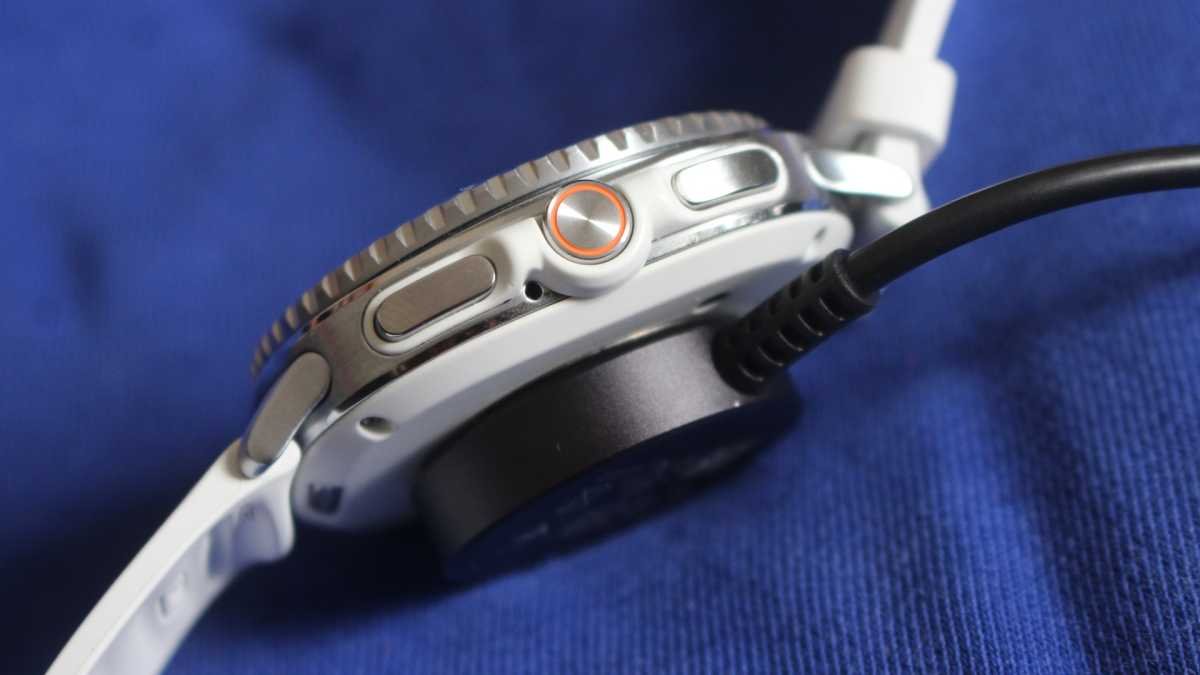
For example, independent reports commonly place normal use between one and two days. Some lighter routines can cross a second night, while heavy exercise or LTE use may require a daily charge. Owner discussions show the same spread, especially after setup or software updates.
Fast WPC-based wireless charging makes short top-ups practical, but a full charge still takes time in published testing. Charging during a shower or desk session is less disruptive than losing sleep data overnight. People who dislike planning around a charger should choose another watch.
Bluetooth or LTE?
Samsung sells Bluetooth/Wi-Fi and LTE variants, with eSIM support on the LTE model. Bluetooth 5.3, dual-band Wi-Fi and NFC cover normal syncing, local connectivity and supported contactless payments.
The Bluetooth version is the sensible default when a phone usually stays nearby. LTE can handle calls, messages and streaming without the phone in supported situations. It also adds a purchase premium, possible carrier charges and more battery demand.
US carrier support must be confirmed before ordering the LTE version. Imported stock can differ in activation, warranty and regional health features. A low international price is less attractive if the cellular function does not work as expected.
US price and value
The 46mm Bluetooth model launched in the United States at $499.99, with LTE costing more. That is a large premium over the standard Watch8. Most of the extra value comes from the stainless-steel construction, rotating bezel, Quick Button and additional storage rather than a dramatic change in core health tracking.
Discounts have already changed the equation. Some international or refurbished offers look much cheaper, but warranty and LTE compatibility need careful checking. We would favor official US stock unless the savings clearly justify the tradeoff.
Therefore, the Samsung Galaxy Watch8 Classic is difficult to recommend broadly at full price. At a strong discount, its design and controls become easier to defend. Galaxy Watch6 Classic owners should keep their current watch unless the newer software, storage or sensors solve a specific problem.
Three realistic alternatives
Samsung Galaxy Watch8 44mm: choose it for a larger screen, much lower weight and a lower price. Choose the Classic only when its bezel, steel case and 64GB storage matter.
Samsung Galaxy Watch Ultra: choose it for a more rugged outdoor role and longer practical endurance. The Classic looks more traditional and costs less at normal retail pricing.
OnePlus Watch: choose it when multi-day battery life matters more than Samsung Health integration. The Classic offers the better fit for a Galaxy phone and the unique rotating bezel.
Who should buy it?
Buy the Samsung Galaxy Watch8 Classic if a physical bezel is central to how you use a watch, you prefer stainless steel and you own a compatible Android phone. The 46mm case suits larger wrists and people comfortable with visible weight.
Skip it if sleep comfort, low weight or long battery life leads the decision. The standard Watch8 offers most software and health functions for less. iPhone users are outside the supported platform entirely.
Questions before buying
Is the rotating bezel worth the extra cost? It is worth paying for when tactile control is used every day. The ring makes long menus and notifications easier to navigate without covering the screen. If touch gestures already feel natural, the lighter standard model offers better value.
Can the Classic work with an iPhone? No. The Specs Universe record requires Android 12 or newer with Google Mobile Services. A compatible Samsung phone also provides the most complete health and software integration.
Is 46mm too large for sleep? The 63.5g steel case is substantial before adding a strap. Some wrists will tolerate it well, while others will prefer the 34g standard Watch8. Trying the watch is the best way to judge overnight comfort.
Does LTE improve health tracking? No. LTE mainly adds phone-free communication and data through a supported carrier. The Bluetooth model keeps the same core health sensors and costs less to own.
Can it replace a medical monitor? No. ECG, SpO2, heart-rate and sleep tools can provide useful consumer trends. They do not diagnose illness or replace professional care.
Final verdict
The Samsung Galaxy Watch8 Classic is a polished Android smartwatch with excellent controls, a bright screen and useful software. Its rotating bezel is the reason to pay more. The heavy case, short charging cycle and $499.99 launch price are the reasons not to.
We recommend the 46mm Bluetooth model for a Galaxy phone owner who finds a strong US discount and specifically wants the bezel. LTE only makes sense when phone-free calls and data justify the extra cost.