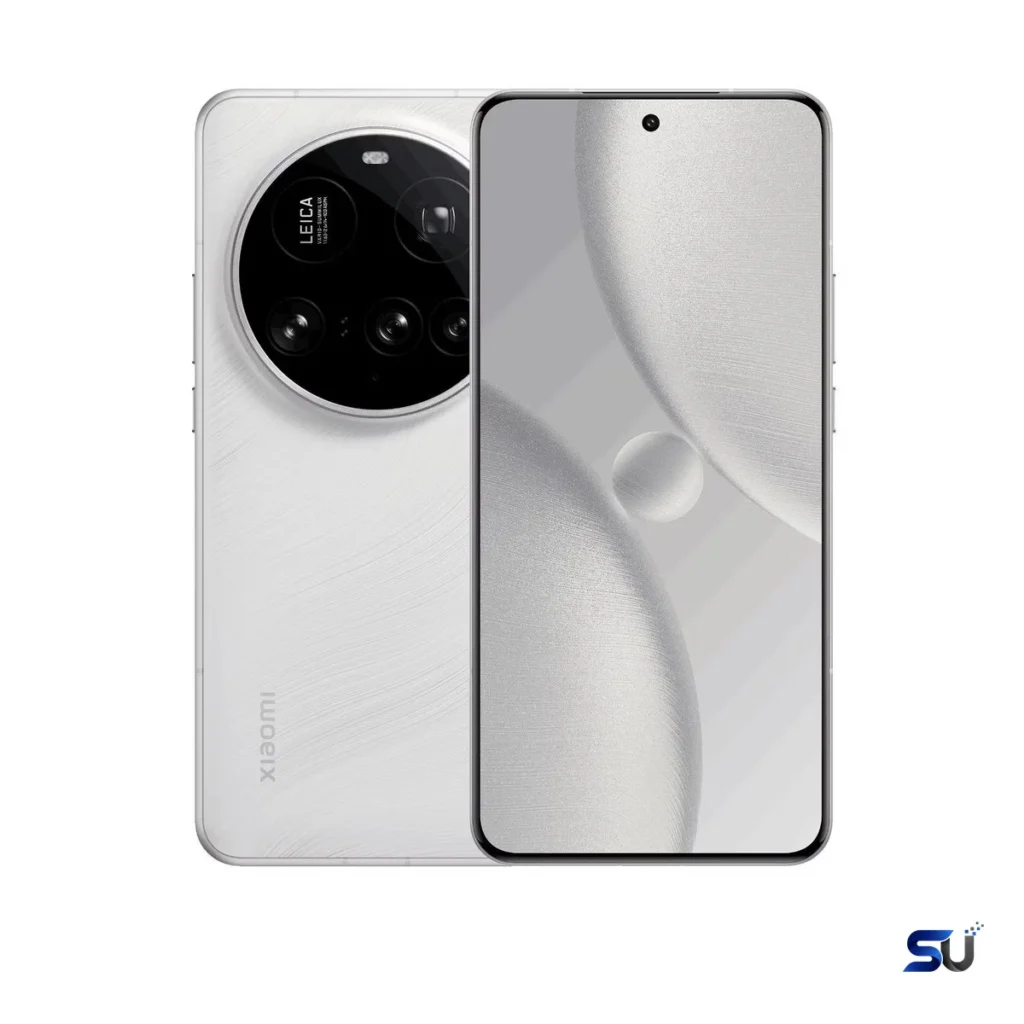
LTPO AMOLED
16 GB
512 GB
Quad: 50MP main (Sony LYT-900, 1-inch, f/1.63, OIS) + 200MP periscope telephoto (f/2.6, OIS) + 50MP telephoto (f/1.8, 3x) + 50MP ultrawide (115 deg, f/2.2), Leica Summilux optics
Qualcomm Snapdragon 8 Elite (3 nm)
5410 mAh
6.73 inches
LTPO AMOLED
3200 x 1440 (WQHD+)
120
3200
HDR10+, Dolby Vision
Xiaomi Shield Glass 2.0
Quad: 50MP main (Sony LYT-900, 1-inch, f/1.63, OIS) + 200MP periscope telephoto (f/2.6, OIS) + 50MP telephoto (f/1.8, 3x) + 50MP ultrawide (115 deg, f/2.2), Leica Summilux optics
32MP (f/2.0, 21mm)
120x digital zoom
8K at 30fps, 4K at 120fps, Dolby Vision HDR
Yes
Yes (OIS)
Qualcomm Snapdragon 8 Elite (3 nm)
Octa-core (2x 4.32 GHz Oryon V2 Phoenix L + 6x 3.53 GHz Oryon V2 Phoenix M)
Adreno 830
16 GB
512 GB
UFS 4.1
No
161.3 x 75.3 x 9.35 mm
226 g
Glass front and back, aluminum frame
IP68
Black, White, Silver Chrome
5410 mAh
90W wired
5G
Dual SIM (Nano-SIM + Nano-SIM or Nano-SIM + eSIM)
6.0
Wi-Fi 7
GPS (L1+L5), GLONASS, Galileo, BeiDou, QZSS, NavIC
Yes
USB Type-C
Android 15
Xiaomi HyperOS 2
3106 (single-core) / 9710 (multi-core) - Geekbench 6
3,030,376 - AnTuTu v11
1920Hz PWM / DC dimming
226 g
9.35 mm
Glass, aluminum
Ultrasonic in-display
Xiaomi's Ultra line has always been about the camera, and the Xiaomi 15 Ultra 16GB 512GB doubles down. A Leica co-engineered quad camera headlined by a 200MP periscope, backed by 16GB of RAM and 512GB of storage — a photography-first flagship that happens to do everything else brilliantly.
Xiaomi's Ultra line has always been about the camera, and the Xiaomi 15 Ultra 16GB 512GB doubles down. A Leica co-engineered quad camera headlined by a 200MP periscope, backed by 16GB of RAM and 512GB of storage — a photography-first flagship that happens to do everything else brilliantly.
If you're weighing up configurations, the 16GB/512GB setup is the sensible middle of the range. 512GB of storage means no hunting for space after a year of photos. 16GB of RAM handles anything Android can throw at a phone right now. A 16GB/1TB version also exists for people who truly need a terabyte in their pocket. For most buyers, though, this variant hits the sweet spot.
Xiaomi announced the 15 Ultra globally in March 2025 at MWC Barcelona. It priced this Xiaomi 15 Ultra 16GB 512GB variant at €1,499 in Europe. There's no official US release. Xiaomi doesn't sell phones directly in the United States, so American buyers are looking at imported global units. As a result, street prices move around depending on the importer.
That matters for warranty. You're buying the global model. After-sales support goes through the seller, not a US carrier store. On the plus side, the global model supports a wide spread of 5G bands, so it works on the major US networks.
Color options stay refreshingly restrained: White, Black, and Silver Chrome. The Silver Chrome finish is a touch thicker and heavier than the other two. That's also worth knowing if you count every gram. All three share the same camera hardware and the same IP68 rating, so the choice is purely cosmetic.
At the heart of the Xiaomi 15 Ultra 16GB 512GB sits the Snapdragon 8 Elite. It's Qualcomm's 3nm flagship platform. The CPU pairs two prime Oryon cores (up to 4.32GHz) with six performance cores (up to 3.53GHz). Meanwhile, the Adreno 830 GPU handles graphics.
On paper, that's the fastest Android silicon of its generation. In practice, apps open the instant you tap them. Demanding games run at max settings without stuttering. The phone juggles a dozen apps without breaking a sweat. Xiaomi also fits a 3D dual-channel IceLoop vapor chamber, so long gaming sessions and 8K recording don't turn the phone into a hand warmer. Even so, performance doesn't fall off a cliff.
Independent benchmark runs put the Xiaomi 15 Ultra 16GB 512GB at roughly 3,106 single-core and 9,710 multi-core in Geekbench 6. AnTuTu v11 scores land around 3,030,000. That means the phone feels overpowered for everyday use. In other words, that's exactly what you want from a flagship. The headroom covers years of software updates and hungrier apps. Gamers get stable high frame rates at max settings. The 300Hz touch sampling keeps controls feeling wired to your fingers.
Phone memory runs about as fast as it gets: 16GB of LPDDR5X at 8533Mbps. Apps stay alive in the background for ages. You can bounce between a game, a browser with twenty tabs, and the camera. As a result, nothing reloads. Storage is 512GB of UFS 4.1 — the quickest flash in phones. Installing huge games takes seconds, not minutes. Shuffling 8K video files is painless too. There's no microSD slot, so 512GB is your lot. If your camera roll eats storage for breakfast, the 1TB version is the alternative.
Up front sits a 6.73-inch AMOLED panel: 3200x1440 (WQHD+) at 522 pixels per inch, with text that looks printed even held close to your face.
It's an LTPO panel. The refresh rate slides between 1Hz and 120Hz depending on what's on screen. You get buttery scrolling when swiping, but it barely sips power when the image is static.
Peak brightness hits 3,200 nits. The screen stays readable in harsh sunlight. It supports HDR10+ and Dolby Vision, so supported movies get proper dynamic range, not a washed-out approximation.
Colors run to 68 billion shades with DCI-P3 coverage. For night use, there's 1920Hz PWM dimming plus DC dimming. That cuts flicker at low brightness, so your eyes will thank you during late scrolling sessions. The glass is Xiaomi Shield Glass 2.0. Wet-touch support means the screen still responds with damp fingers.
Above everything else, the camera system is what defines the Xiaomi 15 Ultra 16GB 512GB: four rear cameras developed with Leica, with Summilux lenses spanning 14mm to 100mm.
Headlining the system is the 200MP periscope telephoto. It uses a Samsung HP9 sensor with an f/2.6 aperture and optical stabilization. Focal length is 100mm. In plain terms, you can zoom deep into a scene and still pull out real detail — no smeary digital mess. It also doubles as a superb portrait lens with natural background compression.
Main camera duties fall to a 50MP Sony LYT-900 sensor: a full 1-inch type, f/1.63 aperture with OIS, at 23mm. A big sensor plus a wide aperture is the classic recipe for clean low-light shots. It also gives genuinely blurred backgrounds.
Next, a 50MP Sony IMX858 "floating" lens handles the middle distances at 70mm and f/1.8, and focuses close enough for detailed close-ups. The 50MP ultrawide (f/2.2, 14mm, 115-degree field of view) handles landscapes and tight interiors.
Digital zoom stretches to 120x. That's more bragging rights than practical photography. But the optical range underneath is genuinely useful, all the way from 14mm to 100mm.
Most phones give you one decent zoom level and then fall apart. The Xiaomi 15 Ultra 16GB 512GB gives you four genuinely usable perspectives. The 23mm main is your everyday lens: street scenes, food, friends. The 70mm telephoto is the portrait sweet spot. It flatters faces without wide-lens distortion. The 100mm periscope reaches across streets and into stadiums. It gets you closer to wildlife without moving your feet. The 14mm ultrawide squeezes in the whole building when you can't step back. Leica's color science comes in two flavors — punchy Leica Vibrant and restrained Leica Authentic — so pick a look and stick with it; no need to edit every shot.
Video goes up to 8K at 30fps. 4K runs at up to 120fps for smooth slow motion. Dolby Vision HDR recording gives footage real pop. The front camera is a 32MP OmniVision OV32B sensor. It has an f/2.0 aperture, a 21mm focal length, and a wide 90-degree field of view. That's wide enough for group selfies without a stick.
A 5,410mAh battery powers the Xiaomi 15 Ultra 16GB 512GB — generous for a phone this powerful. The adaptive 1-120Hz display and efficient 3nm chip stretch it further. Most people will end the day with charge to spare. Heavy camera days and long gaming sessions will still get you to bedtime.
When it runs low, 90W wired HyperCharge refills it remarkably fast. You get a meaningful charge in the time it takes to drink a coffee. 80W wireless HyperCharge is faster than most phones' wired charging. The phone also supports reverse wireless charging, so it can top up your earbuds in a pinch. It supports QC3+ and PD3.0 over USB-C, which also helps with third-party chargers.
Three things stand out here. First, 90W wired is properly fast — no battery anxiety like older ultra-fast systems. Second, 80W wireless is genuinely quick. Drop the phone on a compatible stand and it still tops up fast — not the trickle wireless used to be. Third, reverse wireless charging turns the phone into a power bank for accessories. One caveat: the very fastest speeds need Xiaomi's own chargers. A standard PD charger still charges quickly, just not at the full 90W.
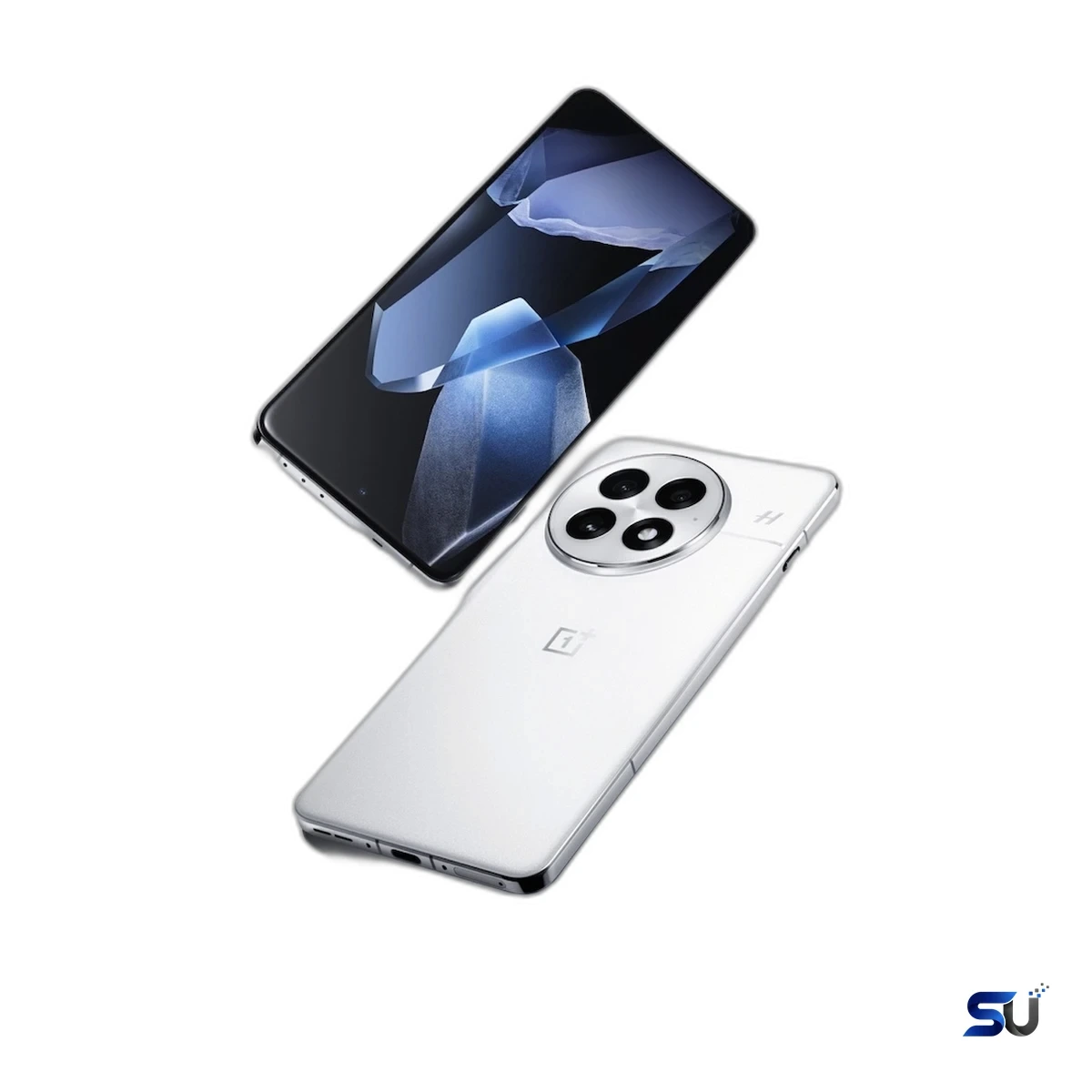
At 226 grams and 161.3x75.3x9.35mm, the Xiaomi 15 Ultra 16GB 512GB is a big, substantial phone. You feel it in a pocket and in the hand. That's the price of the camera hardware. The periscope zoom and 1-inch sensor need physical depth. The circular camera island makes no attempt to hide it.
It's a handsome device, though. Clean glass back, aluminum frame, and a prominent Leica-branded camera module. The IP68 rating keeps dust out completely. It also survives submersion in fresh water. Rain, spills, and accidental dunkings are non-issues. Just keep it away from salt water and soapy water, as with every IP68 phone.
The ultrasonic in-screen fingerprint sensor is fast. It works with slightly damp fingers too. AI face unlock is there for when you'd rather just glance at the phone.
The Xiaomi 15 Ultra 16GB 512GB ships with HyperOS 2 on top of Android 15. HyperOS replaces MIUI, and version 2 is noticeably cleaner. In practice, there's less bloat and smoother animations. It also ties in neatly with other Xiaomi devices you might own. The phone bakes in AI features — photo editing that removes passersby, real-time translation, writing assistance — and none of it feels bolted on. Xiaomi commits its flagships to several years of Android upgrades and security patches, so check Xiaomi's current policy for exact numbers — they vary by region.
Connectivity is covered thoroughly: it's a 5G phone with broad sub-6GHz band support, and the global model spans bands n1 through n79, including the ones US carriers lean on. The SIM setup is dual Nano-SIM, or Nano-SIM plus eSIM on the global version.
Wi-Fi 7 support means it's ready for the newest routers. Bluetooth 6.0 brings a long codec list — SBC, AAC, aptX, aptX HD, aptX Adaptive, LDAC, LHDC 5.0, and LC3 — great news for wireless audio quality. NFC handles contactless payments.
Positioning uses GPS (L1+L5), Galileo, GLONASS, BeiDou, QZSS, and NavIC. Location locks are fast and accurate. Stereo speakers with Dolby Atmos and Hi-Res certification cover media. And the IR blaster — a Xiaomi signature — turns the phone into a remote for the TV and air conditioner.
This phone is for people who put the camera first and everything else second. Love zooming into concerts? Shooting in low light? Wanting a proper 100mm lens in your pocket? Then the Xiaomi 15 Ultra 16GB 512GB is one of the most capable camera phones ever made. Meanwhile, power users get the fastest chip, the fastest memory and storage standards, and charging that embarrasses most flagships. It's less suited to small-phone fans — this is a big, heavy device. It's also not for anyone who wants to walk into a US carrier store for support. Xiaomi doesn't sell it officially in America. Import buyers should be comfortable with that trade-off.
Xiaomi announced the 15 Ultra in China in February 2025. It launched globally in March 2025 at MWC Barcelona. The 16GB/512GB variant was part of the global lineup from day one.
Yes. The global model's wide 5G band support covers the frequencies major American carriers use. It accepts Nano-SIM or eSIM. But Xiaomi doesn't sell it officially in the US. So you're buying an import, and warranty support goes through the seller — not a carrier store.
Yes. The periscope telephoto uses a 200MP Samsung HP9 sensor. It has optical stabilization and a 100mm focal length. It's a real optical zoom lens, not a software trick. And it's the standout of the phone's Leica camera system.
It supports 90W wired HyperCharge and 80W wireless HyperCharge. Reverse wireless charging covers accessories too. The fastest speeds need Xiaomi's own chargers. Standard PD chargers still charge it quickly.
It carries an IP68 rating. That seals out dust and lets it survive submersion in fresh water under controlled conditions — but treat it as highly water-resistant rather than waterproof. Salt water, soapy water, and high-pressure jets still deserve caution.
No. The Xiaomi 15 Ultra 16GB 512GB has no microSD slot, so the 512GB of UFS 4.1 storage is all you get. If you need more room, the 16GB/1TB version is the step up.