

LTPO Flexible AMOLED
16GB
512GB
50MP (Sony Lytia 700, f/1.9, Gimbal OIS) + 13MP ultrawide (f/2.2, 120°) + 32MP telephoto (f/2.4, 3x optical zoom, OIS)
Qualcomm Snapdragon 8 Elite (4.3 GHz, octa-core, 3 nm)
5800 mAh
6.78 inches
LTPO Flexible AMOLED
2400 x 1080 (FHD+)
185
2500 nits
HDR10
Corning Gorilla Glass Victus 2
50MP (Sony Lytia 700, f/1.9, Gimbal OIS) + 13MP ultrawide (f/2.2, 120°) + 32MP telephoto (f/2.4, 3x optical zoom, OIS)
32MP (f/2.5)
3x optical zoom
8K at 30 fps; 4K at 30/60 fps; 1080p at 30/60 fps
Still to discover
Yes (Gimbal OIS on main camera; OIS on telephoto)
Qualcomm Snapdragon 8 Elite (4.3 GHz, octa-core, 3 nm)
Octa-core (2 x 4.32 GHz Oryon + 6 x 3.53 GHz Oryon)
Qualcomm Adreno 830
16GB
512GB
UFS 4.0
No
163.8 x 77 x 8.9 mm
227 g
Glass back, metal frame
IP68
Phantom Black
5800 mAh
65W wired (Quick Charge 5.0, PD 3.0)
Yes, 15W (Qi 1.3)
Yes, 10W
Up to about 29 hours general use (NanoReview test); 13 hours 9 minutes web browsing
5G, 4G LTE, 3G, 2G
Dual Nano-SIM, Dual-Standby (no eSIM)
Bluetooth 5.4 (aptX Adaptive, aptX Lossless)
Wi-Fi 7 (802.11be/ax/ac/a/b/g/n, 2.4/5/6 GHz, Wi-Fi Direct)
GPS (L1/L5), Glonass, Galileo, BeiDou, QZSS, NavIC
Yes
USB Type-C 3.2, 3.5 mm headphone jack, DisplayPort 1.4
AeroActive Cooler X Pro compatible; AirTrigger controls
Android 15
ROG UI
Still to discover
Geekbench 6: Single-Core 3298, Multi-Core 10812 (NanoReview / Geekbench)
AnTuTu 11: 3,290,813 (NanoReview)
Still to discover
3DMark Steel Nomad Light stability 90%; Wild Life Extreme stability 82% (NanoReview)
General use about 29 hours 22 minutes; web browsing 13 hours 9 minutes; video 19 hours 36 minutes (NanoReview)
Full charge in about 47 minutes with 65W wired charging (NanoReview)
90.1 dB maximum (NanoReview speaker test)
670 Hz (NanoReview display test)
227 g
8.9 mm
Glass back, metal frame, Corning Gorilla Glass Victus 2 front
In-display optical fingerprint sensor; face recognition
Still to discover
Still to discover
Still to discover
AirTrigger shoulder buttons with dual-stage press
Specifications shown here are for reference only and may change or vary by variant. Please confirm the final details with the manufacturer or retailer before making a purchase.
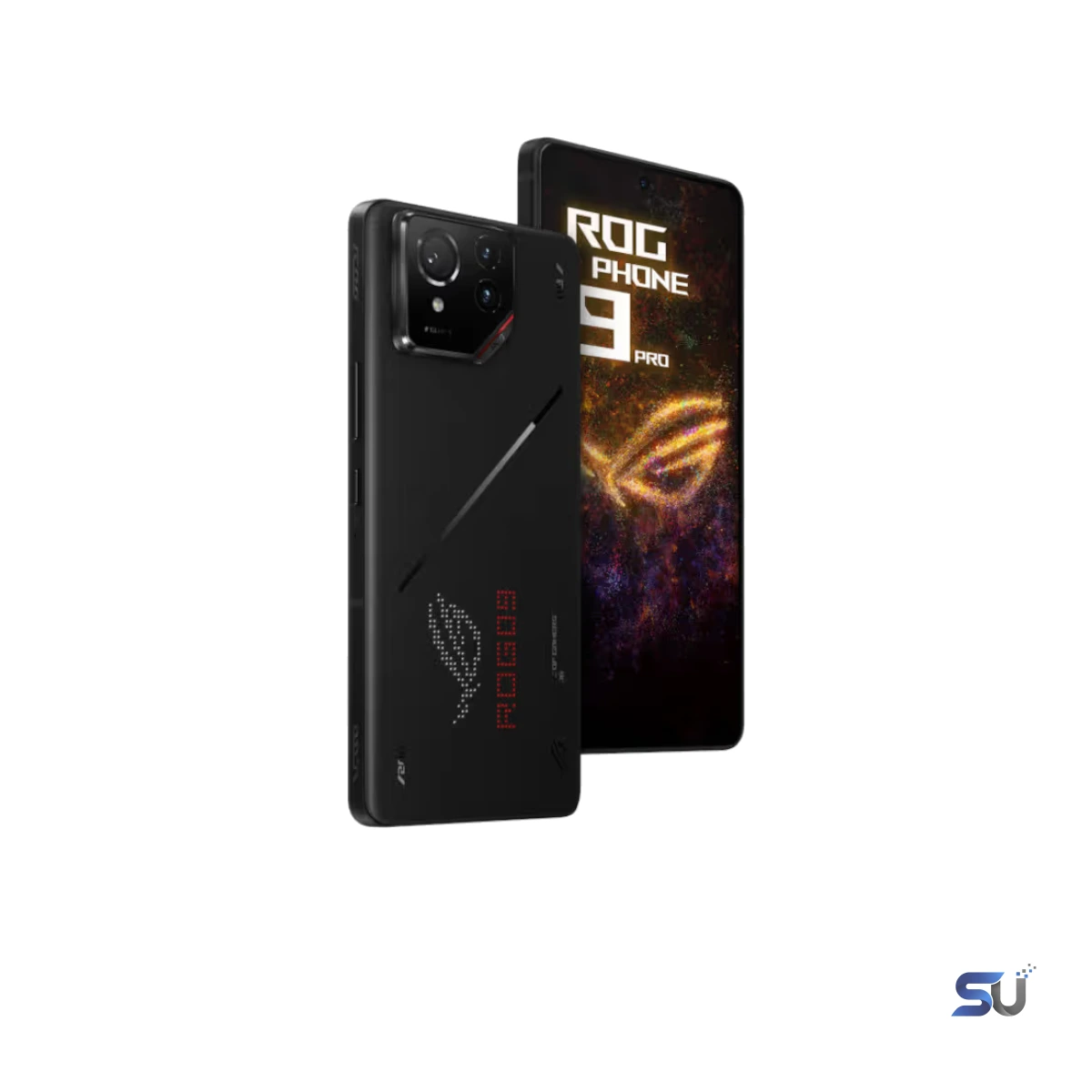
Asus built its reputation by listening to players who wanted phones that never blink first. The Asus ROG Phone 9 Pro 16GB 512GB continues that story with a sharper focus on endurance, speed, and control. It pairs a flagship Snapdragon 8 Elite chip with 16GB of memory and 512GB of storage. Furthermore, its large 5800 mAh battery keeps long sessions alive without constant charging. Indeed, this phone treats gaming as a serious pursuit rather than a casual pastime.
Asus built its reputation by listening to players who wanted phones that never blink first. The Asus ROG Phone 9 Pro 16GB 512GB continues that story with a sharper focus on endurance, speed, and control. It pairs a flagship Snapdragon 8 Elite chip with 16GB of memory and 512GB of storage. Furthermore, its large 5800 mAh battery keeps long sessions alive without constant charging. Indeed, this phone treats gaming as a serious pursuit rather than a casual pastime.
Its 6.78-inch display reaches 185 Hz for fluid motion in fast games. Moreover, the screen peaks at 2500 nits for clear outdoor play. The triple rear camera, led by a 50MP sensor, handles everyday photography with confidence. Thus, buyers get a complete flagship, not merely a gaming novelty. Nevertheless, weight and size remain important trade-offs for some hands.
Released in November 2024, the Asus ROG Phone 9 Pro 16GB 512GB arrived when mobile esports kept growing rapidly. Asus kept the headphone jack, added stereo speakers, and protected the body to IP68. For example, streamers can play, chat, and record without juggling extra dongles. Similarly, heavy users gain a device that stays fast through demanding days. As a result, the appeal stretches well beyond tournament players alone.
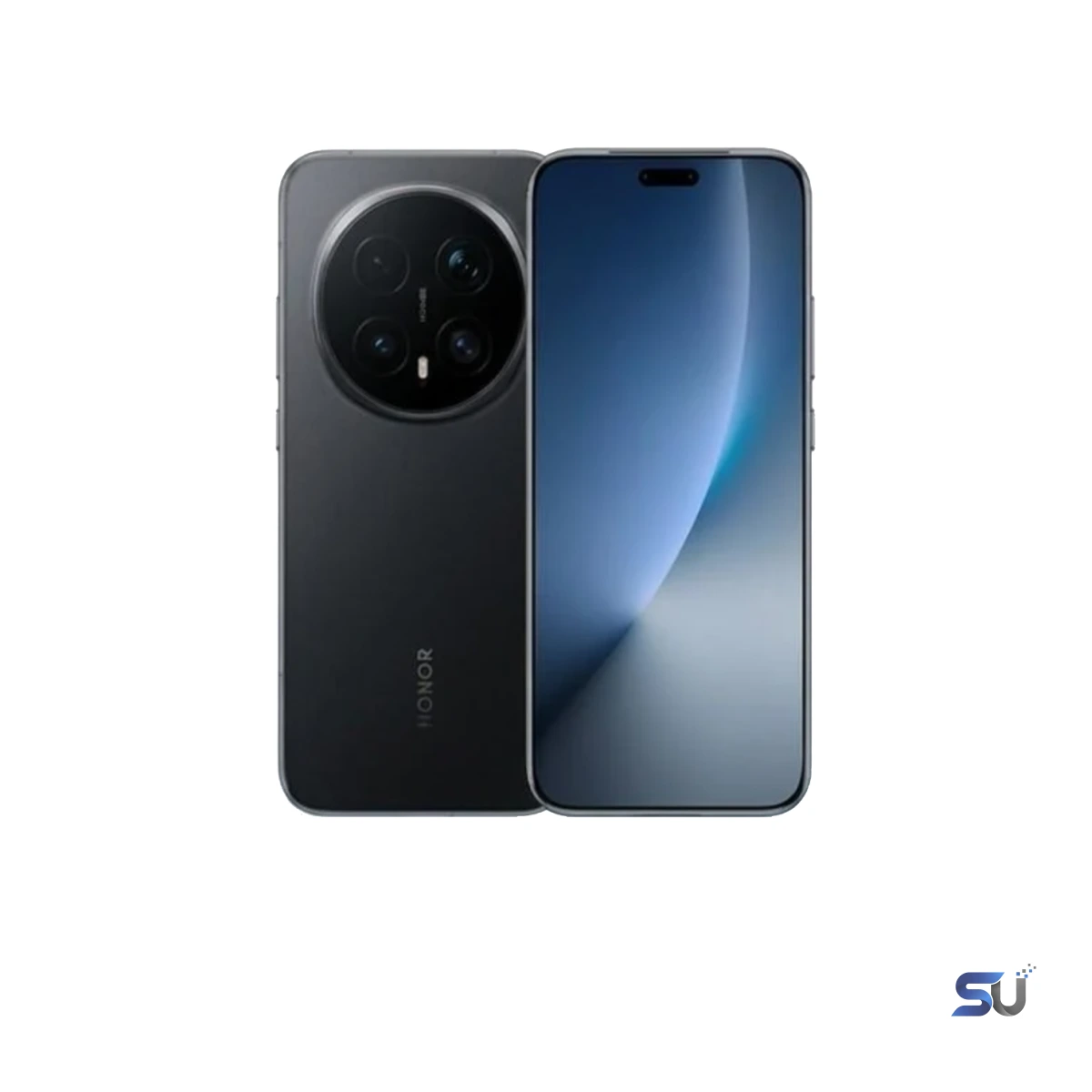
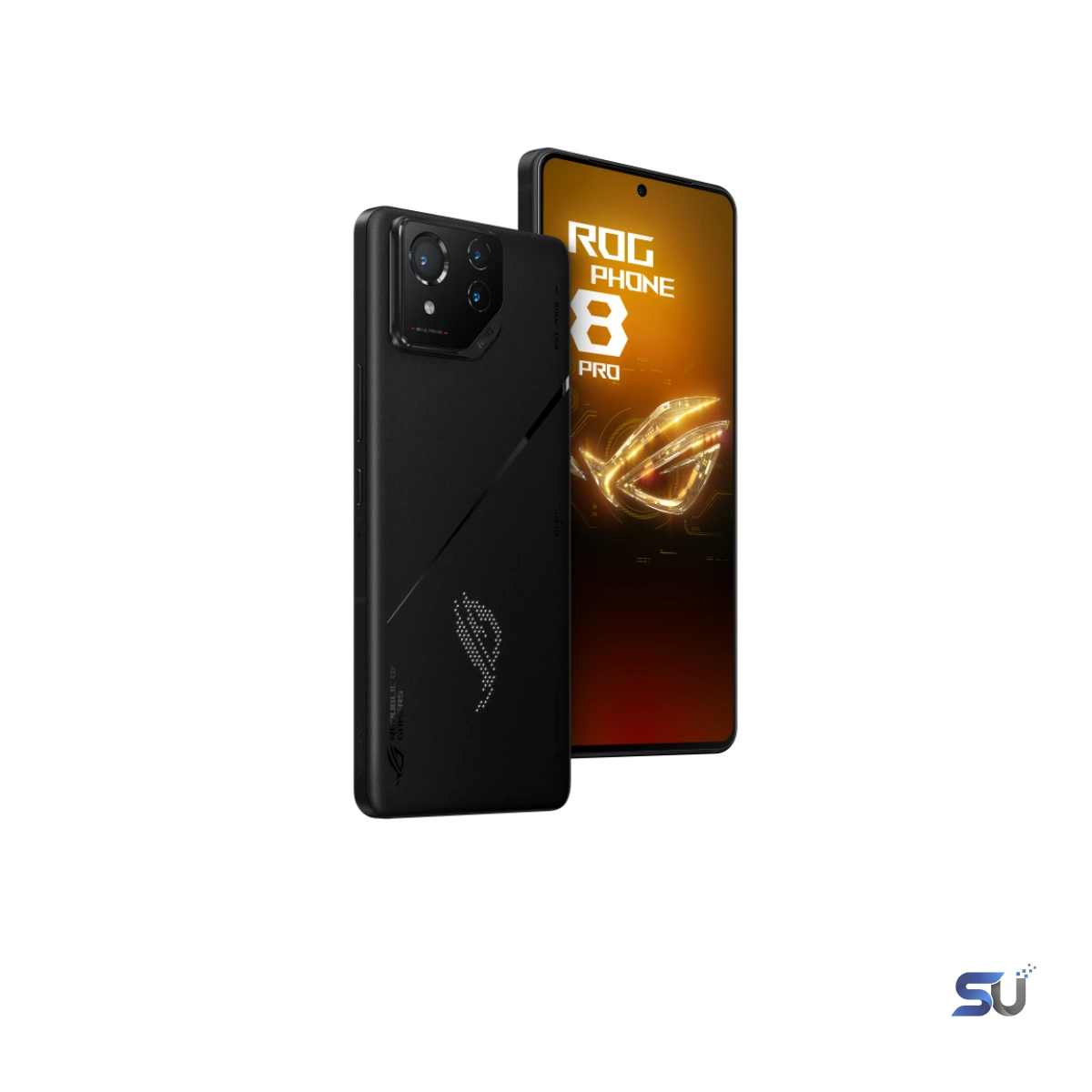
Phantom Black gives the Asus ROG Phone 9 Pro 16GB 512GB a restrained, serious appearance. Its glass back and metal frame feel solid in the hand. Furthermore, Corning Gorilla Glass Victus 2 protects the front against everyday knocks. The body measures 163.8 x 77 x 8.9 mm and weighs 227 g. Thus, it feels substantial rather than feather-light.
An IP68 rating guards against dust and water immersion. However, buyers should still treat the rating as protection, not an invitation. AirTrigger shoulder buttons add dual-stage press controls for games. Moreover, an in-display optical fingerprint sensor unlocks the phone quickly. Face recognition offers a convenient alternative unlocking method.
The rear camera module sits cleanly in the upper corner. Its angled design lines give Phantom Black a subtle gaming identity. For instance, the dotted ROG motif appears without shouting for attention. Similarly, the front screen stays free of heavy branding. As a result, the phone looks acceptable in offices and arenas alike.
The dark finish pairs well with most cases and accessories. Moreover, the phone's weight reminds users of its large battery inside. Indeed, flagship gaming hardware rarely travels light. As a result, buyers trade pocket comfort for stamina and power.
The 6.78-inch LTPO Flexible AMOLED screen defines daily use. Its 2400 x 1080 (FHD+) resolution keeps text sharp and games detailed. Furthermore, the 185 Hz refresh rate makes scrolling and aiming feel immediate. A 2500 nits peak brightness keeps the screen readable outdoors. HDR10 support adds richer contrast to supported video.
Corning Gorilla Glass Victus 2 shields the display from scratches. Moreover, the large screen suits split attention between gameplay and chat. For example, fast shooters benefit most from the high refresh rate. Similarly, video streaming looks smooth and vivid on this panel. Nevertheless, the full 185 Hz mode matters mainly in supported games. As a result, everyday scrolling still feels fluid without wasting power.
The screen measures 6.78 inches, a size that favours immersion. Indeed, larger displays help players spot distant opponents sooner. Thus, the panel serves both competitive play and relaxed viewing.
Brightness of 2500 nits helps in harsh sunlight. Furthermore, HDR10 video gains depth on supported content. Text stays legible during bright outdoor sessions. Similarly, colours remain vivid without looking oversaturated. Thus, the display works hard in every lighting condition.
Qualcomm Snapdragon 8 Elite powers this phone at up to 4.3 GHz. Its octa-core design pairs two 4.32 GHz Oryon cores with six 3.53 GHz Oryon cores. Furthermore, the Qualcomm Adreno 830 graphics processor handles demanding titles smoothly. Memory reaches 16GB, while storage offers 512GB of fast UFS 4.0 space. However, storage cannot expand, so buyers should choose capacity carefully.
Benchmark results confirm the flagship positioning with clear numbers. Geekbench 6 records a single-core score of 3298. Moreover, its multi-core score reaches 10812 in the same test. AnTuTu 11 totals 3,290,813, according to NanoReview testing. Thus, heavy multitasking and high-end gaming stay comfortable.
3DMark Steel Nomad Light stability reaches 90 percent in testing. Similarly, Wild Life Extreme stability measures 82 percent. For example, long sessions should remain stable rather than throttling early. Nevertheless, real-world heat still depends on ambient temperature and game load. As a result, players gain predictable power for ranked matches.
Memory and storage speeds matter during loading screens. UFS 4.0 storage helps games and apps open quickly. Furthermore, 16GB of memory keeps background apps ready. Switching between a game and chat stays smooth. As a result, the phone rarely forces users to wait.
The rear system combines three lenses for flexible shooting. Its main camera uses a 50MP Sony Lytia 700 sensor at f/1.9. Furthermore, Gimbal OIS steadies the main camera during handheld shots. A 13MP ultrawide lens at f/2.2 captures 120-degree wide scenes. The 32MP telephoto lens at f/2.4 adds 3x optical zoom with OIS.
Video reaches 8K at 30 fps from the main camera. Moreover, 4K recording runs at 30/60 fps. Footage at 1080p also supports 30/60 fps. For instance, creators can film smooth clips without extra equipment. Similarly, the zoom range helps capture distant subjects cleanly.
The front camera of the Asus ROG Phone 9 Pro 16GB 512GB offers 32MP resolution at f/2.5. Indeed, selfies and video calls look sharp in good light. Thus, streamers can rely on the front camera for face-cam footage. However, low-light results depend heavily on scene lighting. As a result, the camera package suits everyday photography and social use.
A 5800 mAh battery anchors the Asus ROG Phone 9 Pro 16GB 512GB endurance story. General use lasts about 29 hours in NanoReview testing. Furthermore, web browsing reaches 13 hours 9 minutes. Video playback extends to 19 hours 36 minutes. Thus, most users can skip midday charging entirely.
Wired charging runs at 65W with Quick Charge 5.0 and PD 3.0. A full charge takes about 47 minutes in testing. Moreover, wireless charging supports 15W through Qi 1.3. Reverse charging offers 10W for accessories and other devices. For example, earbuds can gain power directly from the phone.
Large capacity matters most during travel and tournaments. Nevertheless, heavy gaming drains any battery faster than browsing. Similarly, high refresh rates increase power draw during play. As a result, players should still pack a charger for marathon days. Indeed, the 65W wired option makes short top-ups genuinely useful.
Charging flexibility covers wired, wireless, and reverse options. The 65W wired charger fills the battery in about 47 minutes. Furthermore, 15W wireless charging suits overnight bedside use. Reverse charging at 10W helps accessories in emergencies. Thus, power management adapts to different daily routines.
AirTrigger shoulder buttons change how games feel on the Asus ROG Phone 9 Pro 16GB 512GB. Their dual-stage press supports aiming and shooting with precision. Furthermore, AeroActive Cooler X Pro compatibility extends accessory options. Stereo speakers reach 90.1 dB maximum in NanoReview testing. Thus, game audio stays loud without external speakers.
A 3.5 mm headphone jack serves players who prefer wired audio. Moreover, Bluetooth 5.4 supports aptX Adaptive and aptX Lossless. The USB Type-C 3.2 port also supports DisplayPort 1.4 output. For instance, players can connect the phone to larger displays. Similarly, wired headsets avoid the latency of wireless audio.
The in-display fingerprint sensor keeps unlocking fast between matches. Face recognition adds a hands-free alternative when fingers stay busy. Indeed, small conveniences matter during long competitive sessions. As a result, the phone stays practical away from games too.
Network support covers 5G, 4G LTE, 3G, and 2G. Dual Nano-SIM slots support dual-standby operation. However, the phone does not support eSIM. Wi-Fi 7 covers 2.4, 5, and 6 GHz bands. Furthermore, Wi-Fi Direct helps with fast local sharing.
Bluetooth 5.4 covers aptX Adaptive and aptX Lossless audio. NFC support enables contactless payments and quick pairing. Moreover, satellite positioning includes GPS, Glonass, Galileo, BeiDou, QZSS, and NavIC. The L1 and L5 GPS bands improve location accuracy outdoors. Thus, navigation stays reliable during travel and outdoor play.
Ports on the Asus ROG Phone 9 Pro 16GB 512GB include USB Type-C 3.2 and a 3.5 mm headphone jack. DisplayPort 1.4 support adds wired video output options. For instance, the phone can drive an external display for big-screen play. Similarly, the jack keeps wired accessories simple and affordable. As a result, connectivity covers both modern wireless and trusted wired needs.
Android 15 runs beneath the ROG UI skin. The interface adds gaming tools without hiding Android basics. Furthermore, ROG UI themes match the phone's bold hardware identity. Navigation stays familiar for anyone moving from another Android phone. Thus, new owners face little learning curve.
Gaming features sit close at hand during play. AirTrigger controls and performance modes remain easy to reach. Moreover, the interface keeps notifications manageable during matches. Indeed, software should support play rather than interrupt it. As a result, ROG UI feels purposeful instead of decorative.
Android 15 also brings current privacy and permission controls. For example, users can review app access from system settings. Similarly, familiar Google services work exactly as expected. Nevertheless, buyers should confirm update plans with Asus directly.
This phone suits competitive mobile gamers first. The Asus ROG Phone 9 Pro 16GB 512GB also suits heavy users who want flagship speed daily. Furthermore, the bright 185 Hz screen rewards fast-paced titles. The large 5800 mAh battery supports long sessions away from chargers. Thus, endurance and speed form the core appeal.
Streaming, multitasking, and demanding everyday use also fit well. Everyday photography, video, and social use remain perfectly workable. For instance, the versatile cameras handle holidays and gatherings easily. Similarly, the loud speakers and large screen suit media viewing. Nevertheless, light-phone lovers may find 227 g too heavy.
Small-phone buyers should look elsewhere for compact dimensions. Buyers wanting wireless charging above 15W should also reconsider. Moreover, expandable storage is absent, so capacity planning matters. As a result, the ideal buyer values power over pocketability. Indeed, this phone makes its priorities clear from first use.
The Asus ROG Phone 9 Pro 16GB 512GB blends flagship speed with genuine gaming focus. Its Snapdragon 8 Elite chip, 185 Hz display, and 5800 mAh battery cover competitive needs. Furthermore, versatile cameras and strong connectivity keep everyday life simple. Thus, it stands as a complete flagship for players first.
Buyers should weigh weight, size, and fixed storage before ordering. Nevertheless, few phones match this blend of power and endurance. As a result, serious mobile gamers gain a dependable daily flagship.
Yes, wireless charging reaches 15W through Qi 1.3. Furthermore, wired charging runs at 65W for faster top-ups. Reverse charging adds 10W for accessories.
This configuration includes 512GB of UFS 4.0 storage. However, storage cannot expand through a memory card. Moreover, 16GB of memory supports heavy multitasking smoothly.
Yes, the 50MP main camera handles everyday scenes confidently. Furthermore, the 13MP ultrawide and 32MP telephoto add flexibility. Video reaches 8K at 30 fps for ambitious creators.
Yes, a 3.5 mm headphone jack remains available. Moreover, Bluetooth 5.4 supports aptX Adaptive and aptX Lossless audio. Thus, both wired and wireless listening work well.
AirTrigger shoulder buttons give players console-style controls. Furthermore, the 185 Hz display and large battery target long sessions. As a result, gaming stays central without sacrificing everyday flagship features.
The Asus ROG Phone 9 Pro 16GB 512GB rewards buyers who put play first. Its chip, screen, and battery work together without obvious weak links. Furthermore, the camera system and stereo speakers keep everyday use enjoyable. Thus, the phone avoids feeling like a one-trick device.
Buyers should still consider size, weight, and fixed storage carefully. However, those trade-offs buy genuine flagship endurance. Moreover, the 185 Hz display and AirTrigger controls remain rare strengths. For example, ranked players gain tools that standard flagships rarely offer. As a result, this gaming flagship earns a confident recommendation for its intended audience.
Students, streamers, and heavy multitaskers also benefit from the large battery. Indeed, long days away from chargers become far less stressful. Similarly, the bright screen and loud speakers suit video watching anywhere. Thus, the verdict stays simple for players who want power first.