

LCD
8GB
128GB
50MP + 2MP
Qualcomm Snapdragon 4 Gen 2
6000mAh
6.75 inches
LCD
1600 x 720
120
450
Still to discover
2.5D cover glass
50MP + 2MP
8MP
Still to discover
Full HD @30/60 fps
Yes
Still to discover
Qualcomm Snapdragon 4 Gen 2
Octa-core (2 x 2.2 GHz + 6 x 2.0 GHz)
Adreno 613
8GB
128GB
UFS 2.2
Yes, up to 2TB via microSD (hybrid slot)
Height 168.2 mm, thickness 9.15 mm
210g
PMMA back
IP64
Blue, Pink, Green, Burgundy, Navy Blue
6000mAh
18W
Still to discover
Still to discover
17h 16m (PCMark, 91mobiles model test)
5G (SA/NSA), dual 4G VoLTE
Dual Nano-SIM (hybrid)
5.1
Wi-Fi 802.11ac (2.4GHz + 5GHz)
GPS, GLONASS, BeiDou, Galileo
No
USB Type-C, 3.5mm headphone jack
Still to discover
Android 16
Stock Android (no bloatware)
Two OS upgrades, guaranteed to Android 18
916 single-core / 2131 multi-core (91mobiles model test)
624,632 (91mobiles model test)
Still to discover
Still to discover
17h 16m PCMark (91mobiles model test)
1h 48m 49s, 20% to 100% (91mobiles model test)
Still to discover
Still to discover
210g
9.15mm
PMMA back, 2.5D cover glass
Side-mounted, capacitive
Still to discover
Still to discover
Still to discover
Still to discover
Specifications shown here are for reference only and may change or vary by variant. Please confirm the final details with the manufacturer or retailer before making a purchase.
Morning trains, group chats, maps, and calls all compete for attention before breakfast ends. Most budget phones handle one demand well, then stumble when several arrive together. That crowded, ordinary pressure is where the Mivi One 5G 8GB makes its quiet case. Moreover, it does not chase flagship glamour or headline numbers for their own sake. Instead, it offers room to breathe, a large battery, and software that stays out of the way. Indeed, the appeal lies in steadiness rather than spectacle or sudden speed bursts.
Morning trains, group chats, maps, and calls all compete for attention before breakfast ends. Most budget phones handle one demand well, then stumble when several arrive together. That crowded, ordinary pressure is where the Mivi One 5G 8GB makes its quiet case. Moreover, it does not chase flagship glamour or headline numbers for their own sake. Instead, it offers room to breathe, a large battery, and software that stays out of the way. Indeed, the appeal lies in steadiness rather than spectacle or sudden speed bursts.
For example, a student can switch between notes, video, and messages without constant reloading. Similarly, a busy parent can keep navigation, calls, and photos running through a long afternoon. Thus, this overview treats the phone as a daily companion, not a trophy device. Nevertheless, honesty matters here, since some limits remain visible at this level. As a result, the sections below weigh strengths plainly and name trade-offs early.
Mivi built its name on earphones and speakers that sounded good without costing a fortune. Furthermore, that background shows in a phone that values clear calls and simple controls. However, a first smartphone still needs proof, not only a familiar brand name. For instance, buyers should ask whether memory, battery, and support truly last.
Indeed, those three questions shape the rest of this guide in practical terms. Firstly, extra memory should keep apps ready rather than forcing fresh starts. Secondly, a large battery should reduce charger anxiety during long days. Thirdly, clean software should keep the phone easy after months of use. As a result, each section below returns to daily use, not abstract specifications alone.
Eight gigabytes of RAM changes how a phone feels after the novelty fades. Moreover, apps stay in memory longer, so returning to a chat feels instant. For example, switching from a map to a payment app rarely forces a reload. Similarly, video calls, browsers, and music can share the phone without constant juggling. Thus, the extra memory suits people who keep many tasks open at once.
However, memory alone cannot turn a budget chip into a flagship performer. Nevertheless, it removes a common bottleneck that makes cheaper phones feel slow. Indeed, the difference appears in small moments, not in dramatic benchmark charts. Furthermore, 128GB of UFS 2.2 storage gives photos, apps, and downloads ample room. As a result, most buyers will not need to delete memories to install updates.
For instance, a large offline playlist and a term of class files can coexist. Moreover, a hybrid slot allows microSD expansion up to 2TB when needs grow. However, that choice replaces a second Nano-SIM, so travellers should plan ahead. Thus, memory here means headroom for real life, not bragging rights alone. Nevertheless, buyers who use only two apps may find the smaller tiers sufficient.
A 6.75-inch LCD panel gives video, reading, and maps generous breathing room. Moreover, its 1600 x 720 resolution keeps text readable without draining power quickly. For example, long articles and recipe pages remain comfortable during evening scrolling. Similarly, a 120Hz refresh rate makes swipes and feeds feel smooth and responsive. Thus, motion looks calmer than on many basic phones with slower screens. However, HD+ sharpness cannot match sharper Full HD panels at close range.
Nevertheless, the balance suits battery life and everyday viewing very well. Indeed, 450 nits of brightness helps outdoors in ordinary daylight conditions. Furthermore, a 2.5D cover glass softens edges and adds a gentle, modern feel. As a result, holding the phone for long calls feels less tiring. For instance, the waterdrop notch keeps the front simple, though some may prefer punch-hole designs. Moreover, colours stay pleasant for video, even if deep blacks remain limited by LCD technology. Thus, this screen prioritises comfort, size, and smoothness over premium contrast.
The Qualcomm Snapdragon 4 Gen 2 chip powers daily tasks with calm efficiency. Moreover, its octa-core layout pairs two 2.2 GHz cores with six 2.0 GHz cores. For example, messages, browsing, and social apps open without frustrating delays. Similarly, the Adreno 613 graphics handle casual games and smooth video playback. Thus, light gaming works well, while demanding titles need modest settings. However, buyers should not expect console-level graphics from this class. Nevertheless, 91mobiles model-level tests provide useful context for performance.
Indeed, AnTuTu reached 624,632 in that shared model test. Furthermore, Geekbench recorded 916 single-core and 2131 multi-core in the same test. As a result, the numbers suggest dependable mid-tier speed, not flagship power. For instance, a Wild Life Extreme score of 184 underlines modest gaming headroom. Moreover, the 4nm design helps efficiency during long sessions and warm weather. Thus, the Mivi One 5G 8GB suits steady use far better than marathon gaming sessions. Nevertheless, the top memory tier helps the chip maintain apps without repeated reloads.
A 50MP main camera leads a simple dual rear setup with a 2MP companion. Moreover, its Samsung ISOCELL sensor uses an f/1.8 aperture for brighter daylight shots. For example, outdoor photos show natural colours and useful detail for sharing. Similarly, phase detection autofocus helps lock onto moving children and pets. Thus, quick family moments need less waiting and fewer missed shots. However, low light still challenges a budget sensor, despite pixel merging. Nevertheless, night mode offers a helpful option for dim restaurants and streets.
Indeed, four pixels merge into larger 1.28 units when light drops. Furthermore, Full HD video at 30 or 60 frames per second covers everyday clips. As a result, birthday videos and class recordings look clear on a phone screen. For instance, the 8MP front camera suits video calls and wide group selfies. Moreover, its f/2 aperture and screen flash help in dim indoor light. Thus, selfies stay social and usable, even if fine detail remains modest. Nevertheless, buyers seeking pro-level portraits should look at higher tiers.
A 6000mAh battery anchors the phone's promise of long, calm days. Moreover, PCMark endurance reached 17h 16m in 91mobiles model testing. For example, a full morning of maps, calls, and music leaves ample reserve. Similarly, evening video and reading rarely demand a midday top-up. Thus, many users can stretch use across two lighter days. However, heavy gaming and bright outdoor use will shorten that result. Nevertheless, the large cell remains the phone's most reassuring feature.
Indeed, 18W USB PD charging refills the battery steadily, not rapidly. Furthermore, a charger comes in the box, which many rivals now omit. As a result, buyers avoid an extra purchase on day one. For instance, 91mobiles recorded 1h 48m 49s from 20% to 100% in testing. Moreover, that pace rewards overnight charging and planned top-ups. Thus, patience becomes part of the deal, balanced by excellent endurance. In short, the Mivi One 5G 8GB trades charging speed for stamina.
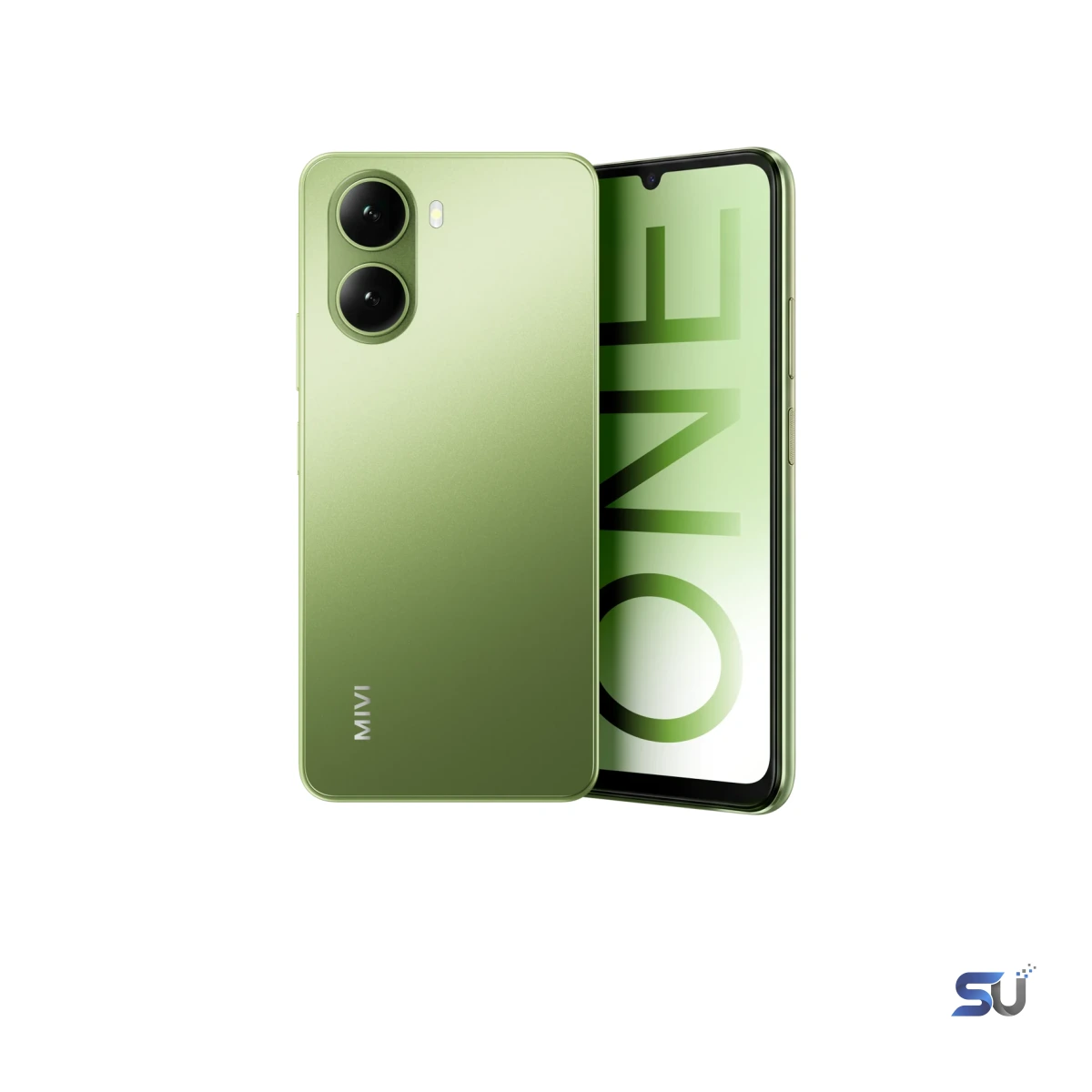
Five colours give buyers a genuinely personal choice at this level. Moreover, Blue, Pink, Green, Burgundy, and Navy Blue each suit different tastes. For example, Green feels fresh and lively, while Navy Blue stays quietly classic. Similarly, Burgundy adds warmth without shouting for attention in a meeting. Thus, colour becomes a small daily pleasure, not an afterthought. However, the phone weighs 210g, so it feels solid rather than featherlight. Nevertheless, a 9.15mm thickness keeps the large battery surprisingly manageable.
The Mivi One 5G 8GB stands 168.2mm tall, with that 9.15mm thickness. Indeed, a 2.5D PMMA back gives a smooth, rounded impression in hand. Furthermore, IP64 dust and splash resistance adds useful everyday protection. As a result, light rain and dusty commutes cause less worry. For instance, a side-mounted capacitive fingerprint sensor unlocks quickly and naturally. Moreover, its position suits both right-handed and left-handed users well. Thus, the design balances size, protection, and colour with quiet confidence.
Stock Android 16 keeps menus simple, with no bloatware slowing the experience. Moreover, two OS upgrades promise a path guaranteed to Android 18. For example, future features should arrive without waiting for a heavy skin. Similarly, a clean home screen helps new smartphone users learn quickly. Thus, software becomes a long-term asset, not a launch-day gimmick. However, stock software also means fewer custom extras than some rivals offer. Nevertheless, many buyers will prefer clarity over crowded feature lists.
Indeed, Mivi ClearTalk noise reduction aims to keep calls clear in noise. Furthermore, 5G SA and NSA support, plus dual 4G VoLTE, covers modern networks. As a result, calls and data should stay reliable across busy areas. For instance, Wi-Fi 802.11ac works on both 2.4GHz and 5GHz bands. Moreover, Bluetooth 5.1, GPS, GLONASS, BeiDou, and Galileo support navigation and audio. Thus, everyday connectivity feels complete, apart from the absence of NFC. Nevertheless, USB Type-C and a 3.5mm headphone jack cover common accessories. On this front, the Mivi One 5G 8GB keeps priorities simple and practical.
Made in Hyderabad, the phone carries a homegrown story with practical benefits. Moreover, local support can feel closer when a repair or question arises. For example, a one-year warranty and a seven-day replacement promise reduce early worry. Similarly, a wide service network helps buyers outside major cities too. Furthermore, Mivi lists more than 500 service centres across India.
Thus, support becomes part of value, not a footnote after purchase. However, service speed can still vary by location and spare-part availability. Nevertheless, the promise signals confidence from a brand entering phones carefully. Indeed, that careful entry matches the phone's calm, practical character. For buyers weighing a first 5G phone, the Mivi One 5G 8GB offers reassurance beyond specifications.
For buyers who multitask heavily, the extra memory offers the clearest reason to choose this tier. Moreover, long battery life and clean software support that choice every day. For example, students, commuters, and families gain stamina without complexity. Similarly, the large screen and simple camera cover most daily needs well. Thus, this tier rewards patience and practical priorities over flashy extras. In short, the Mivi One 5G 8GB suits buyers who want headroom, stamina, and simplicity together.
Yes, Mivi states 128GB for every variant, including this top memory tier. Moreover, UFS 2.2 storage keeps apps and files loading briskly. For example, photos, offline maps, and class notes fit comfortably together. Similarly, microSD expansion up to 2TB helps when libraries grow larger. However, expansion uses the hybrid slot, so a second SIM must wait.
Yes, Mivi's official page states 120Hz for its HD+ LCD panel. Moreover, 91mobiles review text also describes a smooth 120Hz display. Thus, buyers should trust the manufacturer's figure over a table error. Nevertheless, HD+ resolution remains the main display trade-off here.
PCMark endurance reached 17h 16m in 91mobiles model testing. Moreover, real use will vary with brightness, gaming, and signal strength. For example, light days can stretch further, while gaming shortens endurance. Similarly, 18W charging needs 1h 48m 49s from 20% to 100% in testing. Thus, overnight charging suits this phone better than rushed top-ups.
Yes, Mivi promises two OS upgrades, guaranteed to Android 18. Moreover, stock Android 16 starts clean, without bloatware clutter. For example, menus stay simple for first-time smartphone buyers. Similarly, fewer preinstalled apps leave more room for personal choices.
For buyers who value stamina over spectacle, this tier makes a strong case. Moreover, 8GB RAM, 128GB storage, and a 6000mAh battery form a practical trio. For example, long commutes, study days, and family weekends feel less constrained. Similarly, clean Android 16 keeps the experience calm after the novelty fades. Thus, the Mivi One 5G 8GB earns its place as a sensible keeper phone.
However, HD+ sharpness, 18W charging, and modest low-light photos remain limits. Nevertheless, those trade-offs feel honest at this level, not hidden. Indeed, a phone that promises less and delivers steadily deserves respect. Furthermore, buyers who need faster charging or sharper screens should compare rivals first. As a result, the final advice is simple: choose this tier for headroom and endurance.