The Polar Pacer Pro review starts with the watch’s clearest strength: it serves people who want training guidance more than smartwatch entertainment. It is light, easy to wear, and built around structured exercise, recovery, and long-term progress. That focus still gives it a clear purpose, even though newer watches now offer brighter displays, richer maps, and broader everyday features.
Its strongest argument is restraint. Polar does not try to turn the watch into a wrist-sized phone. There is no cellular connection, Wi-Fi, NFC payment system, or large app store. Instead, the Pacer Pro concentrates on running data, heart-rate tracking, GPS recording, sleep, and Polar Flow. For a runner who finds a general smartwatch distracting, that can be an advantage.
Quick verdict: The Polar Pacer Pro remains a sensible buy for runners who value light weight, physical controls, useful training analysis, and several days of battery life. Buy it at a meaningful discount. At full original pricing, newer Garmin, COROS, and Polar models offer stronger value or more modern hardware.
This is a desk-researched review. Specs Universe treated its published Polar Pacer Pro record as the source for hard specifications, then checked official support information, independent testing, and recurring user feedback for practical context. We did not run or sleep with this watch ourselves.
Polar Pacer Pro design, screen, and running controls
The 45 x 45 x 11.5mm case is conventional by sports-watch standards, but the 41g weight makes it easier to forget during a long run or overnight. That comfort matters. A watch cannot provide consistent sleep, recovery, and training trends if it spends half the week on a desk because it feels bulky.
Gorilla Glass 3 covers the display, while an aluminum bezel adds some visual structure. Polar sells the watch in Carbon Gray, Snow White, Midnight Blue, Autumn Maroon, and Aurora Green. The styling is functional rather than luxurious. It looks appropriate with training clothes and remains discreet enough for ordinary daily wear.
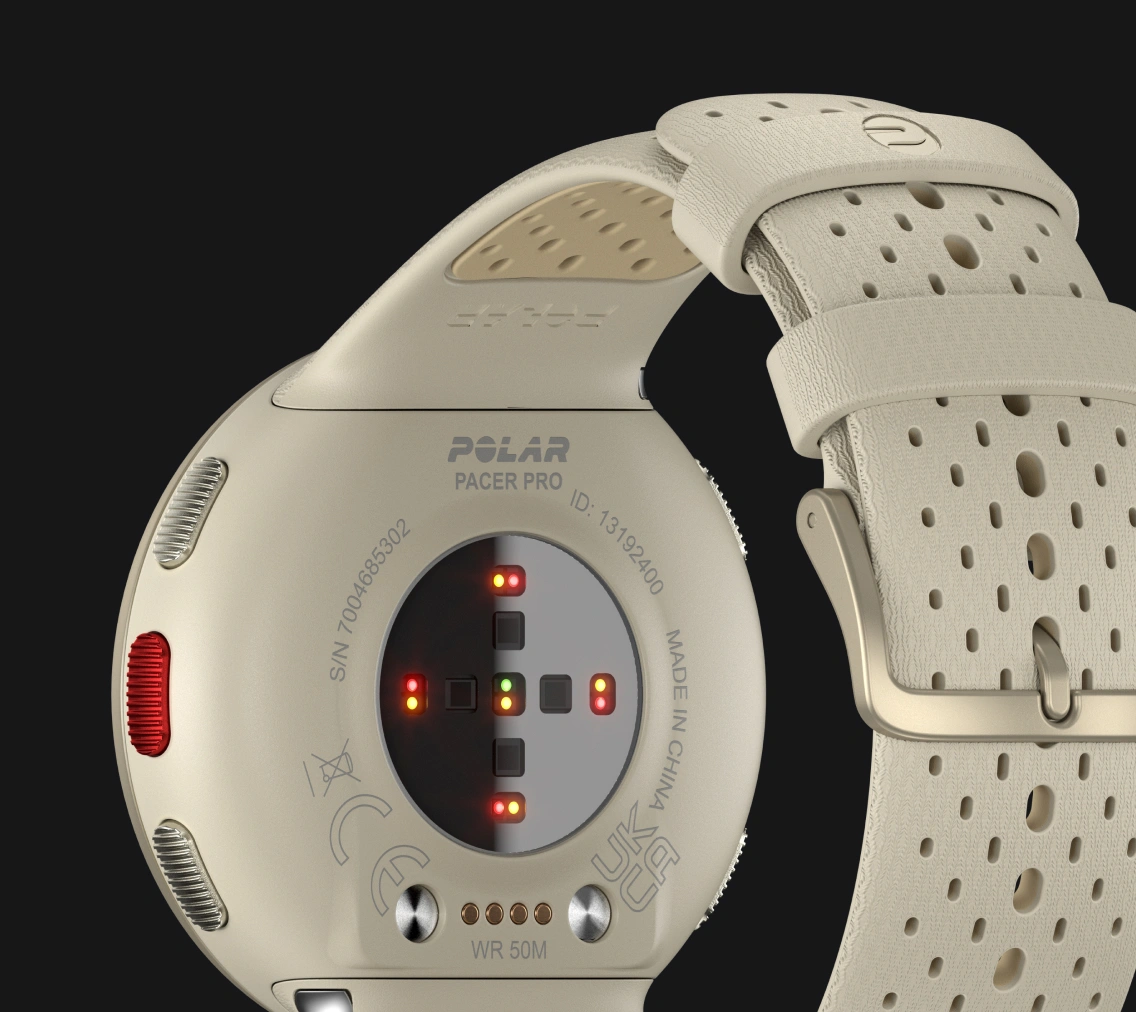
WR50 water resistance suits swimming within Polar’s guidance. Polar designed the watch for sweat, rain, and regular training, although no water rating removes the need to rinse it after salt water and avoid unnecessary impacts. Buttons are especially useful in wet conditions because touch controls can become unreliable.
The 1.2-inch memory-in-pixel color display has a 240 x 240 resolution and stays visible at all times. It is not as bright or visually rich as a modern AMOLED panel. Indoors, its muted colors and lower contrast can look dated. Outdoors, however, reflected light helps readability and the efficient panel supports better battery life.
Outdoor readability and buttons
This is a good example of a specification that should be judged by purpose. Runners need pace, distance, heart rate, lap information, and navigation cues at a glance. They do not need glossy animation during a hard interval. The screen performs the important job, but buyers who want vivid watch faces and polished graphics will prefer a newer AMOLED model.
Physical buttons keep controls predictable with gloves, rain, or sweaty hands. Once the layout becomes familiar, runners can start a session, change a data view, and mark a lap without staring at the watch. The interface has a learning curve because Polar places training depth ahead of visual simplicity. A few quiet minutes with the settings before the first serious workout pays off.
Comfort during training and sleep
The band and case are comfortable enough for sleep tracking, according to recurring owner comments. Some users praise the low weight and secure fit; others find Polar’s menu structure less intuitive than Garmin or Apple software. These are repeated patterns rather than universal outcomes. Wrist shape, previous watch experience, and preferred data layout all influence the result.
Polar Pacer Pro review: training and GPS
The Polar Pacer Pro uses Polar’s proprietary platform, with 37MB of RAM and 32MB of storage listed in the Specs Universe record. Those numbers should not be compared directly with Wear OS or Apple Watch hardware. The operating system is designed for a narrower set of tasks, so app capacity is not the point.
Built-in multi-band GNSS handles route and pace recording without a phone. A compass supports direction, while the accelerometer contributes movement data. The Specs Universe page does not list a barometer as publicly specified, so this review does not assign one. Hard facts are kept to the exact published record rather than borrowed from a related Polar watch.
Real GPS accuracy depends on tree cover, tall buildings, weather, wrist position, and the selected recording mode. Independent reviewers have generally found the Pacer Pro dependable for training, while noting that no wrist watch draws a flawless line in every environment. Runners who need formal race measurement should still trust certified course distance rather than any consumer GPS trace.
Optical heart-rate tracking supports ordinary running, recovery, and daily health trends. Wrist sensors can struggle during sharp intervals, cold weather, strength work, or movement that loosens contact. A compatible chest strap remains the better tool for athletes who need fast response and high confidence during hard sessions. Polar’s ecosystem makes that upgrade natural rather than treating it as an admission of failure.
Polar Flow and recovery guidance
The watch records sleep and uses Polar’s analysis to connect rest with training readiness. Its value grows after several consistent weeks. One night of imperfect sleep should not control a training plan, but repeated changes in sleep, resting signals, and perceived effort can help a runner recognize fatigue before a poor session becomes an injury problem.
Polar Flow is the center of the experience. It organizes sessions, routes, training load, sleep, and longer trends in one place. The service is deep without demanding a paid subscription for its core analysis. That is an important advantage for buyers who dislike purchasing a device and then discovering that its most useful interpretation sits behind another monthly bill.
The downside is presentation. Polar Flow can feel dense, and syncing or navigating settings is not always as effortless as using a mainstream smartwatch. Owners who enjoy studying training patterns often appreciate the depth. Casual users may see more charts than they need. The Pacer Pro rewards curiosity, but it does not hide complexity as well as a general fitness watch.
Running power and route guidance
Training guidance is more valuable than collecting isolated numbers. Suggested sessions, load information, running performance tools, and recovery context can help an athlete balance demanding days with easier work. None of these features replaces a good coach or awareness of pain. Used sensibly, they add structure for runners who otherwise guess every session.
Running power and hill-related guidance can add another view of effort, especially where pace changes with gradient. The watch estimates these measures rather than producing laboratory readings. Their best use is consistency: compare the watch with itself across similar routes and conditions. Chasing a single impressive number is less valuable than noticing whether the same effort becomes easier over time.
Route guidance is useful for planned training, but the display and interface are not a substitute for detailed offline maps. A breadcrumb line and directional prompt can keep a runner on course, while complex trail networks still demand attention and, when appropriate, a phone or paper backup. This distinction matters for buyers comparing the Pacer Pro with newer watches that offer richer cartography.
Recovery information works best alongside subjective judgment. Soreness, illness, poor motivation, and unusual fatigue may matter more than a favorable score. Polar gives runners another source of evidence, not permission to ignore their bodies. That responsible approach also prevents the watch from turning exercise into a daily pass-or-fail test.
Battery life and charging
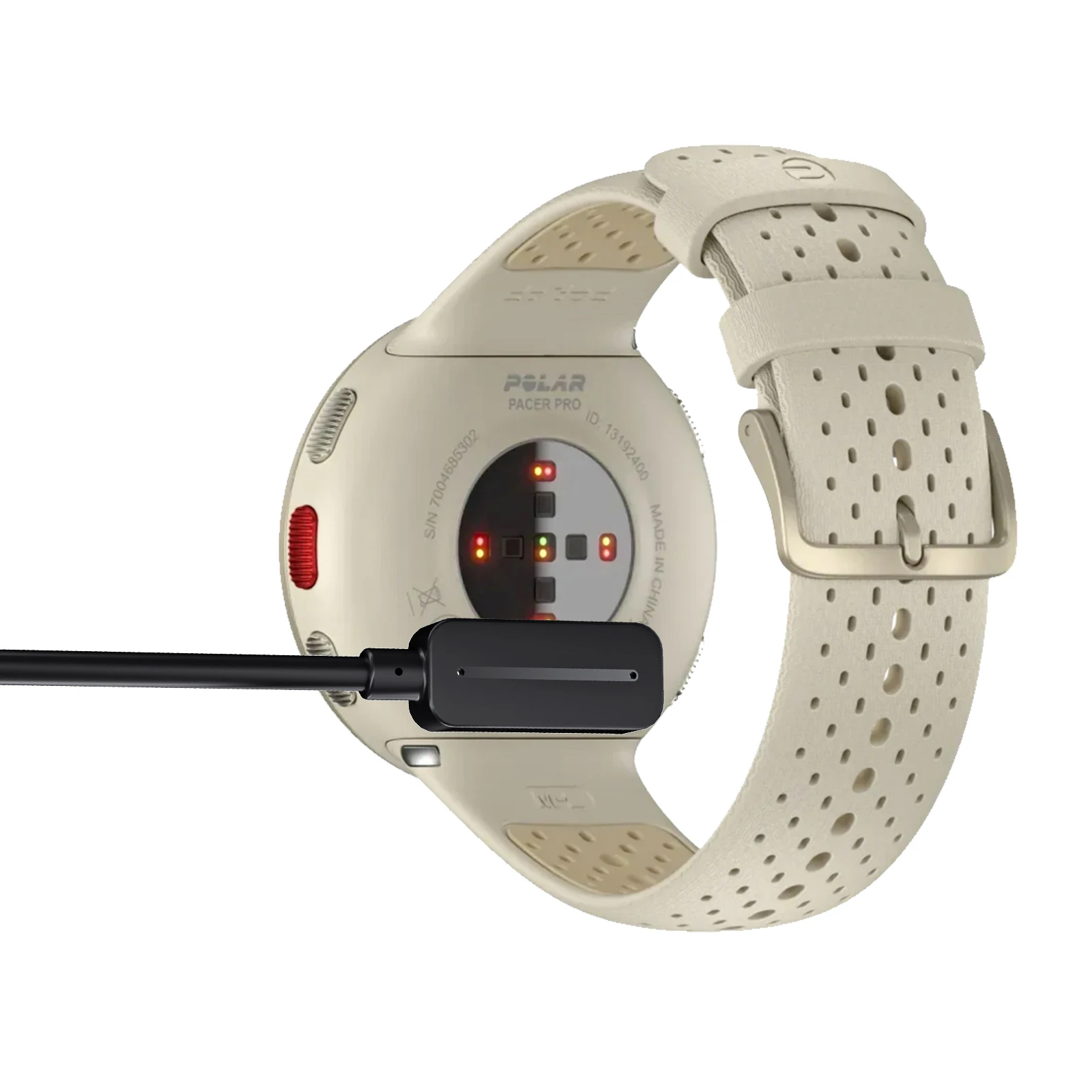
Polar rates the 265mAh battery for up to seven days in watch use and 35 hours of GPS training. Real life depends on workout frequency, GPS settings, backlight use, notifications, continuous heart-rate tracking, and sleep recording. Independent accounts commonly describe several days between charges, which is far more relaxed than a full-featured Wear OS watch.
That endurance changes the experience. A runner can record several sessions and multiple nights without planning a daily charge. A long race or weekend trip is also easier to manage. Athletes approaching the 35-hour GPS ceiling need to examine power-saving options or a watch made specifically for ultra-distance use.
Charging uses a proprietary wired magnetic cable. Specs Universe lists the cable under charging speed because Polar does not publish a conventional wattage figure on the device record. The connection is simple, but it creates another cable to remember. Keeping a spare can be worthwhile for frequent travelers.
Connected features and long-term support
Polar deliberately limits smart features. The watch pairs with iOS and Android through Polar Flow and can show supported phone notifications. It does not provide LTE, eSIM, Wi-Fi, NFC payments, or a broad third-party app platform. Music control differs from storing a playlist for phone-free listening. Buyers should be honest about whether those omissions will feel peaceful or frustrating.
Software support continues through firmware delivered with Polar Flow, but Specs Universe does not list a fixed end date. That makes the present feature set more important than promises about future additions. Buy the watch for the tools it offers now. Any later improvement should be welcome, not necessary for the purchase to make sense.
There is also a practical difference between upgradeability and longevity. The sealed watch does not offer user-upgradeable storage or sensors. Long-term value comes from battery health, continued syncing, replaceable bands, and the usefulness of Polar Flow. Buyers considering an older discounted unit should check warranty coverage and the seller’s return policy, particularly if it has been stored for a long period.
US value and competitors
Current value depends heavily on the sale price. The Pacer Pro launched as a serious midrange running watch, but time has moved the market forward. It becomes attractive when discounted well below newer AMOLED training watches. If its price approaches a Polar Vantage M3, Garmin Forerunner 265, or another current model, the older display and limited smart functions are harder to accept.
The Garmin Forerunner 165 is a friendly alternative for runners who want an AMOLED screen, stronger everyday presentation, and Garmin’s large ecosystem. The COROS Pace series tends to appeal to athletes who prioritize low weight, battery life, and straightforward training tools. Polar’s own Vantage M3 costs more but adds a more modern display and broader navigation and health hardware. Each option should be compared at its actual US street price, not only its launch price.
For US buyers, this Polar Pacer Pro review supports a purchase when the watch costs clearly less than those newer rivals. A small discount is not enough to offset older hardware, but a substantial reduction makes its mature training tools appealing.
Seen as a focused sports tool, the Polar Pacer Pro review reaches a more favorable conclusion than a feature-by-feature smartwatch comparison would suggest.
Who should buy it?
The Polar Pacer Pro is best for runners who train several times a week, care about recovery, and want clear physical controls. It also suits buyers who prefer a focused sports device over constant apps and calls. It is less appropriate for someone seeking contactless payment, rich maps, music storage, LTE independence, or a bright smartwatch-style screen.
Is the Polar Pacer Pro still worth buying?
Yes, when the price reflects its age. Its running and recovery tools remain useful, but newer watches deserve consideration at a similar cost.
Can it be used without a phone during a run?
Yes. Built-in GNSS records outdoor sessions without carrying a phone. A phone is still needed for Polar Flow syncing and connected features.
Does it support swimming?
The WR50 rating and Polar’s published guidance make it suitable for swimming. Users should follow the company’s care and water-use instructions.
Is it a good smartwatch?
It is a good running watch with basic connected functions. Buyers who mainly want apps, calls, payments, media, and a bright interface should choose a mainstream smartwatch instead.
Should a serious runner add a chest strap?
A chest strap is worthwhile for fast intervals, cold conditions, or any training where rapid heart-rate response matters. The wrist sensor remains convenient for daily tracking and steady sessions.
The central message of this Polar Pacer Pro review is simple: focused running tools age better than fashionable smart features, but price still has to reflect the older screen and limited connectivity.
Final verdict
The final verdict is positive but price-sensitive. The Polar Pacer Pro succeeds because it remains focused on what runners actually use: dependable session recording, comfortable wear, physical controls, useful recovery context, and battery life measured in days rather than hours. Its dimmer display and limited smart features clearly reveal its age. At the right discount, those compromises are reasonable. At full premium pricing, a newer training watch is the wiser long-term purchase. This Polar Pacer Pro review recommends it only when the saving is meaningful.