A premium outdoor watch earns its price by being dependable when a phone is inconvenient or unavailable. The Garmin Fenix 8 has a strong answer: detailed maps, long battery life, physical controls and a broad training system. This 47mm Solar version is aimed at people who value endurance and visibility outdoors more than the richer color of an AMOLED screen.
Specs Universe prepared this desk-research assessment from its published device record, Garmin documentation, independent testing and recurring owner feedback. We did not physically test this watch. Comfort, battery life and sensor results can change with fit, settings, weather and activity type.
Quick verdict
The Garmin Fenix 8 is an excellent tool for hiking, distance running, cycling, triathlon training and other activities that benefit from maps and reliable controls. The 47mm Solar model makes the most sense when long charging intervals and a screen that stays clear in sunlight matter more than vivid indoor graphics.
Its main weakness is value. Many people will never use enough of its navigation, diving and training tools to justify the price. It is also a large, heavy watch for sleep tracking. If the fit works and outdoor training is a serious part of life, though, this model remains easy to recommend at a meaningful discount.
Important specifications
| Area | Specs Universe record | Why it matters |
|---|---|---|
| Display | 1.3-inch transflective MIP, 260 × 260 | Easy to read outdoors and economical with power |
| Lens | Gorilla Glass or sapphire by SKU | The exact retail version affects scratch resistance and price |
| Case | 47 × 47 × 15.2 mm, 80 g | Strong wrist presence and potentially awkward sleep comfort |
| Construction | Fiber-reinforced polymer with metal bezel and rear cover | Built for demanding outdoor use |
| Water resistance | 10 ATM; EN 13319 dive rated to 40 m | Suitable for swimming and supported diving activities |
| Storage | 32GB | Useful for maps, software and supported offline media |
| Battery claim | Up to 21 days; up to 28 days with solar | Far less frequent charging than most app-led smartwatches |
| Positioning | Built-in multi-system GNSS | Supports route recording and navigation away from a phone |
| Compatibility | iPhone and Android through Garmin Connect | Does not lock the owner into one phone platform |
Garmin sells several Fenix 8 sizes and display versions. These values apply to the exact 47mm Solar record on Specs Universe. Do not transfer them to the 43mm, 51mm or AMOLED configurations.
The solar MIP display is a deliberate choice
The 1.3-inch transflective memory-in-pixel screen is always on and becomes easier to read as outdoor light increases. That suits a route glance in bright sun and avoids the need to wake a glowing panel every time. It also helps the watch preserve power across long trips.
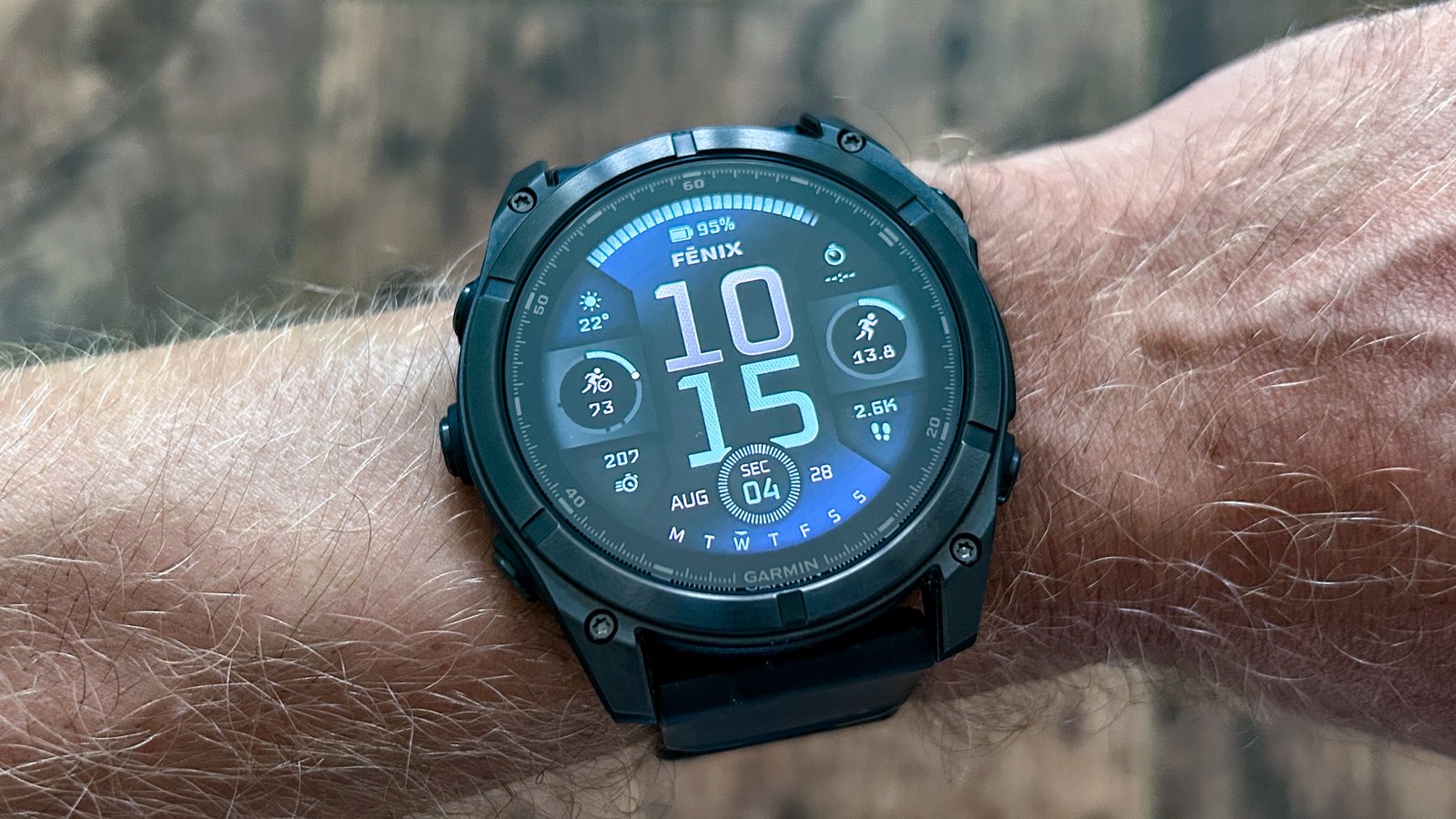
Indoors, the compromise is obvious. Colors look muted beside a modern AMOLED watch, and the 260 × 260 resolution prioritizes clarity rather than visual richness. Maps remain functional, but photographs and elaborate watch faces are not the point. Anyone who spends most training time in a gym may prefer the separate AMOLED edition.
Treat solar charging as an extension, not a replacement for the cable. The headline benefit depends on sustained exposure to suitable outdoor light. Sleeves, shade and an indoor routine reduce the gain. Choosing this model for the MIP display and longer charging interval is sensible; expecting unlimited power is not.
Size, controls and durability
At 47mm wide, 15.2mm thick and 80g, this is not a discreet watch. The size gives maps room to breathe and supports a substantial battery, but smaller wrists may find it top-heavy. Trying the case before buying is worthwhile, especially if overnight sleep tracking matters.
Touch input makes map movement and ordinary menus easier. Five physical buttons remain the better control during rain, cold weather or a hard workout. That combination is one of the strongest parts of the design. A touchscreen is convenient; buttons are dependable.
The case combines fiber-reinforced polymer with a metal bezel and rear cover. Lens material varies by SKU, so the full product listing deserves attention. Sapphire costs more but makes sense around rock, equipment and rough trails. Gorilla Glass may be the better-value choice for running, road cycling and normal daily use.
A 10 ATM rating and EN 13319 dive rating to 40 meters give the watch a wider role than ordinary splash protection. Limits and Garmin guidance still apply. Water resistance is not permanent, and damage can change it over time.
Maps and navigation justify the premium
Navigation is the clearest reason to buy the Garmin Fenix 8. Offline mapping, route guidance, compass information and barometric data make it useful when a phone screen is awkward or coverage disappears. Independent reviews consistently praise Garmin’s mapping depth and outdoor positioning.
Built-in multi-system GNSS supports recorded routes without carrying a phone. No wrist tracker is perfect under dense trees, beside cliffs or among tall buildings, yet published testing generally places the Fenix line among the stronger choices for difficult outdoor use. Waiting for a firm satellite lock before starting an activity still matters.
Good navigation does not replace preparation. Load a route before leaving, confirm the available maps, and carry a suitable backup on remote trips. A watch can help someone stay oriented, but never make it the only safety plan.
The built-in flashlight is another practical feature. It can help during an early run, around a campsite or while finding gear in a dark room. This sounds minor until it becomes the quickest light available.
Training and health data need context
The Garmin Fenix 8 works best with consistent wear. Training readiness, recovery guidance, sleep information and workout history gain value after the watch has established a personal baseline. A single score should not dictate a training day, but several weeks of trends can expose fatigue or a change in routine.
Heart-rate tracking is useful for steady exercise and daily patterns. Fast intervals, strength work, cold skin and a loose strap can produce errors on any optical sensor. Athletes who pace demanding sessions by heart-rate zones should use a compatible chest strap when accuracy is critical.
The Specs Universe record includes ECG, SpO2, heart-rate and sleep tracking. These are consumer wellness and fitness tools, not a diagnosis. ECG availability can depend on location and account eligibility. Unusual symptoms or persistent concerns belong with a qualified medical professional.
Recurring owner feedback is broadly positive about mapping, battery life and training depth. It is more mixed on software complexity and occasional bugs. A system with this many activities, screens and settings needs time to learn. Garmin has improved the interface, but it still rewards patience more than casual exploration.
Garmin Fenix 8 battery life
The published claim is up to 21 days in smartwatch use and up to 28 days with suitable solar exposure. Real use will be lower when GPS, maps, music, backlight and continuous sensors work frequently. Even after those reductions, independent reports place normal endurance well beyond the nightly or every-other-day charging pattern of many mainstream smartwatches.
That changes how the watch fits into training. Sleep data is less likely to disappear because the battery needed an overnight charge. A weekend trip does not automatically require another cable. Long activities also begin with more confidence.
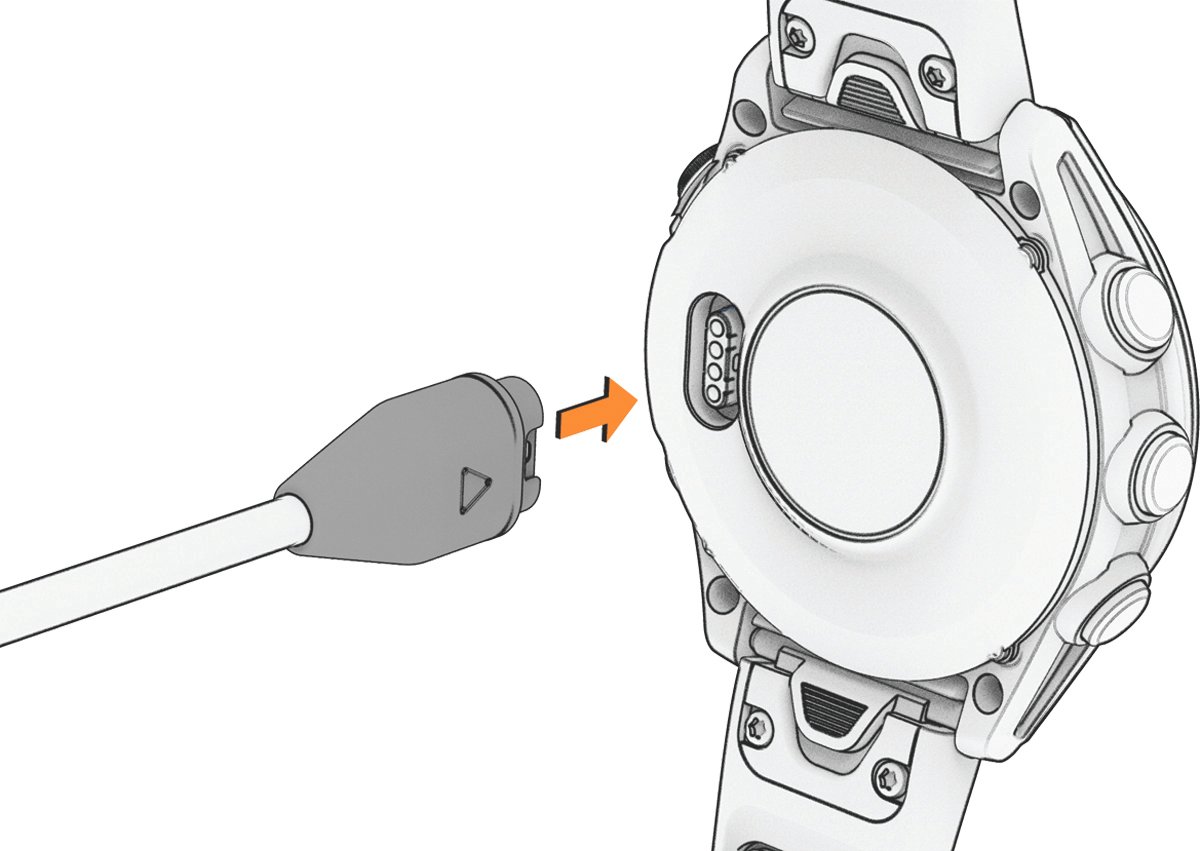
Charging uses Garmin’s proprietary wired cable. It works, but it creates another accessory to pack and replace. Keeping a spare in a travel bag is sensible when the watch is part of navigation or a serious training plan.
Battery complaints in owner communities often trace back to demanding settings, frequent GPS activity, music, sensor use or software problems. Those reports deserve attention, yet one person’s result cannot define the product. The useful conclusion is simpler: endurance is a major strength, while the maximum figure is not a promise.
Everyday smartwatch features
Bluetooth, Wi-Fi and NFC support notifications, syncing and Garmin Pay with participating banks. The built-in speaker and microphone add calls through a connected phone and selected voice functions. There is no cellular connection on this exact record, so a nearby phone remains important for connected communication.
Garmin Connect works with iPhone and Android, which is a genuine advantage over watches tied closely to one ecosystem. Specific replies and integrations can still vary by phone platform. Check the payment bank, music service and notification behavior that matters before ordering.
The app experience is less broad than watchOS or Wear OS. Garmin puts training, navigation and battery life first. People who want richer messaging, a large third-party app catalog or phone-like interaction on the wrist will be happier elsewhere.
Price and value in the United States
The Fenix 8 entered the US market at a premium price, and newer Garmin models now make full-price stock harder to justify. Current deals change quickly, but recent US discounts have placed some Fenix 8 versions well below their original level. The exact 47mm Solar SKU, lens and warranty must match before comparing offers.
At close to four figures, the watch needs a demanding job. At a substantial discount, its maps, rugged construction and long battery life become more convincing. We would avoid an imported bargain unless the seller clearly explains warranty coverage and the exact model.
Check Garmin’s optional services separately from the core watch. The essential training and navigation features do not require turning every subscription offer into part of the purchase.
Three realistic alternatives
Garmin Forerunner 970: choose it for serious running and triathlon tools in a lighter format. The Fenix is better when rugged construction, long outdoor trips and a broader adventure role matter more.
Garmin Instinct 3: choose it to keep strong outdoor fundamentals and long endurance while spending less. Its interface and mapping experience are not as rich, but the value is easier to defend.
Apple Watch Ultra: choose it with an iPhone when apps, calls, messages and wider smartwatch integration come first. The Garmin is the stronger fit for cross-platform use, mapping depth and fewer charging stops.
Who should buy it?
Buy the 47mm Solar model if hiking, endurance training, cycling, multisport events or navigation are regular parts of life. It is especially suitable for someone who values physical buttons, an always-visible outdoor screen and weeks rather than days between routine charges.
Skip it if the watch will mainly count steps, show notifications and record occasional gym sessions. It is also a poor fit when a slim case, vivid AMOLED display or deep phone-style app support matters most. Current Fenix owners should upgrade only when the newer interface, diving support, speaker, microphone or other added tools solve a real need.
Questions before buying
Is the Solar model better than AMOLED? It is better for a particular job. The Solar version favors outdoor readability and a longer charging interval. AMOLED produces richer color and stronger contrast indoors. Choose based on where the watch will be used, not on which display sounds newer.
Does it need a phone? GPS recording, maps and many training functions work directly on the watch. A paired iPhone or Android phone is still needed for setup, syncing and many connected services. This exact record does not include cellular service.
Can it replace a dive computer? It carries a 10 ATM rating and an EN 13319 dive rating to 40 meters. That makes supported diving a real feature, but follow Garmin’s instructions, skill requirements and safety limits. Never base critical diving equipment decisions on a short specification.
Is 47mm too large? The dimensions and 80g weight make it substantial. Medium and larger wrists are more likely to find the balance comfortable. Sleep comfort is personal, so trying it on is more useful than comparing case numbers alone.
Does solar charging remove the need for a cable? No. Sunlight can extend endurance under the right conditions, but the proprietary cable remains necessary. Solar is most valuable during long periods outdoors.
Garmin Fenix 8 verdict
The Garmin Fenix 8 47mm Solar remains a serious outdoor watch with excellent navigation, useful training context and outstanding charging freedom. Its MIP screen and substantial case are purposeful choices, not universal advantages. The price is the main reason to hesitate.
We recommend it for committed outdoor athletes who will use the maps, controls and endurance. Wait for a strong US discount, verify the exact lens and SKU, and choose a simpler Garmin if those specialist features would sit unused.